

Bernstein has reaffirmed its bullish Bitcoin (BTC) price prediction for 2026, arguing that the cryptocurrency remains on track to reach $150,000 despite a slowdown in capital inflows and weaker retail participation.
According to the Wall Street brokerage, Bitcoin’s recent decline is primarily due to reduced investment flows rather than concerns about its long-term fundamentals.
The firm maintained that Bitcoin’s role as a store of value remains intact, even as investors increasingly direct capital toward artificial intelligence-related stocks.
As of press time, Bitcoin was valued at $62,902, about 50% below its record high of $126,000 reached in October 2025.
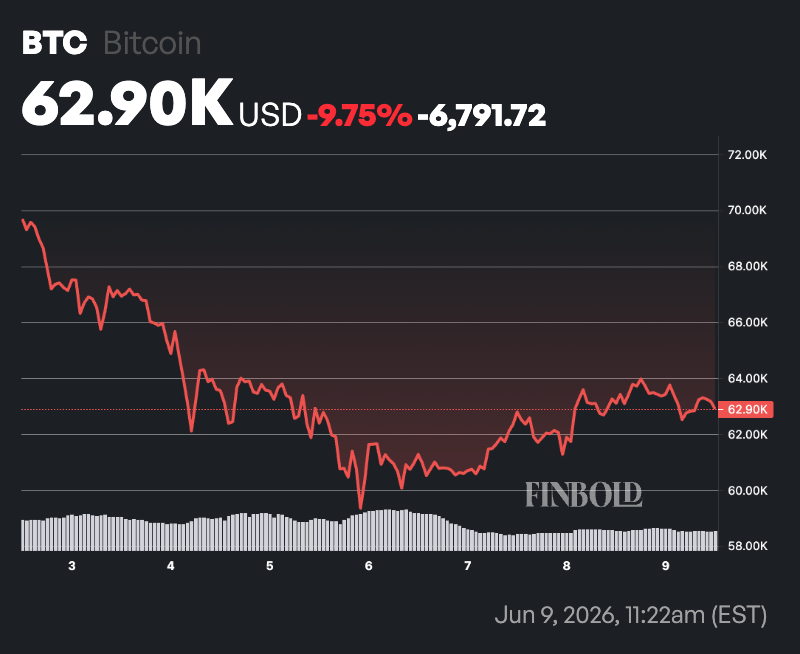
The cryptocurrency recently fell to its lowest level in more than two months amid continued outflows from spot Bitcoin exchange-traded funds (ETFs) and broader macroeconomic uncertainty.
Bernstein noted that net inflows into Bitcoin through spot ETFs and corporate treasury companies have totaled approximately $12 billion so far in 2026, a sharp decline from the $60 billion recorded during all of 2025.
Impact of corporate participation on Bitcoin price
While Bitcoin ETF flows have weakened, the brokerage highlighted that net ETF outflows amount to only about $2.6 billion year-to-date from roughly $75 billion in assets under management.

The firm pointed to continued accumulation by corporate buyers, particularly companies following the Bitcoin treasury strategy pioneered by Strategy.
Despite weaker flows, Bernstein argued that Bitcoin’s market structure has become significantly stronger than in previous cycles.
Ownership is now distributed across ETF investors, corporate treasuries, wealth management platforms, broker-dealers, institutional funds, pension funds, and sovereign investors. This diversification marks a significant shift from earlier market cycles that were heavily driven by retail speculation.
Bernstein argued that Bitcoin’s lack of retail momentum is not a concern, as many investors have shifted their focus to AI stocks. The brokerage believes Bitcoin has matured into a more institutionally driven asset, reducing its reliance on retail speculation.
“This maturation phase of Bitcoin is less appreciated, and the criticism has largely come from its lack of retail momentum, which may not be a bad thing considering retail has crowded into AI. <…> Bitcoin being boring this cycle should not be held against it and does not take away from the long-term ‘store of value’ thesis, in our view,” the analysts noted.
While weaker capital inflows have weighed on prices, Bernstein views the slowdown as temporary rather than a structural weakness. The firm maintained that growing institutional ownership, continued Bitcoin ETF adoption, and Bitcoin’s role as a store of value support its long-term outlook.