

Two large-cap stocks are approaching the $500 billion market capitalization milestone in 2026 after demonstrating strong growth potential.
In this regard, Finbold has identified two companies already trading near that level, with relatively modest gains potentially enough to push their valuations above the threshold.
As investors continue searching for market leaders capable of delivering sustained growth, these stocks stand out as potential candidates to join the ranks of the world’s most valuable publicly traded companies.
Mastercard (NYSE: MA)
As of press time, Mastercard (NYSE: MA) carried a market capitalization of about $477 billion, meaning the company needs roughly 5% growth to surpass the $500 billion threshold.
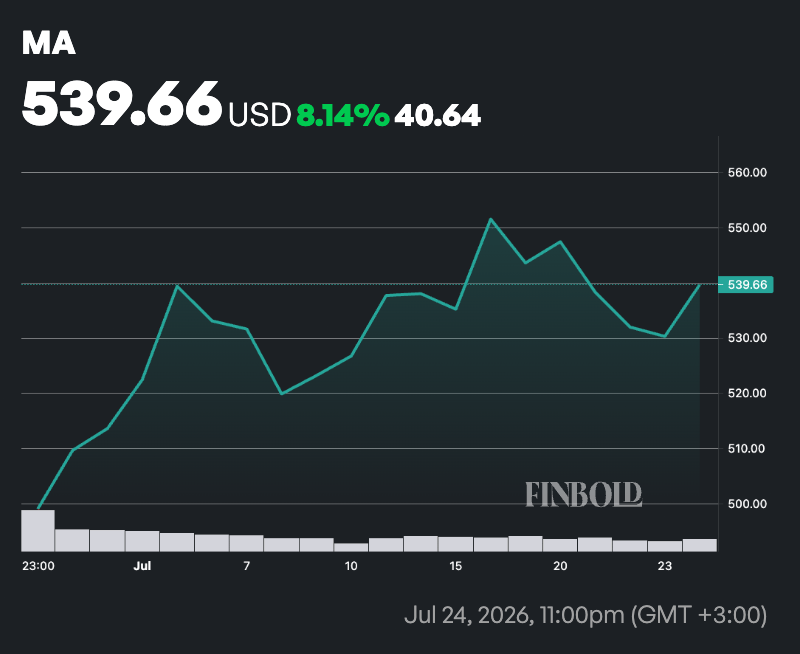
The company’s investment case remains tied to the continued global shift from cash transactions to digital payments.
Mastercard processes trillions of dollars in payment volume annually and continues to benefit from expanding electronic payment adoption, particularly in developing markets.
Recent financial performance has reinforced this growth story. Revenue increased about 16% to 17% in the latest reporting period, while net income rose around 18%. Analysts expect revenue growth of roughly 10% to 12.5% annually over the next several years, alongside earnings-per-share growth of approximately 15% to 16%.
Mastercard’s extensive payment network, strong brand recognition, and global scale provide significant competitive advantages. The company also generates substantial free cash flow, supporting continued share repurchases and dividend growth.
Beyond payment processing, Mastercard has expanded into cybersecurity, fraud prevention, and data analytics services, helping diversify revenue streams and strengthen long-term growth prospects.
Intel (NASDAQ: INTC)
Meanwhile, Intel’s (NASDAQ: INTC) market capitalization has fluctuated between approximately $464 billion and $515 billion in recent months, placing the company within reach of the $500 billion valuation milestone.
The company’s resurgence has been driven largely by growing demand for artificial intelligence infrastructure. In its latest quarterly results, Intel reported revenue growth of about 25% year over year, exceeding market expectations.
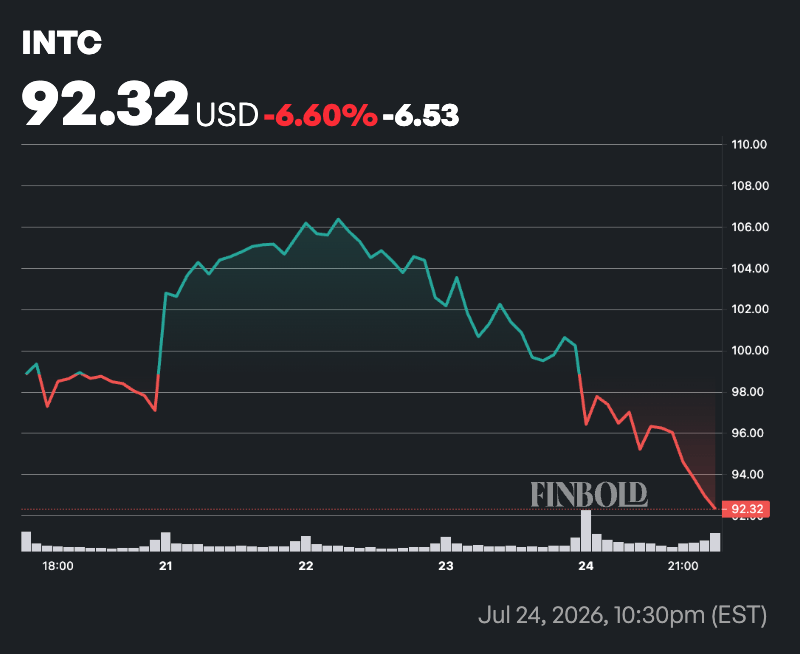
A major contributor was the data center and AI segment, where revenue surged nearly 59%.
Demand for server processors and related technologies has remained strong, prompting Intel to raise forward guidance and increase planned capital expenditures to more than $20 billion.
The company is also advancing long-term initiatives aimed at strengthening its competitive position.
These include expanding its foundry business for external customers and accelerating next-generation manufacturing technologies expected to enter volume production in the coming years.
As AI adoption expands across enterprise and cloud computing markets, Intel stands to benefit from rising demand for processors supporting inference workloads, data center operations, and emerging AI applications.