
SpaceX (NASDAQ: SPCX) stock could finish July 2026 at approximately $175 per share, according to a forecast generated by ChatGPT.
The prediction suggests SpaceX shares will trade within a base-case range of $165 to $185 by July 31, while a more bullish scenario places the stock between $190 and $220.
A bearish outcome could see shares fall to between $140 and $155 if valuation concerns intensify or broader market sentiment weakens.
The forecast comes as investors continue to assess the long-term growth prospects of the aerospace and satellite communications company following its blockbuster June 2026 initial public offering.
ChatGPT’s base-case target of $175 implies an upside of about 8% from SpaceX’s press-time price of $162.
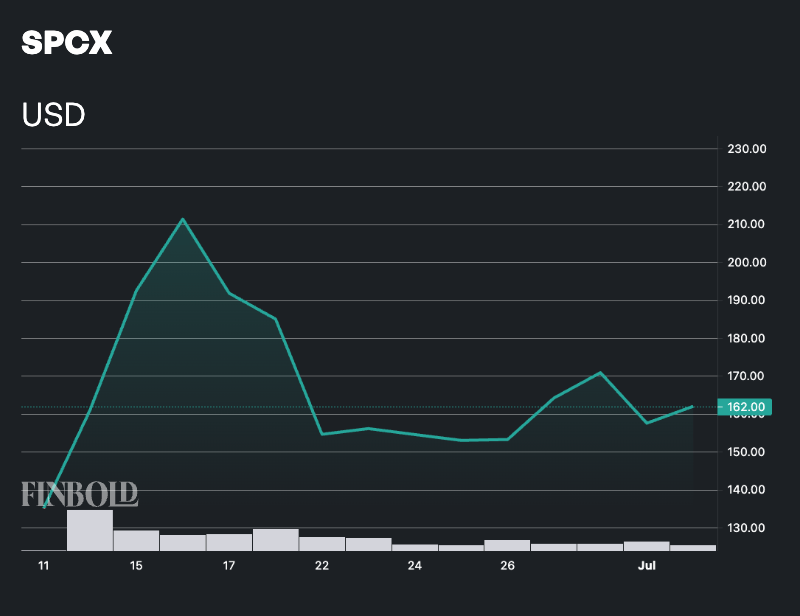
The forecast also factors in SpaceX’s upcoming inclusion in the Nasdaq-100 Index, a development expected to increase demand from index-tracking funds and exchange-traded funds (ETFs).
The company’s addition to the benchmark could generate billions of dollars in passive inflows, providing a potential near-term catalyst for the stock during July.
SpaceX diversified offering
According to ChatGPT, SpaceX should increasingly be viewed as a combination of a space technology, communications, and artificial intelligence company.
Much of the bullish case is tied to the future growth of Starlink, the company’s satellite internet business, as well as opportunities stemming from its artificial intelligence initiatives following the acquisition of xAI.
Starship development also remains a key driver of long-term expectations. Investors believe the next-generation launch system could significantly reduce launch costs and expand the commercial space market over the coming years.
These growth opportunities have helped support a valuation exceeding $2 trillion, making SpaceX one of the largest publicly traded companies in the world.
Another notable development is the sharp increase in short interest. In this line, approximately 31% of SpaceX’s publicly tradable shares have reportedly been sold short, highlighting skepticism among some investors about the company’s ability to justify its valuation.
The elevated level of bearish positioning has also increased the potential for volatility in either direction during the remainder of the month.
SpaceX’s record-setting IPO raised approximately $75 billion and attracted strong demand from institutional investors.
Overall, the stock has remained one of Wall Street’s most closely watched names since its market debut, with major funds continuing to build positions as the company becomes more widely represented across key investment benchmarks.