

Bitcoin (BTC) reserves on Binance are declining at a dramatic rate, dropping from nearly 595,000 BTC to some 572,000 BTC between November 22 and December 3, according to new on-chain data Finbold retrieved from market statistics platform CryptoQuant.
While alarming at first glance, the data is not necessarily a bearish signal. Rather, it reflects structural factors consistent with a healthy bullish cycle.
Namely, analysts argue that the chief suspect behind the falling numbers is the shift toward self-custody. That is, as the market strengthens, long-term investors and whales are moving “digital gold” from exchanges to cold wallets.
This not only reduces potential selling pressure but also signals confidence rather than fear, as the behavior is typical of robust markets.
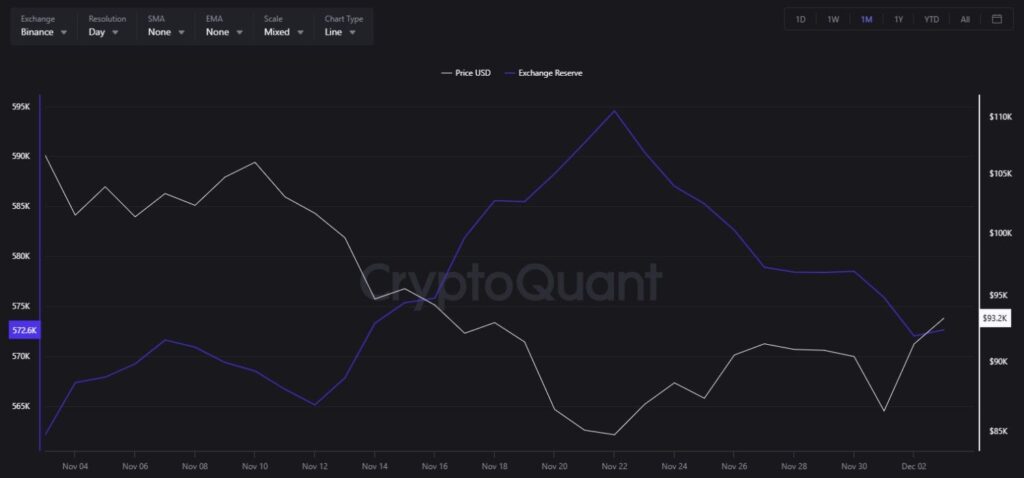
Why Bitcoin reserves are falling
A good chunk of the vanishing supply can simply be ascribed to spot Bitcoin ETFs drawing the asset in: movers such as BlackRock acquired BTC, and it gets shifted off exchanges and into custodial storage.

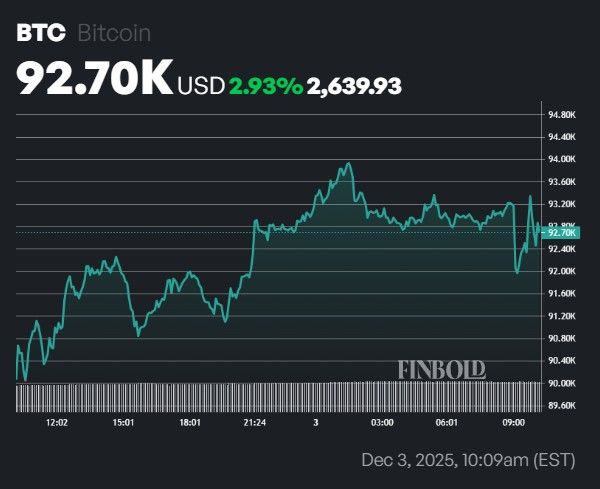
Macro conditions are another important factor. Bitcoin has witnessed some rather drastic price swings over the past week or so amid risk-off flows and ETF redemptions. While it has since managed to stabilize, being up nearly 3% on the day and trading at $92,700 at the time of writing, the price action still shows that short-term price swings can be more than impactful.
Further, as XWIN notes, the late-November sell-off caused notable liquidations, particularly during Asian trading hours. In turn, this reduced margin deposits and lowered BTC balances on the exchange.
Overall, the shrinking reserves appear to suggest that the world’s first cryptocurrency is simply being withdrawn from immediate circulation, with tightening supply, a condition that has usually supported medium- to long-term price gains, being the natural result. As such, the situation adds further support to some of the more bullish 2026 narratives.
Featured image via Shutterstock