

Bitcoin (BTC) realized volatility, a measure of price movement, dropped to a multi-year low as of June 1, 2026.
Bitcoin’s one-week realized volatility has fallen to roughly 17%, down over 56% from its second-quarter peak of around 39%, according to data from CryptoQuant. As such, BTC 1-week volatility has revisited its 2026 low, which preceded the January-February capitulation.
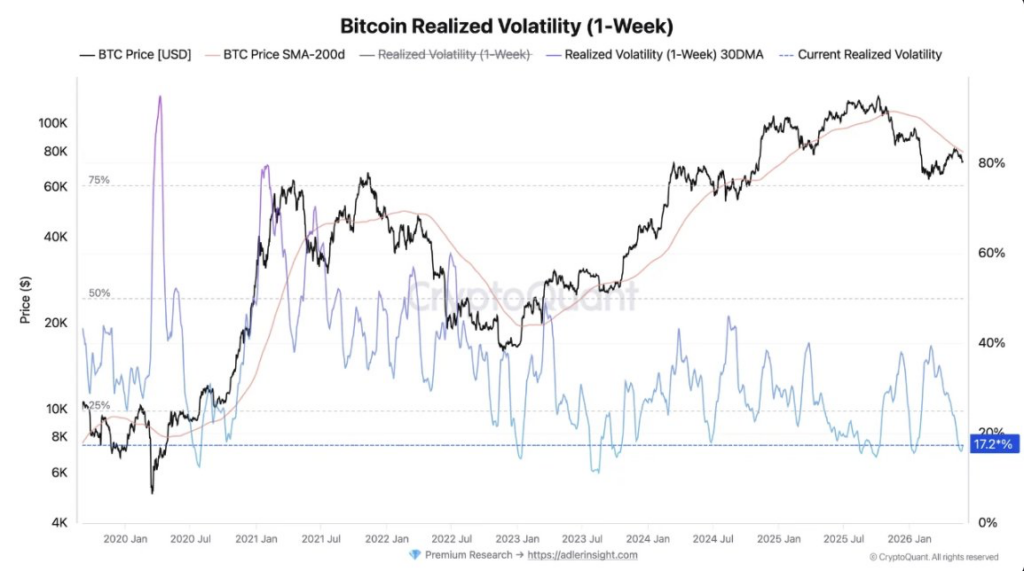
Despite the recent Bitcoin price rally from $65,000 to slightly above $82,000, its 1-week volatility has continued to contract. For context, BTC’s realized volatility over 1 week surged above 90% during the 2020 Black Thursday, triggered by the Covid-19 pandemic, and above 75% during the 2021 crypto bull market.
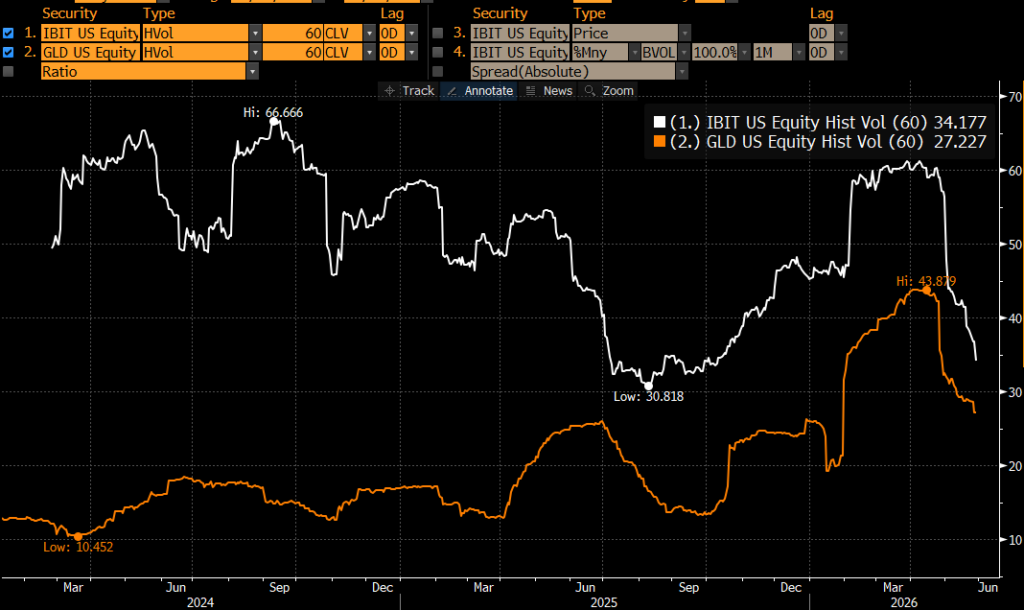
However, Bitcoin’s 1-week realized volatility has ranged around 34% in recent years, due to rising institutional investor adoption. Additionally, BTC’s volatility has been closely correlated with Gold, despite the flagship coin underperforming stocks and precious metals, as per analysis recently shared by Eric Balchunas, an ETF analyst.
What’s next for Bitcoin price amid reduced realized volatility?
The notable decline in Bitcoin’s 1-week realized volatility could signal a calm before the storm. Historically, major BTC price moves, in either direction, have followed this tool dropping to around 17%.
“History is consistent with what usually comes next. Deep volatility compression rarely resolves quietly. It tends to come before large directional moves because forced calm eventually ends with a release,” Axel Adler noted.
As such, if the flagship coin reclaims its 200-day Simple Moving Average (SMA) amid rising volatility, a risk-on breakout could be confirmed. However, if BTC price continues to drop, possibly below $70,000 over the coming weeks, amid rising volatility, a fresh capitulation could be confirmed.
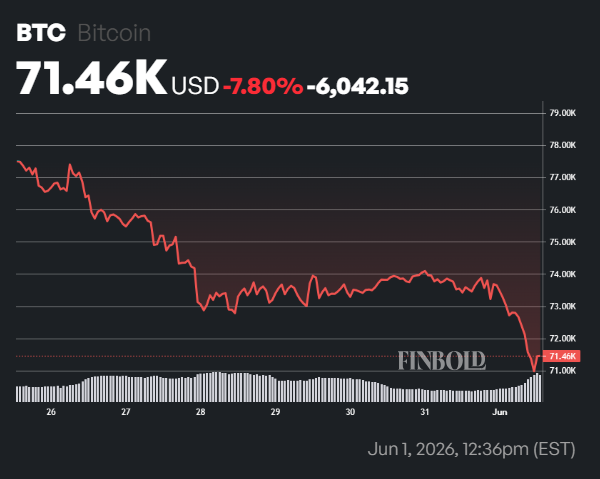
At press time, BTC price traded around $71,460 after dropping 7.8% over the past seven days.
Meanwhile, if BTC realized volatility (1-week) stabilizes at its multi-year low over the next 1 week, Bitcoin’s price could get trapped in a multi-month horizontal consolidation, hence making the tool vital for midterm prediction.