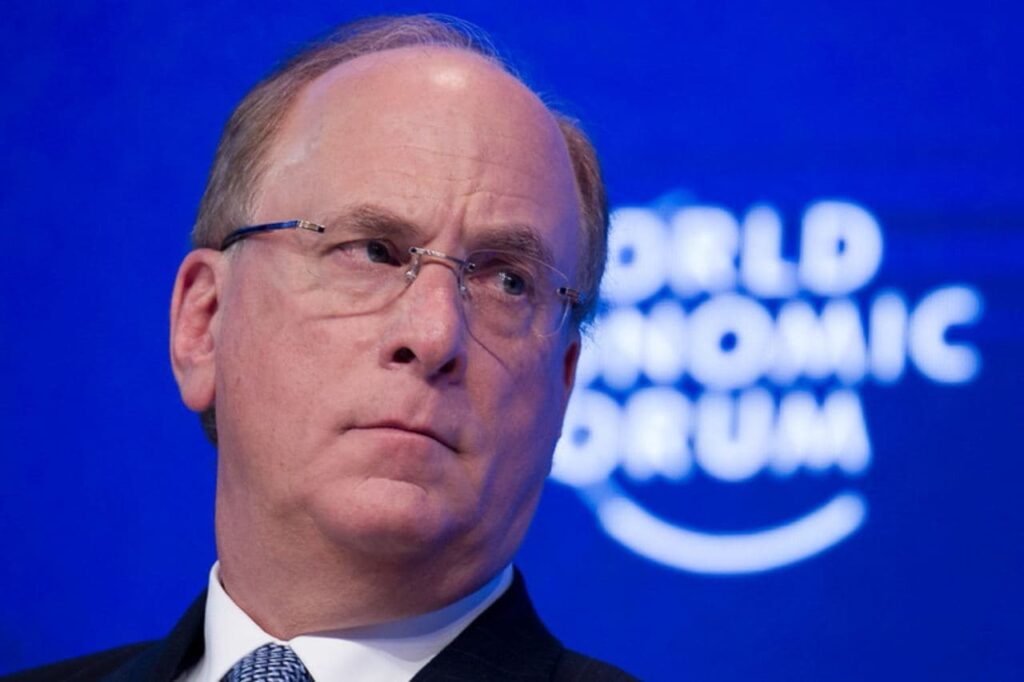

BlackRock CEO Larry Fink is the latest influential figure in the financial space to warn of an impending global recession triggered by surging oil prices amid ongoing geopolitical tensions in the Middle East.
In an interview with the BBC’s Big Boss Interview podcast published on March 25, Fink outlined two contrasting scenarios for the global economy depending on how the conflict involving Iran unfolds.
He emphasized that prolonged disruption to oil supplies could push crude prices to extreme levels, with severe consequences for global growth.
Fink said a full de-escalation and Iran’s reintegration into the global economy could drive oil prices down sharply, potentially to around $40 per barrel, boosting supply, supporting economic growth, and easing pressure on energy-dependent sectors.
However, a partial resolution, where conflict subsides, but Iran continues to threaten trade routes, the Strait of Hormuz, and Gulf Cooperation Council stability, poses a greater risk.
In that scenario, he warned oil could remain elevated above $100 and approach $150 per barrel for years, with serious consequences for the global economy, likely triggering a steep recession.
He added that oil holding near $150 would almost certainly result in a global downturn, as high energy costs would disproportionately impact lower-income populations and raise production and transportation expenses across industries.
“If there is a cessation of war, and yet Iran remains a threat, a threat to trade. <…> I would argue that we could have years of oil prices above $100, closer to $150 oil, which has profound implications in the economy. <…> We will have global recession,” Fink said.
Rising recession probability calls
Fink joins other market players in warning that oil prices could act as a catalyst for a potential economic downturn. In this context, as reported by Finbold, Goldman Sachs lifted its probability of a United States recession to 30%, citing the oil-driven surge in inflation and a downward revision to growth expectations.
Meanwhile, JPMorgan has placed the odds at 35%, cautioning that markets may still be underestimating the drag from a sustained energy shock.
The comments come as oil markets have shown significant volatility in recent weeks due to developments in U.S.-Israeli actions involving Iran.
While speculation around ceasefires led to modest price dips on Wednesday, uncertainty remains high given the strategic importance of key shipping routes for global energy flows.