
Chainlink has long been viewed as core infrastructure for decentralized finance, securing price feeds and off-chain data across Ethereum and other networks. Even so, as market conditions remain volatile and many large-cap tokens trade well below prior highs, participation models tied closely to native-token price performance are drawing closer scrutiny.
This shift has prompted some Chainlink holders to explore alternative participation structures that emphasize capital flexibility and Bitcoin-denominated outcomes. One project increasingly appearing in that conversation is Bitcoin Everlight, which combines mobile-controlled node operations with BTC rewards generated from transaction routing.
How Chainlink Native Staking Works Today
Chainlink offers native staking through its Staking v0.2 platform, currently live on Ethereum mainnet. As of February 2026, the staking system operates with a total pool capacity of 45 million LINK, of which 40.875 million LINK is allocated to community stakers and the remainder reserved for node operators. At this stage, staking is focused on providing cryptoeconomic security for the ETH/USD Data Feed.
The effective reward rate for community stakers is variable, currently around 4.32% APY. This figure is derived from a base emissions rate of 4.5%, with 4% of those rewards redirected to node operators as a delegation fee. Because rewards are distributed from a fixed pool, individual yields fluctuate depending on overall pool participation levels.

Structural Limits on LINK-Based Participation
Participation in Chainlink staking includes several protocol-level constraints designed to encourage decentralization and network stability. Community members are capped at 15,000 LINK per wallet, and pool access operates on a first-come, first-served basis. Once the 45 million LINK limit is reached, new participants can only enter when existing stakers withdraw.
Unstaking is subject to a 28-day cooldown period, followed by a seven-day claim window. In addition, rewards are phased in through a 90-day ramp-up period, during which stakers gradually earn a higher percentage of their attributed rewards. Beyond base emissions, Chainlink’s Rewards program has distributed non-transferable units called Cubes to eligible stakers, redeemable for tokens from selected ecosystem partners.
Why Some LINK Holders Are Exploring Bitcoin-Denominated Participation
Bitcoin Everlight operates as a lightweight transaction layer that functions alongside Bitcoin without modifying Bitcoin’s protocol or consensus. The network focuses on transaction routing, quorum-based confirmations measured in seconds, and predictable micro-fees, with optional anchoring back to Bitcoin for settlement reference.
This structure has attracted attention during turbulent markets because participation rewards are paid in Bitcoin generated from real network activity. If broader conditions recover, network usage compounds participation value. If markets remain compressed, operators continue earning BTC tied to routing performance instead of waiting on price appreciation.
How Everlight Nodes Generate Bitcoin-Based Rewards
Everlight is operated by participants running specialized routing nodes rather than full Bitcoin nodes. Operators commit BTCL to the network, help route transactions, maintain uptime, and contribute to performance metrics. Compensation is paid in Bitcoin and calculated using routing volume, uptime coefficients, and participation tier.
Nodes are organized into Light, Core, and Prime tiers. Higher tiers assume greater routing responsibility and receive priority access and a larger share of BTC-denominated rewards. There is no mandatory lock period, allowing operators to enter or exit freely while rewards reflect active contribution. Current network estimates indicate Bitcoin-denominated annualized returns reaching up to 21%, derived from live transaction usage and operator performance, without fixed or guaranteed payouts.
Chainlink vs. Bitcoin Everlight Participation Models
The contrast drawing attention from LINK holders centers on reward denomination, flexibility, and scalability.
| Feature | Chainlink Staking | Bitcoin Everlight |
| Primary Purpose | Oracle security | Bitcoin transaction routing |
| Reward Denomination | LINK | Bitcoin (BTC) |
| Typical Yield | ~4.32% variable | Performance-based, up to 21% |
| Pool Constraints | Fixed 45M LINK cap | No global participation cap |
| Lock / Cooldown | 28-day unstake + ramp-up | No mandatory lock |
| Retail Node Access | Limited | Open participation |
| Mobile Node Management | No native app | Native Everlight app |
| Bitcoin Exposure | Indirect | Direct via rewards |
Mobile Node Control Through the Everlight App
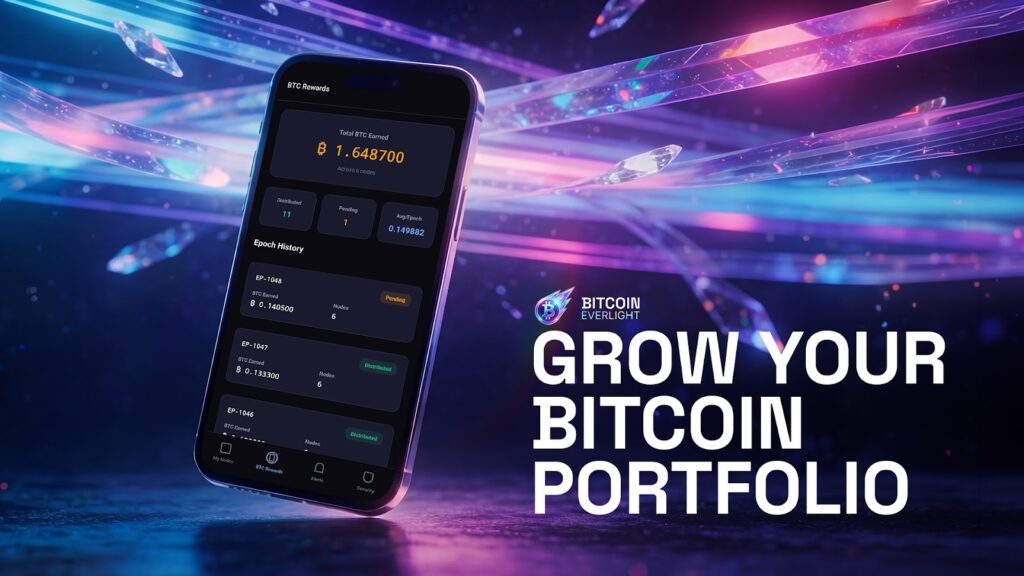
A key distinction for Everlight participants is mobile-first access. The Everlight app enables operators to monitor node status, uptime, and routing activity directly from a smartphone. BTC earned from network usage is displayed within the interface, alongside performance metrics and tier status.
Live alerts notify operators of uptime disruptions, routing changes, and BTC distribution events. This approach lowers operational friction for users accustomed to managing crypto exposure through mobile applications while still participating in network infrastructure.
A recent explainer by Crypto Sister walks through how operators track BTC earnings, monitor node performance, and interact with the Everlight network through the app interface.

Presale Structure and Security Transparency
BTCL operates with a fixed supply of 21,000,000,000 tokens. Allocation is defined in advance: 45% presale, 20% node rewards and network incentives, 15% liquidity provisioning, 10% team allocation under vesting, and 10% ecosystem development and treasury.
The presale follows a 20-stage structure and is currently in Phase 3 at a price of $0.0012. Presale allocations release 20% at token generation, with the remaining 80% distributed linearly over six to nine months. Team allocations follow a 12-month cliff with a subsequent 24-month vesting period. BTCL utility is limited to transaction routing fees, node participation thresholds, performance incentives, and anchoring operations.
For participants evaluating operational and custody-related risk, Bitcoin Everlight has completed multiple independent security reviews, including a SpyWolf and a SolidProof audits. Team identity has been verified through SpyWol and Vital Block team validations.
See how the Bitcoin Everlight app enables BTC-based participation beyond traditional staking models.
Website: https://bitcoineverlight.com/
Security: https://bitcoineverlight.com/security
How to Buy: https://bitcoineverlight.com/articles/how-to-buy-bitcoin-everlight-btcl