
OpenAI’s leading algorithm, ChatGPT, predicts that SpaceX’s (NASDAQ: SPCX) stock is going to maintain its upward trajectory by mid-October 2026, extending September gains that have been pushing the price toward $150.
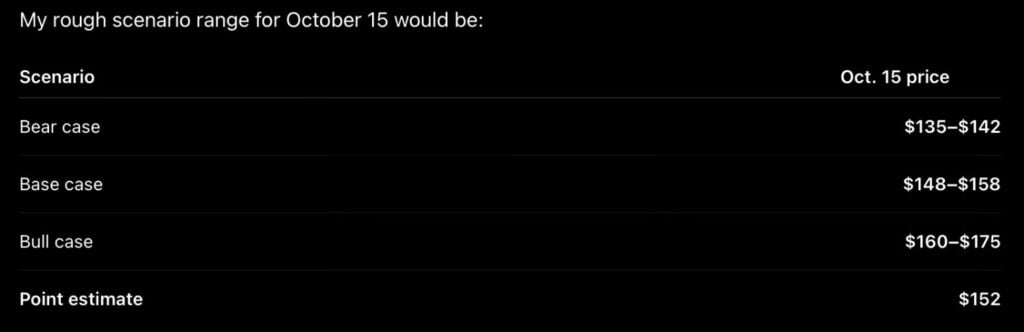
Specifically, the chatbot predicted that SpaceX stock was most likely to trade in the $148-$158 area by October 15, 2026, based on a forecast that sees the company holding close to its current levels despite potential volatility from upcoming share unlocks.
As for the point estimate, the algorithm narrowed the prediction down to $152. With the shares currently trading around $148.68, the figure represents roughly 2.2% upside in the next 17 days.
According to the large language model (LLM), one factor that could influence SpaceX shares in the coming weeks is the company’s staggered post-IPO lockup schedule. In other words, additional insider shares becoming eligible for sale as part of an established unlock schedule could increase the available supply of SPCX shares and create short-term selling pressure.
At the same time, increased representation in the NASDAQ-100 could provide additional demand from funds tracking the index. In turn, that could help offset some of the potential pressure from newly unlocked shares.
AI predicts SpaceX stock price target on October 15
Overall, while positive, the $152 estimate points to relatively limited upside from current levels, and the stock’s direction is likely to depend on the balance between additional share supply, index-related demand, and broader investor sentiment toward SpaceX.
However, the forecast places the base case scenario in a broader range of $135 to $176, with a bearish scenario of $135 to $142 and a bullish scenario of $160 to $175. As ChatGPT argued, the bullish range could come within reach if the stock absorbs the October 9 share unlock without significant selling pressure.
Notably, though, for the stock to reclaim the upper levels of that range – roughly 18% upside from the current level – demand linked to SpaceX’s higher NASDAQ-100 weighting and a supportive broader technology market will have to add further upside.
Featured image via Shutterstock