

Silver’s surge above the $100-per-ounce mark has pushed the metal into historically extreme territory, prompting warnings from Mike McGlone, senior commodity strategist at Bloomberg Intelligence.
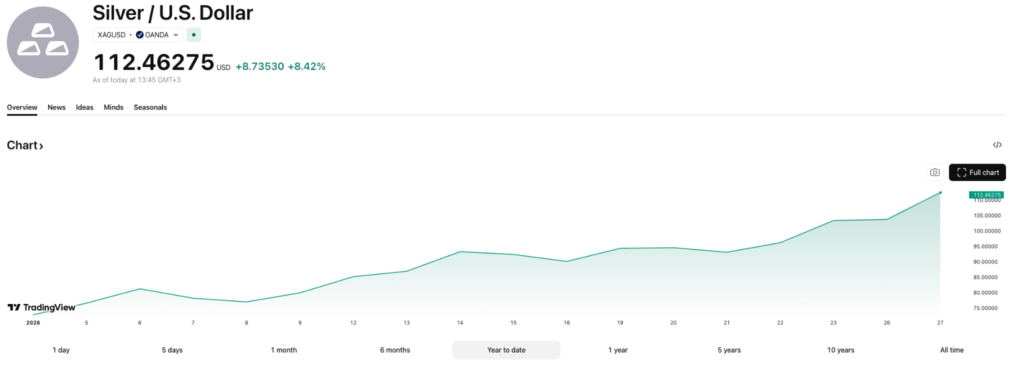
In this context, the expert cautioned that the extreme rally in the white metal could leave investors exposed to significant downside volatility. Notably, as of press time, silver was up more than 8% on the day, trading at $112.
In an X post on January 26, McGlone’s analysis of long-term silver price data showed that the metal is trading at an unusually elevated premium relative to its 60-month moving average. This condition has occurred only three times in modern market history.
Since 1954, silver has traded through 855 monthly price periods, yet only during late 1979 and early 1980 did prices stretch to levels comparable to those seen today.
Those earlier episodes ended painfully, noting that at the time silver averaged about $34 per ounce, peaked near $50, and then entered a prolonged decline that ultimately drove prices down to roughly $3.56 by 1993.
Silver bottoming signal
Now, after bottoming near $28 in 2025, prices have more than tripled to reach triple-digit territory, pushing valuations far above long-term norms. McGlone noted that the metal’s present premium, roughly 3.8 times its long-term average, places it among the most stretched points in decades.
“Silver facts may suggest potential pain following the gain above $100 – Of the 855 months in our database since 1954, silver has stretched beyond its current 3.8x premium,” McGlone said.
Such extremes, he warned, tend to create conditions where volatility intensifies and both bullish and bearish positions are vulnerable.
Overall, the speed of silver’s rally has drawn comparisons to past speculative surges, with gains outpacing many traditional assets and even other precious metals.
Retail participation, momentum trading, and technical factors have amplified price moves, making sentiment as influential as fundamentals.
At the same time, inventories in key trading hubs have tightened amid strong physical demand and speculative flows, while supply constraints limit how quickly producers can respond.
Despite structural support from industrial demand and persistent deficits, analysts warn that volatility is likely to rise.
Prices sit well above historical norms, leaving the market vulnerable to corrections if sentiment shifts, supply pressures ease, or demand growth slows.
Featured image via Shutterstock