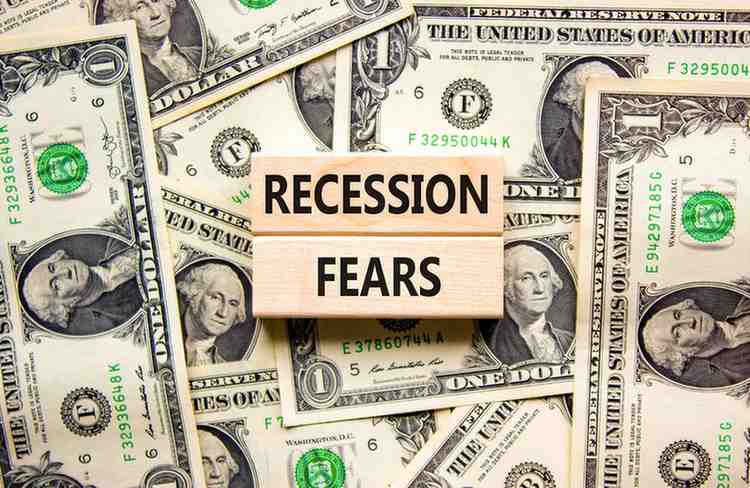

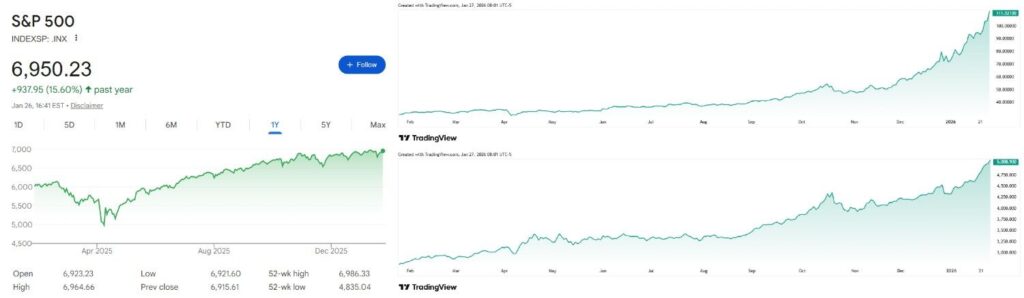
While major safe-haven assets, like Gold and Silver, and benchmark indices for risk assets, including the S&P 500, have done little other than rally in recent years, concerns regarding a looming recession have been piling up.
The latest to warn that ‘the countdown to total collapse has begun’ was a prominent X user and self-proclaimed veteran trader pseudonymously known as NoLimit on the platform.
Soon after claiming they were given dire information by a friend with contacts within the White House on January 26, NoLimit made an alarming social media post outlining the many reasons why the U.S. – and likely the global – economy is nearing a crash.
Patterns hint 2026 will be the repeat of 2008 Great Recession
According to the trader, patterns observable in the United States in late 2025 and early 2026 are concerningly close to the ones seen in 2008 amidst the Great Recession.
Key indicators identified include the Fed’s recent emergency repo facility spike, the growing imbalance between Gold and the S&P 500, and their ratio recently falling below a key support, and the so-called Sahm Rule triggering a significant warning.
The Sahm Rule is an early recession warning indicator that measures spikes in the three-month national unemployment moving average (MA). Specifically, the alarm sounds once the metric rises 0.50% or more compared to the 12-month low, and it has, in recent months, been hovering in the ‘danger zone’ between 0.35% and 0.50%.
The veteran trader and X influencer also highlighted the ‘real-estate debt bomb,’ external instability driven by the Justice Department’s (DoJ) criminal investigation of Fed Chair Jerome Powell, and the recent increase in major business bankruptcies as additional warning signs.
Veteran trader warns of USD sell-off
Despite the many noted signals potentially pointing to an incoming recession, the influencer identified the global trend toward de-dollarization as the biggest risk factor for most investors, urging them to get rid of their USD.
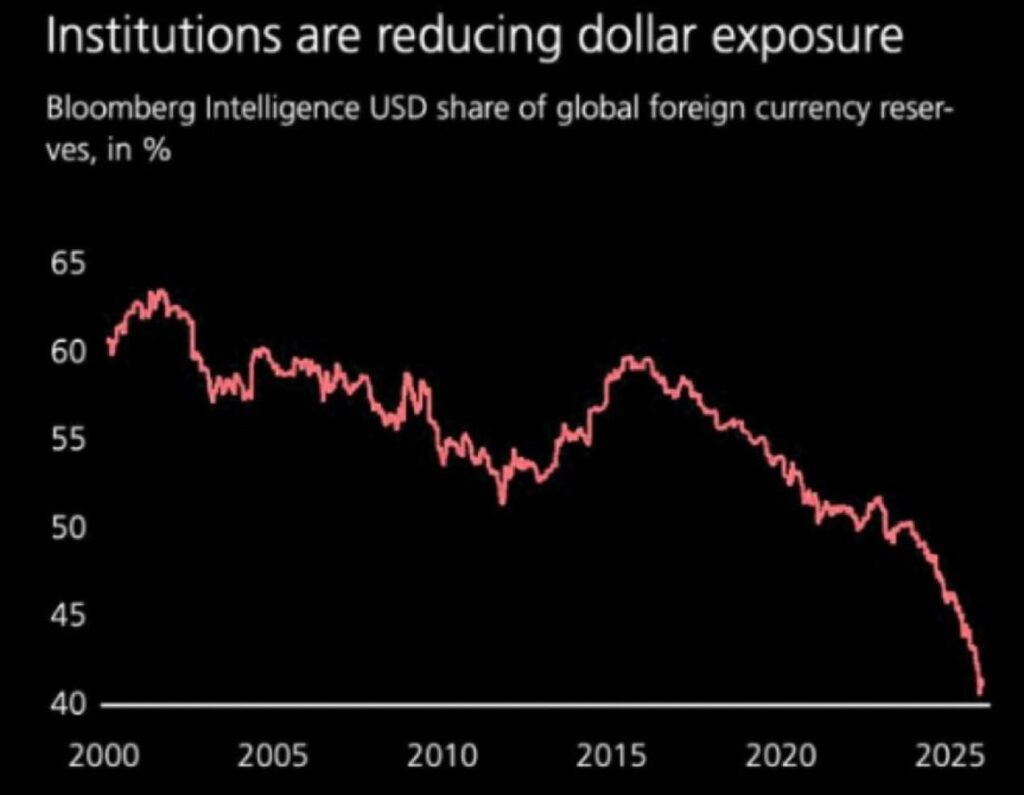
Backing this recommendation, NoLimit pointed toward the growing number of settlements between countries like China and Russia that do not involve the American currency. On the other hand, the overall usage of the greenback in international settlements hit a record high in December, according to a January 22 Bloomberg report.
While the trend has definitely been observable, it is worth noting that the global share of reserve assets held in USD did experience a substantial drop in the last 30 years, but that the dollar still accounts for about 40% of such holdings.
The more interesting side of the X post – and the most controversial – is the allegation that the ‘White House is in shambles’ and has no plan as it is anticipating the U.S. government would face a new shutdown as soon as Saturday, January 31.
Indeed, the main reason, as it turns out, for the recommendation to offload USD stems from the allegation that the Trump Administration has lost control of the situation in the country and lacks a plan other than to keep asserting that everything will work out.
Did the Trump Administration really lose control?
Notably, the discussion about the state of the White House is backed by the supposed source with insider knowledge mentioned in the January 26 X post. At press time, it is unclear if such a source exists and if its information is reliable.
It shall become clearer – albeit only through circumstantial evidence – in the coming months if the dire analysis has merit.
Economic uncertainty and instability running rampant in January 2026
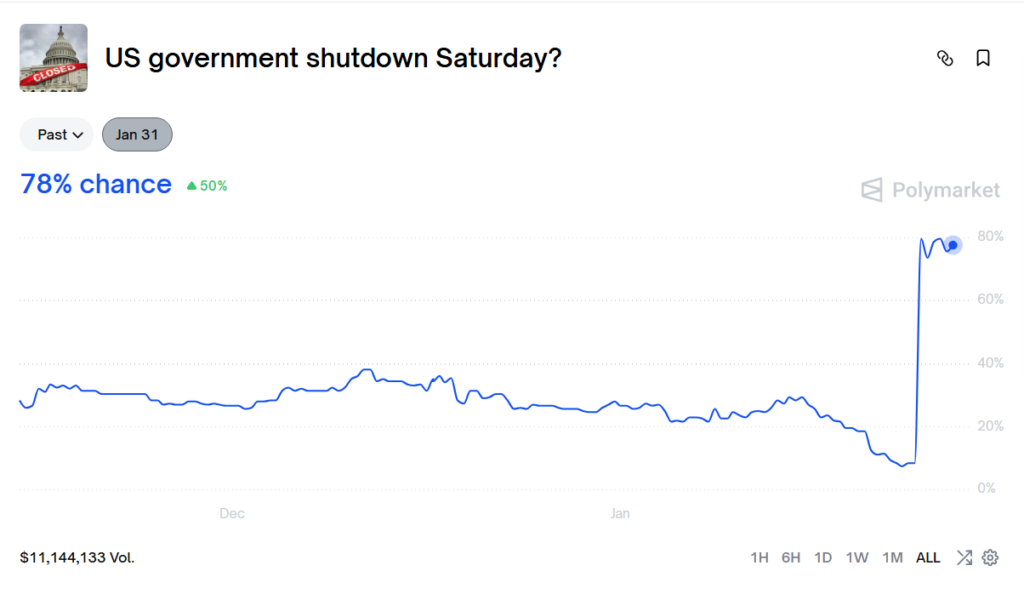
What is evident at press time on January 27, however, is that there is imminent and widespread uncertainty and instability in the American economy. The betting public appears convinced the U.S. government will be shut down on Saturday, as the odds of such an event on Polymarket recently rocketed to about 80%.
President Donald Trump’s address on the economy, scheduled for 2 PM EST on January 27, presents another imminent risk factor.
Though some believe the commander-in-chief will be discussing the seemingly imminent shutdown, other observers have cited it as a de facto kick-off event for the midterms.
Elsewhere and as important on-shore events remain, it is worth noting that current events in the Middle East – the apparent buildup of American forces around Iran – represent another potentially imminent disruptive event for global markets.
The AI boom and bubble remain salient long-term risks
In the longer-term, the perceived artificial intelligence (AI) bubble remains at play as OpenAI’s planned introduction of advertisements in ChatGPT – in direct contradiction to Sam Altman’s previous opposition to such forms of monetization – hints at a possible shortage of money despite the scale of agreed-upon investments.
Considering the fact that the AI boom enabled companies like Nvidia (NASDAQ: NVDA) to rival the German economy – one of the largest – in scale, any disturbances in the sector could indeed trigger a recession.
Still, it is worth pointing out that most technology executives, such as Microsoft’s (NASDAQ: MSFT) Satya Nadella, or investment moguls like BlackRock’s (NYSE: BLK) Larry Fink, remain adamant that there is no bubble and that the greater issue is that not enough money is going toward the boom.
Their conviction, however, can be doubted as these executives have a vested interest in keeping the sector growing and average investors convinced that the risks are negligible for as long as possible.
Featured image via Shutterstock