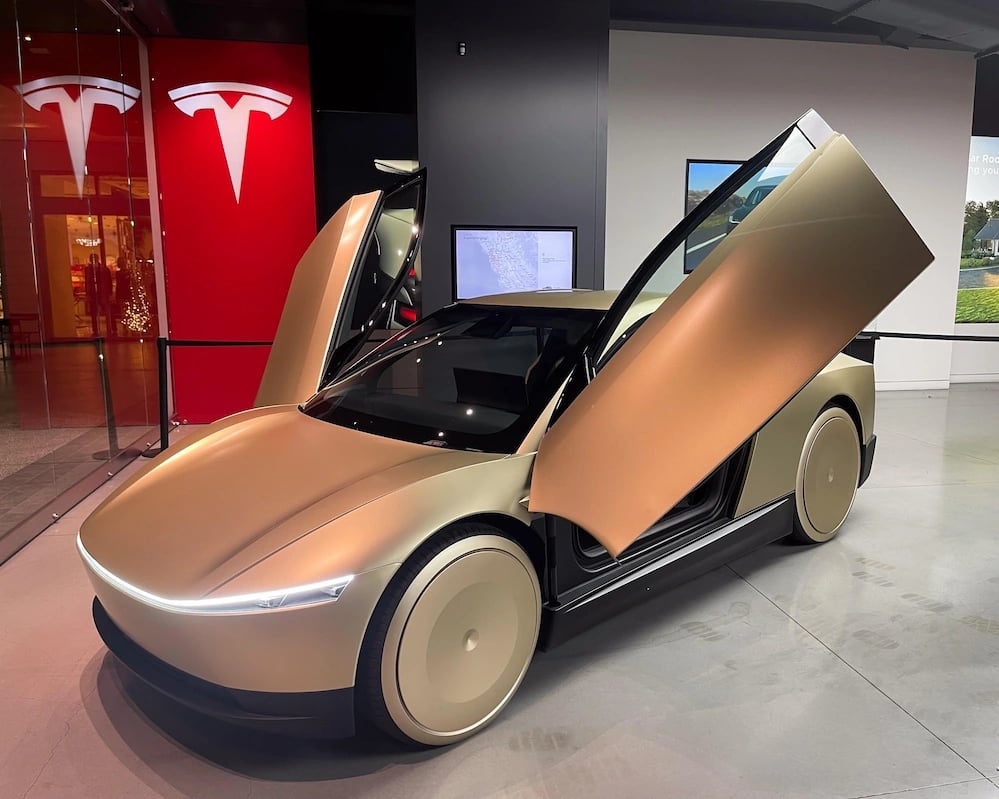

Tesla Inc. (NASDAQ: TSLA) has begun mass production of the Cybercab, an autonomous robotaxi, at Gigafactory Texas.
Tesla is now manufacturing the two-seat vehicle, which runs on its Full Self-Driving (FSD) neural network, in volume, according to a reshared X post by Elon Musk, the company’s Chief Executive Officer (CEO), on April 24.
The point-of-view (POV) video of Cybercab, without a steering wheel or pedals, exiting the factory, revealed its ability to navigate through different weather conditions, both day and night.
The milestone marks a strategic transition from prototype testing to volume manufacturing. Furthermore, the first production units of Tesla Cybercab began in February 2026, but the continuous volume manufacturing started in April.
Notably, Tesla first unveiled the Cybercab at its “We, Robot” event in October 2024, using 19 units to transport guests for over 3 hours.

Here is what to expect from Tesla Cybercab
The purpose-built Cybercab will feature all-around cameras without side mirrors, as it does not require human intervention. The vehicle will primarily use inductive wireless charging, which is compatible with Tesla V4 Superchargers, the company’s fourth-generation fast-charging network.
The single rear-mounted electric motor can accelerate 0 to 60 mph in under 7 seconds, and reach a top speed of 100 mph. As for the early production units, Tesla targets about 200 miles (320 km), with potential improvements in the future. With these features, the Tesla Cybercab is estimated to cost under $30,000.
What’s the expected market impact on TSLA?
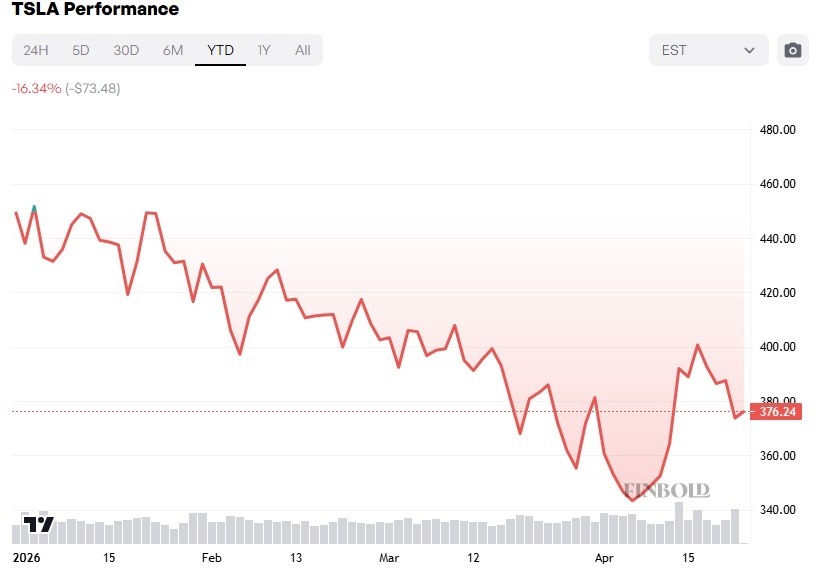
The mass production of the Tesla Cybercab could boost the company’s stock market, as traders may intensify speculation. Year-to-date (YTD), TSLA stock dropped over 16%, trading at $373.48 at press time.
However, during this week’s earnings call for first-quarter results, Musk stated that robotaxis will contribute little revenue in 2026 but may significantly impact revenue in 2027.