

Summary: This article ranks seven blockchain companies for different Web3 needs. The list includes TokenMinds, Alchemy, CertiK, OpenZeppelin, Consensys, Chainalysis, and DappRadar. TokenMinds supports adoption, while Alchemy and Consensys support infrastructure. CertiK and OpenZeppelin focus on security, while Chainalysis supports compliance. DappRadar helps users discover and track blockchain projects across ecosystems. These companies offer unique solutions for industries like finance, gaming, and supply chain. They will play a crucial role in the success of your Web3 adoption journey. The article also explains adoption layers, partner selection, and emerging trends. Key trends include RWA tokenization, AI automation, and institutional DeFi growth.
Overview Table: Top Blockchain Companies & Their Focus
This table provides a quick overview of the top 7 blockchain companies in 2026. It shows their main areas of focus, from decentralized networks to blockchain security. Companies can use it to identify key partners for their Web3 journey.
| Rank | Company | Innovation Focus | Category/Sub‑specialty |
| 1 | TokenMinds | Blockchain Development & Web3 Adoption Support Product | Enterprise Web3 Partner |
| 2 | Alchemy | Blockchain Infrastructure & Developer Tools | Blockchain Infrastructure Innovator |
| 3 | CertiK | Smart Contract Security & Onchain Monitoring | Blockchain Security Leader |
| 4 | OpenZeppelin | Smart Contract Security | Blockchain Security Leaders |
| 5 | Consensys | Web3 Infrastructure | Enterprise Web3 & DeFi Solutions |
| 6 | Chainalysis | Blockchain Data & Analytics | Blockchain Insights & Analytics |
| 7 | DappRadar | Web3 Project Discovery & Analytics | Analytics Blockchain Project Discovery Platform |
What Are Blockchain Companies and Why They Matter
The global blockchain technology market is projected to be worth about USD 47.96 billion in 2026. This signals the rapid growth and increasing importance of blockchain technology across industries.
Blockchain companies create decentralized solutions using blockchain technology. These companies are essential for industries. They help businesses improve security, transparency, and efficiency.
- Improve security through decentralized systems that lower the risk of breaches.
- Enhance transparency by providing verifiable, immutable transaction records.
- Increase efficiency with smart contracts and automation, reducing human errors.
- Drive innovation in industries like finance, supply chain, and healthcare.
- Support digital transformation to Web3 and decentralized technologies.
Blockchain companies are critical for enterprises looking to stay competitive in the digital age.
Blockchain Company Categories & Examples
| Category | Role Description | Example Companies |
| Decentralized Networks | Power blockchain protocols for dApps and decentralized assets. | Ethereum, Solana |
| Blockchain Development & Infrastructure | Build blockchain platforms for enterprises to adopt Web3. | TokenMinds, Consensys |
| Security & Auditing | Provide auditing and security tools for blockchain operations. | OpenZeppelin, Certik |
| Exchanges & Marketplaces | Offer platforms to buy, sell, and trade digital assets. | OpenSea, Binance, Coinbase |
| Blockchain Analytics & Data | Deliver tools for analyzing and monitoring blockchain data. | Chainalysis, Glassnode |
A Breakdown of the Most Innovative Blockchain Companies in 2026
1. TokenMinds: Most Innovative Blockchain Development Company
| Main Focus | Best Fit For |
| Custom blockchain development RWA tokenization platforms Tokenization infrastructure DeFi integration Smart contract design Token and stablecoin development • AI-driven financial automation | Banks Neobanks Payment providersAsset managers exploring Web3 |
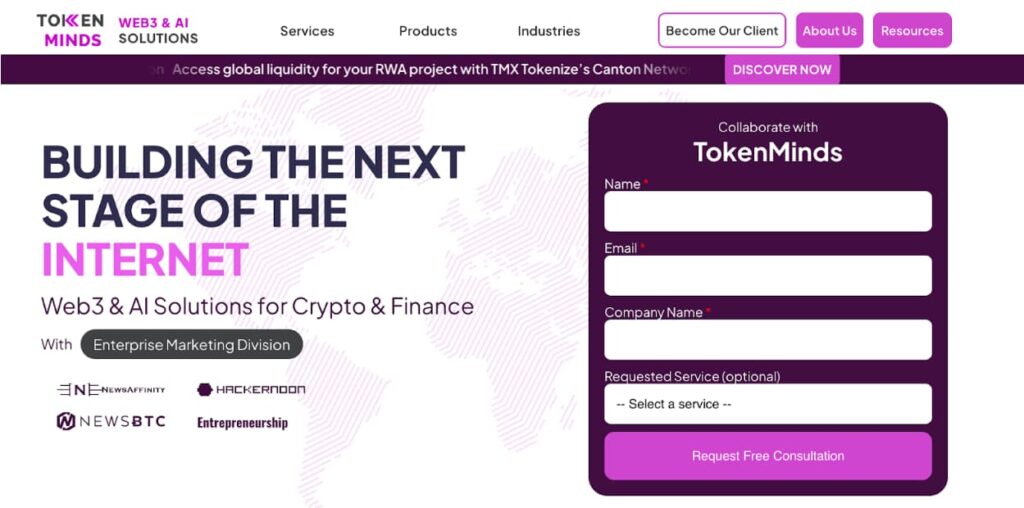
TokenMinds is a Singapore-based developer of blockchain and AI. They assist organizations and financial institutions in migrating off-legacy solutions to blockchain-based solutions. TokenMinds specializes in tokenization, integration of DeFi and custom blockchain development. All their solutions have been designed to be in controlled settings.
Why They’re Innovative:
TokenMinds developed TMX Tokenize to enable financial institutions to tokenize real-world assets. It can tokenize securities, real estate, commodities, and more. Their TMX Agentic Finance solution automates financial processes. Those processes covered include payments, loans, and customer interactions. These innovations reduce operational costs and enhance customer experiences.
Best For:
TokenMinds is particularly well-suited for financial institutions venturing into the Web3 space. This encompasses banks, neobanks, and payment providers. Asset managers looking into tokenization will also find it advantageous.
Examples / Proof Points:
- Khan Bank: TokenMinds built an agentic payment flow for Khan Bank. They built agentic AIs to support the full payment journey. It included a Front-man Agent to guide the checkout flow. It also included a Bank-man Agent to prepare the payment process. Each transaction required cryptographic approval from the user. The payment system ran on a private Hyperledger Fabric with chaincode rules. This made the flow more controlled, private, and auditable. TokenMinds also built AI recommendations during the shopping process. These recommendations used Data Lakehouse signals and Zary API. After approval, TokenMinds integrated Digi-Pay via Apigee for settlement.
- UXLink: TokenMinds built an API-first backend and AI agent layer. The system automated X tasks with quotas, guardrails, and reviewable results.
- MMAON: TokenMinds built a Web3 social platform for fighters and fans. It included wallet support, token tipping, KYC, MFA, and content tools.
2. Alchemy: Blockchain Infrastructure Innovator
| Main Focus | Best Fit For |
| Blockchain APIs Node infrastructure Data APIs Webhooks Smart wallets Rollup tooling | Web3 developers Product teams building onchain apps Companies needing blockchain infrastructure |
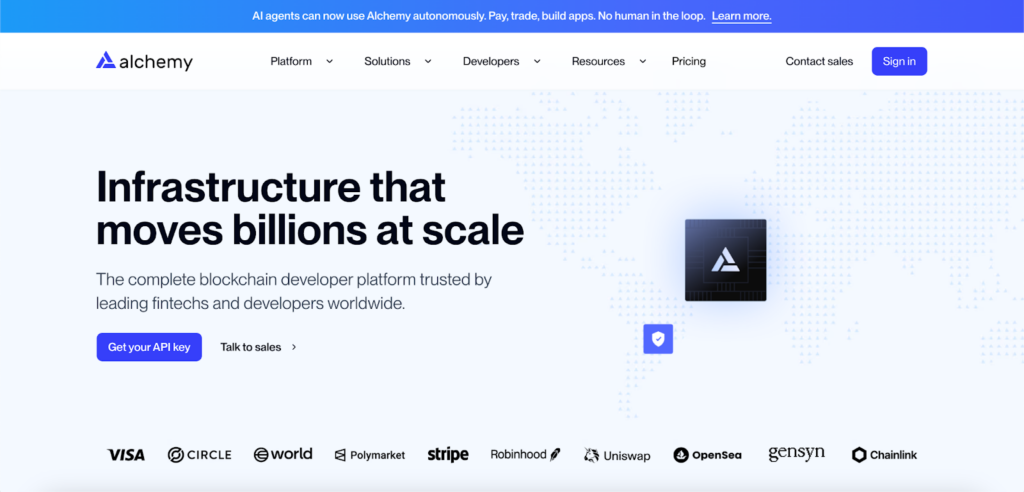
Alchemy is a blockchain infrastructure company. It provides developer tools for building onchain applications. Its platform includes APIs, smart wallets, webhooks, and rollup tooling.
Why They’re Innovative:
- Alchemy provides a full developer platform for on-chain products.
- Its tools support APIs, smart wallets, and real-time webhooks.
- The company also supports rollup development and blockchain data access.
Best For:
Alchemy is best for teams building blockchain applications. It also fits companies needing reliable Web3 infrastructure.
Examples / Proof Points:
- Alchemy’s infrastructure moves billions at scale. Its smart wallets power more than 16 million accounts.
3. CertiK: Blockchain Security Leader
| Main Focus | Best Fit For |
| Smart contract audits Formal verification Onchain monitoring Security ratings KYC services Risk analytics | Blockchain projects DeFi protocols Exchanges Teams needing security review |
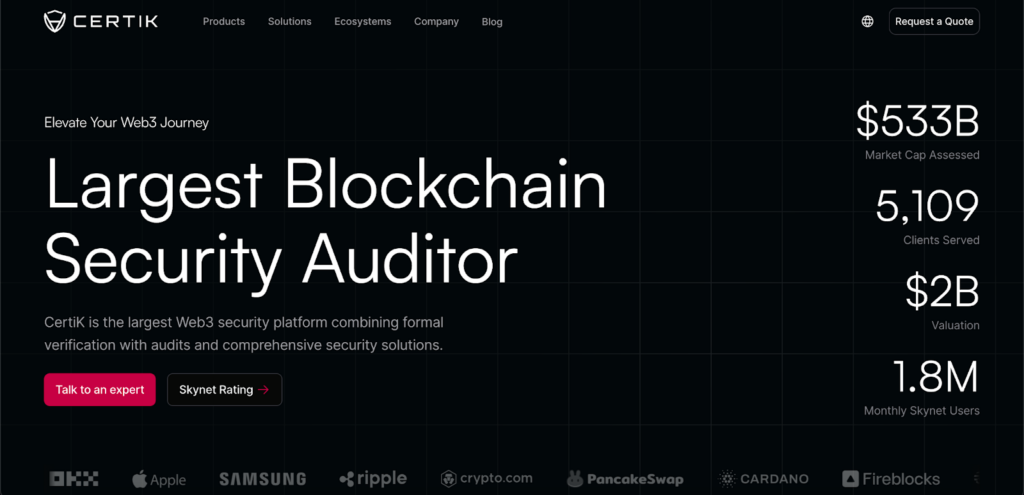
CertiK is a Web3 security company. It provides audits, formal verification, and security products. Its platform also includes monitoring, ratings, and KYC services.
Why They’re Innovative:
- CertiK combines audits with formal verification and monitoring tools.
- Its Skynet platform provides real-time security insights and alerts.
- The company also offers security ratings and KYC verification.
Best For:
CertiK is best for projects needing strong blockchain security. It also fits teams needing monitoring and due diligence tools.
Examples / Proof Points:
- CertiK describes itself as the largest Web3 security platform. Its Skynet platform covers more than 17,000 projects
4. OpenZeppelin: Smart Contract Security Leader
| Main Focus | Best Fit For |
| Smart contract security libraries Smart contract audits Security testing toolsGovernance frameworks Upgradeable contract standards | DeFi protocols Token issuers Blockchain startupsEnterprises requiring audited contracts |
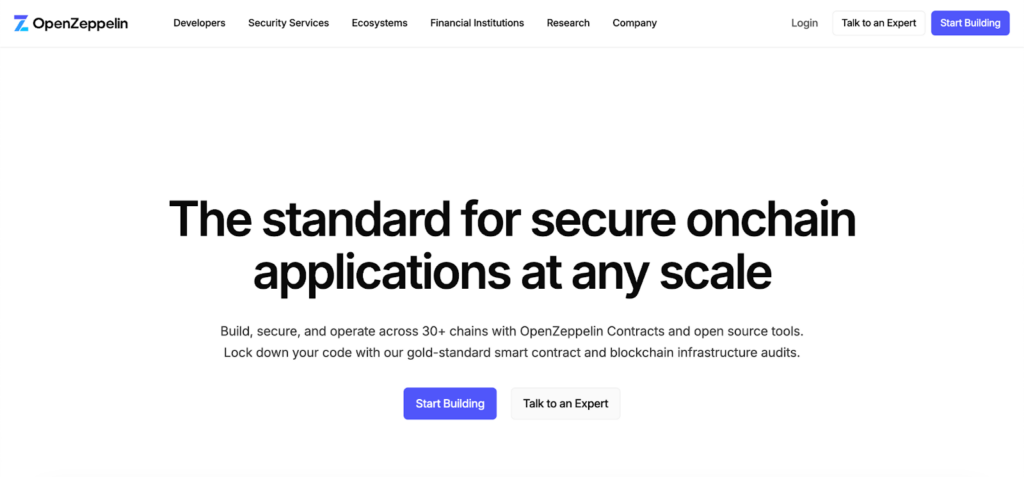
OpenZeppelin is a firm that provides security solutions in blockchain. It develops audit services and smart contract libraries. Its contract libraries are very popular in Web3 projects. Governance and upgrade structures are also offered by the company.
Why They’re Innovative:
- OpenZeppelin is the leader in smart contract security. Its OpenZeppelin Contracts library is widely used across the blockchain space. It provides secure and reusable smart contract code.
- The company offers security audits and consulting services. These services help ensure the integrity of smart contracts before deployment.
Best For:
OpenZeppelin is suitable for blockchain developers. It is also suitable for enterprises that need secure smart contracts. These enterprises also require protection for decentralized applications.
Examples / Proof Points:
- OpenZeppelin has secured over $50 billion worth of digital assets through its security audits. It is trusted by major blockchain projects like Compound and Uniswap.
5. Consensys: Web3 Infrastructure Innovator
| Main Focus | Best Fit For |
| Ethereum infrastructure tools MetaMask wallet ecosystem Infura node infrastructure Enterprise blockchain solutions Developer tooling | Enterprises building on Ethereum Web3 developers Financial institutions integrating Ethereum |
Consensys is a blockchain software company. It develops Web3 infrastructure and developer-tools. It has such products as MetaMask and Infura. The firm is a major contributor of Ethereum ecosystem.
Why They’re Innovative:
- MetaMask wallet is best known at Consensys. Among the most popular Ethereum Web3 wallets is MetaMask.
- The company also develops Infura. Infura is an infrastructure platform. It simplifies blockchain access for developers and enterprises.
Best For:
Consensys is suitable for enterprises building decentralized applications. It is also suitable for companies integrating with Ethereum’s ecosystem. Developers seeking tools for Web3 development can also benefit.
Examples / Proof Points:
- Consensys has supported numerous enterprise blockchain implementations. It is also a key player in the development of Ethereum 2.0.
6. Chainalysis: Blockchain Data & Analytics Leader
| Main Focus | Best Fit For |
| Blockchain analytics platform Transaction monitoring tools Compliance and AML solutions Crypto investigations support Risk intelligence dashboards | Regulators Banks Exchanges Compliance teams |
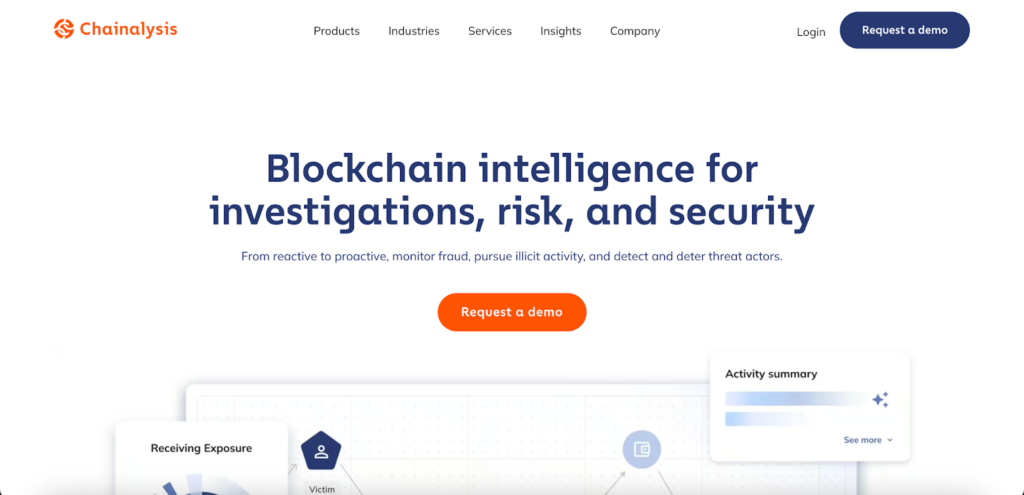
Chainalysis is a blockchain data and analytics platform. It provides compliance and investigation software. Its tools support regulators and financial institutions. The company offers risk intelligence for digital asset markets.
Why They’re Innovative:
- Chainalysis offers blockchain forensics and compliance solutions. These solutions enable businesses to prevent fraud and comply with regulatory requirements.
- The company’s tools help financial institutions track digital asset transactions. The objective is for transparency and regulatory reporting.
Best For:
Financial institutions, regulators, and enterprises. Or similar parties that need to ensure compliance and track blockchain transactions.
Examples / Proof Points:
- Chainalysis’ tools are used by major regulators and financial institutions. It includes the FBI, Europol, and PayPal.
7. DappRadar: Blockchain Project Discovery Platform
| Main Focus | Best Fit For |
| Dapp discovery Web3 rankings NFT data DeFi insights Gaming analytics Blockchain data API | Web3 users Researchers Investors Teams tracking blockchain projects |
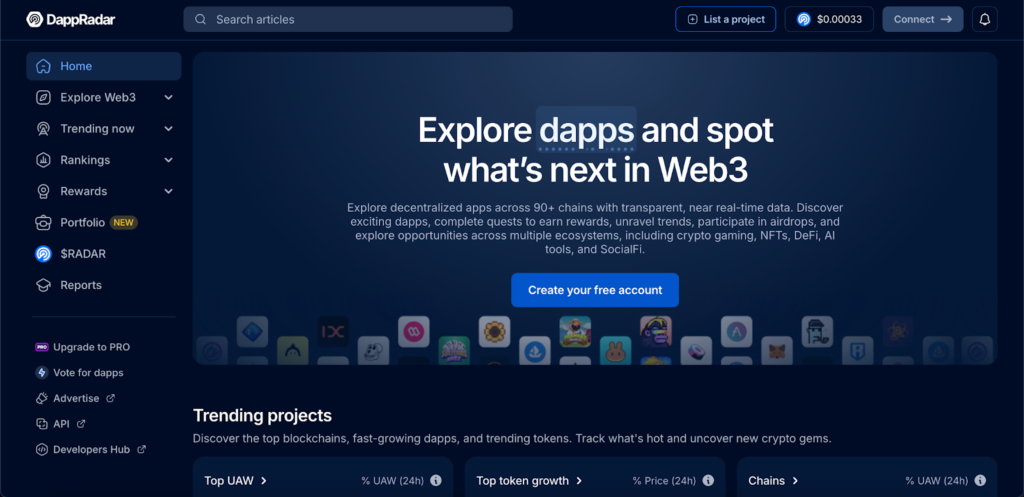
DappRadar is a Web3 discovery and analytics platform. It helps users discover dapps across multiple blockchains. The platform tracks projects across DeFi, NFTs, gaming, and tokens.
Why They’re Innovative:
- DappRadar positions itself as the World’s Dapp Store.
- It supports project discovery across more than 85 blockchains.
- The platform also tracks close to 18,000 applications.
- Its tools help users compare rankings and blockchain activity.
Best For:
DappRadar is best for users exploring blockchain projects. It also fits researchers and teams tracking Web3 activity.
Examples / Proof Points:
- DappRadar says one million users visit the platform each month. It also provides rankings for dapps, NFT collections, and blockchains.
How to Choose Blockchain Companies
With the development of the blockchain technology, Web2 companies should pay attention to the following when selecting a partner in 2026. The following factors will make them embrace blockchain solutions:
- Seamless Web3 Integration
Find partners with easy integration with blockchain into your systems. The right partner will make sure that blockchain transition will not cause disruptions to existing operations.
- Enterprise-Grade Security & Compliance
Make sure that the partner you settle on is well secured and abides by industry rules. This is particularly of importance to financial, health and logistic companies.
- Scalability & Performance
Select a partner that is capable of offering solutions that increase with your business. The blockchain system must be able to manage the high amounts of transactions and expand alongside your company.
- Customizable Solutions
Each business has its individual needs. Locate someone that can provide flexible blockchain solutions. Like integrating tokens and DeFi, industry-specific.
- Support for Digital Transformation
Blockchain adoption is part of a larger digital shift. Your partner should also help with marketing, community engagement, and educating your team on Web3.
Blockchain Layers You Should Know Before Adopting It
When selecting a blockchain partner, understanding the key layers in the Web3 ecosystem is essential. These layers support your transition to Web3 and ensure a successful adoption. Your partner should cover all these layers, providing a complete blockchain solution.
1. Infrastructure Layer
This layer connects applications to blockchain networks. It provides APIs, nodes, and developer tooling. Reliable infrastructure ensures stable on-chain operations.
Examples: Alchemy, Consensys
2. Application Layer
This layer delivers user-facing Web3 products. It includes decentralized applications and smart contract systems. This is where business logic operates onchain.
Examples: TokenMinds
3. Security Layer
This layer protects smart contracts and protocols. It prevents exploits and reduces operational risk. Security is critical before production deployment.
Example: CertiK
4. Compliance & Analytics Layer
This layer monitors blockchain transactions. It supports regulatory reporting and risk analysis. Institutions require visibility across digital asset flows.
Example: Chainalysis
5. Discovery & Data Layer
This layer aggregates blockchain ecosystem activity. It provides rankings and analytics across chains. It helps users track dapps and market movements.
Example: DappRadar
6. Adoption & Integration Layer
This layer bridges Web2 systems with blockchain infrastructure. It enables tokenization and enterprise integration. Adoption partners coordinate across all other layers.
Example: TokenMinds
Blockchain Companies’ Roles in 2026
In 2026, blockchain companies serve various roles within the Web3 ecosystem. These roles are categorized based on the solutions they offer. Below are the key categories, each with a clear definition of their role and example companies.
Categories of Blockchain Companies
- Decentralized Networks
They create blockchain protocols that ensure transparency, security, and scalability in decentralized systems.
- Blockchain Development & Infrastructure
These companies develop solutions that enable businesses to integrate blockchain into their systems.
- Security & Auditing
They provide the necessary tools for auditing. It can help ensure security, and maintain compliance in blockchain operations.
- Exchanges & Marketplaces
These companies facilitate the buying, selling, and trading of digital assets. They offer platforms for exchanging cryptocurrencies and NFTs, ensuring liquidity and market access.
- Blockchain Analytics & Data
They offer analytics and monitoring tools for blockchain forensics. It includes transaction tracking, and compliance with regulatory standards.
Emerging Blockchain Trends in 2026
Several blockchain trends are shaping the future in 2026. These trends go beyond the companies listed earlier and will drive the next phase of innovation:
- RWA Tokenization Growth
Tokenizing real-world assets like bonds, real estate, and commodities.
- AI + Blockchain Automation
Combining AI and blockchain to automate financial processes and improve efficiency.
- Modular Blockchain Architecture
Rollups and data availability layers enable more flexible, scalable blockchain solutions.
- Institutional DeFi Adoption
More financial institutions are adopting decentralized finance (DeFi) solutions for trading and lending.
- Blockchain for Digital Identity
Blockchain technology is increasingly used for secure, decentralized identity management.
These trends are key for businesses looking to stay ahead in the Web3 space.
Conclusion & How to Choose Your Blockchain Partner
The companies that are currently engaged in Web2 ought to define the objectives of their blockchain first. There are various blockchain companies needed to achieve different goals. Regarding the implementation of blockchain and tokenization of enterprises, one can collaborate with TokenMinds or Consensys. These companies contribute to the introduction of blockchain in the current financial system. In case the priority is blockchain infrastructure and developer tooling, companies will be able to cooperate with Alchemy. These platforms provide APIs, node access, and infrastructure for decentralized applications. If security and smart contract protection are required, companies can cooperate with CertiK. These companies offer audits, monitoring, and risk assessment services.
The selection of the partner is based on the business model and industry requirements. Objectives are essential in making the right decision regarding the blockchain partnership.
FAQs
What are the top blockchain companies in 2026?
The top blockchain companies in 2026 include TokenMinds, Alchemy, CertiK. Those companies are considered as the top blockchain companies in 2026.
Which blockchain company is best for enterprise adoption?
TokenMinds is ideal for enterprises. They offer customized blockchain solutions for financial institutions and businesses.
What companies use blockchain technology?
Many companies use blockchain, including banks, payment providers, supply chain, and healthcare organizations. They use blockchain to improve security, transparency, and efficiency.
Featured image via Shutterstock.