

Between 2024 and 2025, yield-bearing stablecoins emerged as one of the fastest-growing segments in crypto, becoming a multi-billion-dollar market. Their appeal is straightforward. Yield-bearing stablecoins promise something traditional stablecoins cannot: returns without directional crypto exposure. Instead of parking capital in non-yielding dollars, users could hold USD-pegged assets that represent a share in a protocol that generates interest through various strategies on the open market.
For much of 2024 and early 2025, this model worked exceptionally well. However, the sequence of individual business failures and dwindling performance caused by macro economic factors put the sector under scrutiny. In this article, we explore what brought yield-bearing stablecoins to success and, later, caused their fall from grace, and what projects can save the day in 2026 and beyond.
Why Yield-Bearing Stablecoins Took Off
The latest iteration of yield-bearing crypto started with projects built on delta-neutral strategies. Ethena’s USDe became the sector’s flagship example. Its model pairs spot crypto exposure with perpetual futures shorts, capturing funding and basis spreads while neutralizing price risk. During periods of strong market performance and elevated funding rates, this approach produced double-digit annualized yields.
At the same time, more conservative designs emerged. USDY from Ondo Finance took a fundamentally different approach, backing its stablecoin with short-term U.S. Treasuries and bank deposits. Rather than relying on the crypto market, USDY offered tokenized access to traditional, even conservative fixed-income instruments.
Together, these two archetypes, yield derived from crypto-based strategies, and returns from real-world assets (RWAs), defined the early yield-bearing stablecoins landscape.
The passage of the GENIUS Act, signed into law in July 2025, which explicitly introduced a regulatory framework for stablecoins, including their yield-bearing variants, reduced legal uncertainty around these products and made them more accessible to institutional and compliance-conscious investors. By showing that yield-bearing stablecoins could exist within a defined regulatory perimeter, the legislation helped legitimize the sector and contributed to its rapid adoption during the rest of 2025.
The November 2025 Turning Point
Sentiment shifted abruptly by November 2025, when a series of failures exposed the fragility of some yield-bearing assets.
A major exploit affecting Balancer liquidity pools in late October 2025 triggered a cascade of losses across protocols that depended on leveraged yield loops. Almost simultaneously, a project called Stream Finance, which managed a yield-bearing token XUSD, disclosed substantial losses linked to an external fund manager, causing XUSD to rapidly depeg.
Within days, Stable Labs’ USDX, another yield-bearing stablecoin, collapsed well below parity due to the revealed connection with Stream Finance.
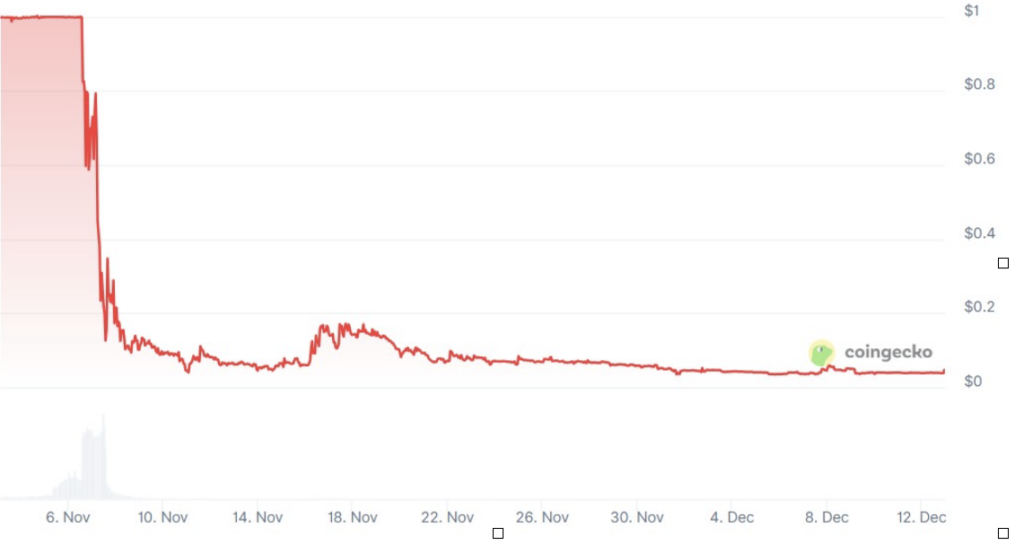
What made these events particularly damaging was not just the scale of losses, but the systemic nature of the failures. Many of the affected protocols shared similar structural weaknesses: reliance on leverage, dependence on sustained funding spreads, and tight coupling to external liquidity venues.
When confidence cracked, liquidity evaporated quickly from most yield-bearing stablecoins.
While not every project was directly impacted, the events marked a clear inflection point: the market now differentiates between robust yield models and those dependent on favorable market regimes.
Macro Pressure and Yield Compression
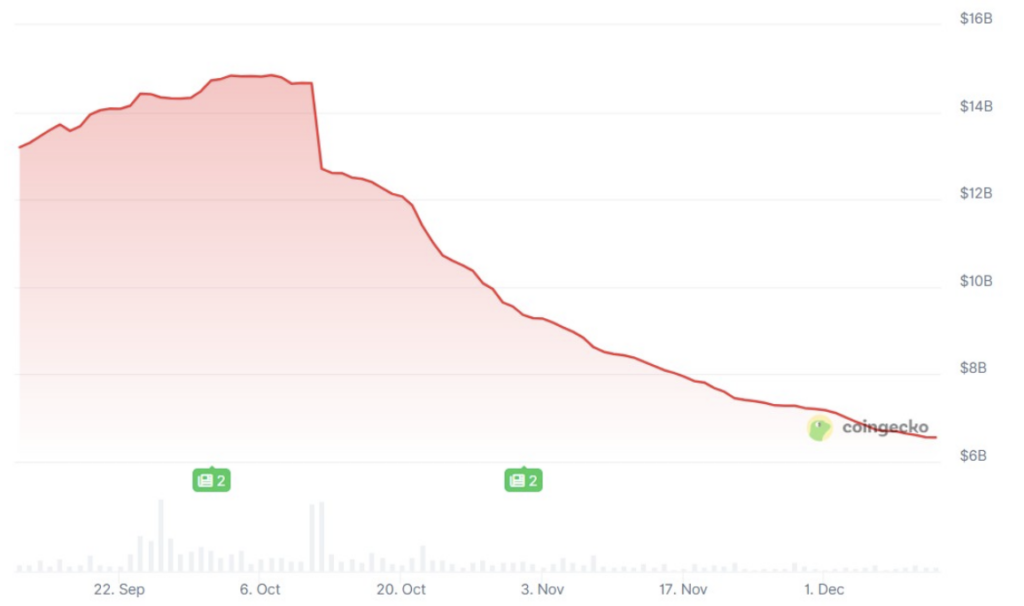
The collapse of several major projects coincided with a macroeconomic shift that further challenged yield-bearing stablecoins. By late 2025, the U.S. Federal Reserve had cut policy rates to the 3.50-3.75% range. Lower benchmark rates reduced returns across fixed-income markets and compressed funding spreads in crypto derivatives.
For Ethena’s USDe, which relies heavily on funding-rate arbitrage, yields declined substantially as capital crowded into similar strategies. Returns that once dwarfed traditional instruments fell significantly (4.3% APR at the time of writing), bringing them much closer to the yields of conservative instruments like U.S. Treasury yields. At that point, many investors reassessed whether the additional smart-contract, liquidity, and execution risks were still justified.
The result was a meaningful “liquidity squeeze”: capital moved out of higher-beta yield crypto products that lost performance capabilities back into altcoins or lower-risk yield alternatives.
Falcon Finance: Flight Toward Structure, Transparency, and Diversification
The downturn did not affect all yield-bearing stablecoins equally. A smaller group of projects continues to draw investors’ attention by offering clearer risk frameworks, diversified yield engines, and stronger transparency.
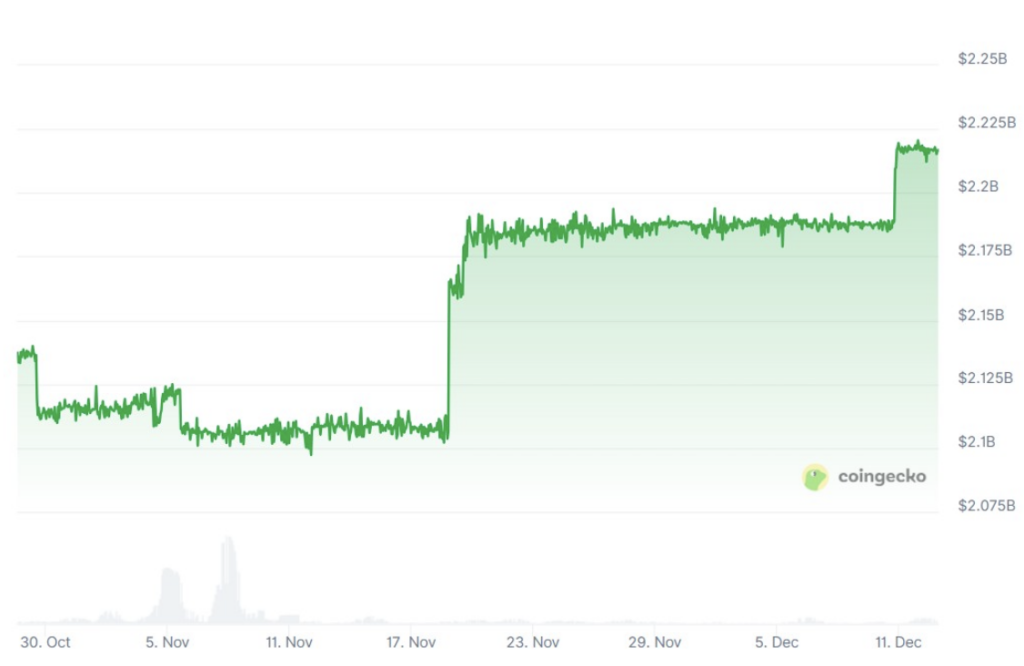
Falcon Finance, a project that allows to mint a synthetic dollar, USDf, and stake it in exchange for a yield-bearing token, sUSDf, emerged as one of the most prominent examples of this differentiated approach. By December 2025, it is one of the largest yield-bearing stablecoins with a TVL of more than $2.5 billion, and USDf’s market cap of over $2.2 billion.
Broad Yield-Generation Strategy Set for Any Market Movement
Instead of relying on a single dominant strategy such as funding-rate arbitrage, Falcon employs a broad, multi-strategy yield engine. Its income sources include cross-exchange arbitrage, spot-perpetuals arbitrage, positive and negative funding farming, options-based strategies, and event-driven trading during periods of extreme market movement.
This diversification allows Falcon Finance to dynamically reallocate capital across strategies as market conditions change, reducing dependence on any one yield regime and enabling more consistent performance across cycles.
High Transparency and Advanced Risk Management
Falcon Finance places a strong emphasis on institutional-grade risk management and capital alignment. First of all, USDf is designed as an overcollateralized crypto asset that has an additional reserve buffer against market volatility and execution risk.
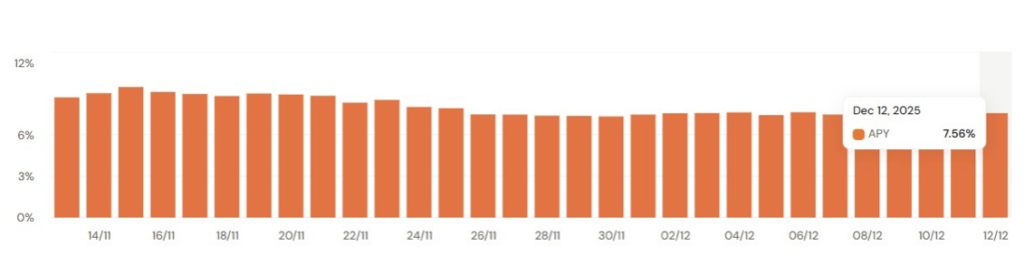
Second, the protocol incentivizes long-term capital allocation through staking USDf with optional lockup periods ranging from 1 to 12 months, with yield multipliers of up to 50% applied to the base rate. This mechanism rewards long-term investors, reduces short-term liquidity pressure, and improves overall system stability, especially during volatile periods, preventing bankrun-like events.
Transparency is another core pillar of Falcon’s model. The project regularly publishes detailed disclosures on its collateral composition, deployed strategies, and performance metrics, alongside weekly external audit reports conducted by an independent auditing firm, all accessible through a dedicated transparency page on its official website.
USDf Collateral Options: RWAs, Blue-Chip Crypto, Stablecoins
Furthermore, Falcon accepts a wide range of collateral types, including blue-chip cryptocurrencies like Ethereum and Solana, major stablecoins (USDT, USDC, USDS, and others), and wide range real-world assets such as tokenized equities (via xStocks), tokenized gold (Tether Gold), and U.S. Treasuries (USTB).
The list of RWA options grows over time as Falcon Finance strives for becoming a universal collateralization layer. For example, in the beginning of December 2025, Falcon integrated Mexico’s short-term sovereign bills tokenized through Etherfuse as collateral for minting USDf.
As a result of these design choices, USDf did not experience the sharp contractions seen elsewhere in the sector. On the contrary, its circulating supply expanded steadily from late October through mid-December 2025, surpassing the $2.2 billion mark. This trend signals that users increasingly favored diversified, transparent, and structurally resilient yield-bearing stablecoin models amid broader market stress.
Ondo Finance: Stable Harbor Backed by Conservative Finance
Meanwhile, Ondo’s USDY demonstrated the durability of the RWA-backed yield-bearing stablecoin model, positioning itself as a bridge between traditional fixed-income markets and on-chain capital. Unlike crypto-driven designs, USDY is backed by a portfolio of short-term U.S. Treasuries and bank deposits, giving holders exposure to one of the deepest and most liquid financial markets in the world. This structure reduces dependence from the crypto market dynamics such as funding rates, leverage cycles, or on-chain liquidity conditions. As a result, USDY largely avoided both depeg events and panic-driven outflows during the broader yield-bearing stablecoin turmoil of late 2025.
The protocol is explicitly designed with institutional compliance and risk frameworks in mind, including clear disclosures, conservative asset selection, and a legal structure that aligns more closely with traditional financial products. This makes USDY particularly attractive to institutions, crypto investor community, and treasury managers seeking on-chain yield without taking on complex derivatives risk.
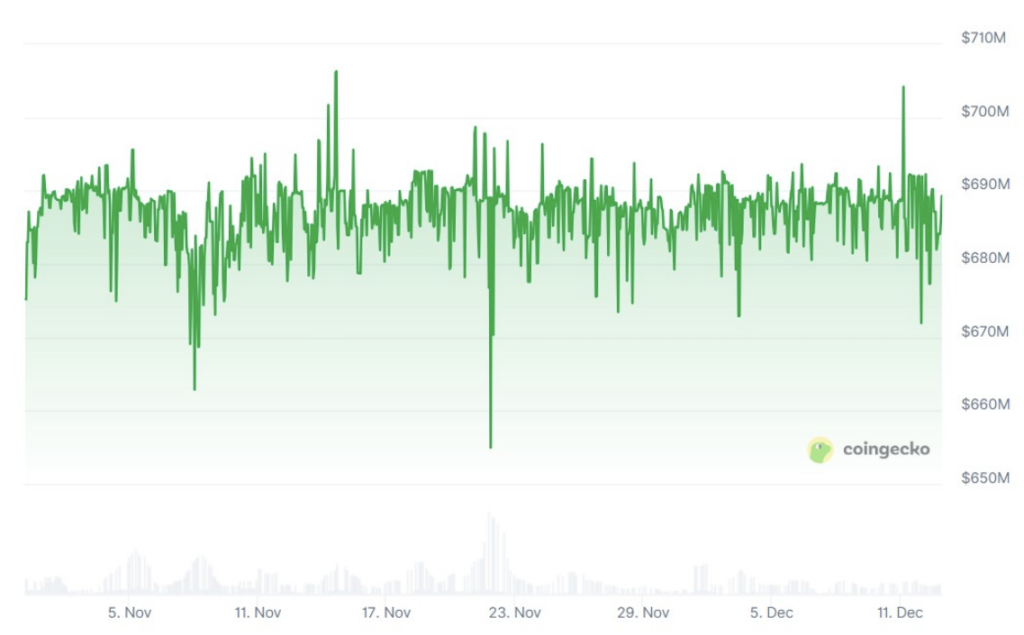
Even as yields compressed alongside U.S. rate cuts, USDY’s TVL stays relatively stable, revolving around $700 million. It highlights persistent demand for predictable, low-volatility yield over maximized returns. In the post-shake-out environment, Ondo’s approach underscored an important lesson of the cycle: credibility, transparency, and capital preservation matter as much as APY.
Lessons Learned
The yield-bearing stablecoin boom of 2024-2025 did not end in failure but differentiation. The market learned that not all yield is created equal: designs built on leverage and favorable market regimes struggled once conditions changed, while projects anchored in diversification, transparency, and conservative risk management proved far more resilient.
With the dust settled, the sector is entering a more mature phase. Yield-bearing stablecoins are no longer judged by yield rate alone, but by the durability of their underlying strategies, the clarity of their disclosures, and their ability to survive stress without breaking the peg. The success of projects such as Falcon Finance and Ondo Finance demonstrates that demand for yield on-chain remains strong, provided it is delivered within a framework that prioritizes transparency, capital protection, and credibility.
The turmoil of 2025 was not a setback, but a necessary step toward building yield-bearing digital assets that can function as reliable financial instruments. Not just in bull markets, but across cycles.
Disclaimer: The content on this site should not be considered investment advice. Investing is speculative. When investing, your capital is at risk.