

Former House Speaker Nancy Pelosi’s well-timed stock trades are back in focus following a transaction involving PayPal (NASDAQ: PYPL).
In late December 2025, Pelosi sold roughly $295,000 worth of PayPal stock at a time when the shares were trading in the mid-$50 to low-$60 range.
Over the subsequent weeks, the stock slid sharply, falling more than 27% from the price at the time of Pelosi’s Congress trade before culminating in a historic drop on February 3.
Receive Signals on US Congress Members' Stock Trades
Stay up-to-date on the trading activity of US Congress members. The signal triggers based on updates from the House disclosure reports, notifying you of their latest stock transactions.
As of press time, PayPal shares are trading at $42.86, down more than 18% on the day.
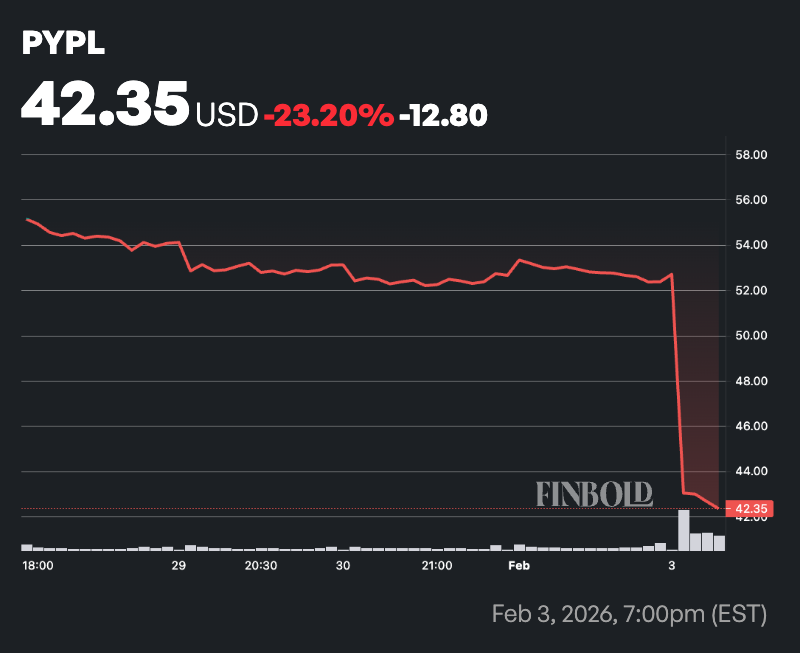
Notably, PayPal stock plunged after the company reported weaker-than-expected results and issued a soft outlook.
Fourth-quarter 2025 revenue came in at $8.68 billion, below expectations of $8.80 billion, while adjusted earnings per share were $1.23, missing the $1.28–$1.29 consensus.
Investor sentiment was further shaken after the company announced a leadership change, naming Enrique Lores as its new CEO.

Pelosi stock trade controversy
Meanwhile, Pelosi’s sale of PayPal shares adds to a long history of market moves that have drawn both attention and controversy. Congressional filings over recent years show that Pelosi’s household portfolio has at times significantly outperformed major market benchmarks.
Critics often point to a series of high-profile trades in technology and other sectors that appeared to coincide with congressional actions, regulatory developments, or major policy announcements.
Frequently cited examples include large positions in semiconductor and technology stocks such as Nvidia (NASDAQ: NVDA) ahead of industry-supportive legislation, as well as timely sales before regulatory or legal pressures weighed on share prices.
While no formal finding of insider trading or wrongdoing has been made, the repeated pattern has intensified debate over whether lawmakers and their families should trade individual stocks.
Supporters of tighter rules argue that the consistent outperformance of some Pelosi-linked trades points to gaps in current regulations, while opponents maintain that strong returns alone do not indicate misconduct, emphasizing public disclosure and the role of experience or analysis rather than privileged information.
Featured image via Shutterstock