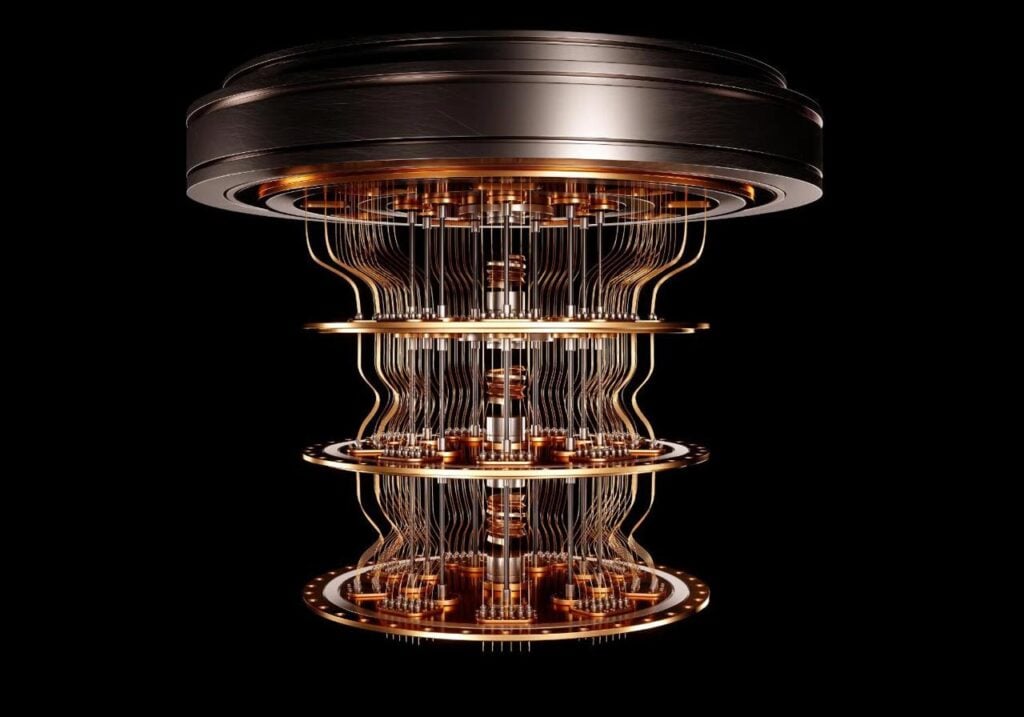

Postquant Labs, the company behind decentralized quantum computer marketplace Quip Network, has announced Quantum Echoes, a digital collectible collection generated using verifiable measurements from gate-based quantum hardware.
Consisting of Quantum Forged Tokens, or QFTs for short, the collection is designed to show how quantum processors can provide verifiable randomness for onchain applications, the company told Finbold on Thursday, September 10.
Accordingly, the main goal of the update is to bring a previously specialized computing capability to a consumer-oriented blockchain product. This is achieved via gate-based quantum computers, which introduce verifiable quantum randomness into generative art.
“We’ve spent the last hundred years telling people that quantum is this spooky and mysterious thing that even the smartest people in the world don’t understand. With Quantum Echoes, we are making multimillion-dollar quantum hardware tangible for everyone, proving that quantum computing can be part of our daily digital lives and not only limited to supercomputing labs or classified facilities,” said Colton Dillion, CEO and co-founder of Postquant Labs.
Unlike traditional algorithmic generation, each piece in the Quantum Echoes collection is uniquely created from physically unclonable quantum information. As a result, every collector can effectively “roll the RNG” using quantum mechanics, as the company puts it.
Quantum randomness is coming to blockchain
Launching as a free open-edition mint on Ethereum via OpenSea, Quantum Echoes also marks the launch of Quip Network’s second subnet, built to generate verifiable quantum randomness at scale by means of random circuit sampling.
This has an important implication for the kind of quantum computers made by companies such as International Business Machines and IonQ, which have historically struggled to compete with state-of-the-art computer clusters on combinatorial optimization problems.
Namely, random circuit sampling ensures these machines have a monetizable role on the network for the first time. Specifically, it allows them to earn token revenue by supplying randomness rather than sitting idle.
“Random circuit sampling is a benchmarking tool that proves a device is truly quantum, as classical computers cannot replicate it efficiently. It is the same class of workload behind the landmark ‘quantum supremacy’ demonstrations, a quantum processor doing what today’s most powerful classical supercomputers effectively cannot,” Dr. Richard Carback, CTO and co-founder of Postquant Labs, added.
Powered by quantum-verifiable randomness, every trait is determined through an actual quantum state collapse rather than pseudorandom algorithms. Furthermore, the project emphasizes open-source accessibility, with a free mint queue that removes financial barriers to entry for the common edition.
Looking ahead, Postquant Labs says this is only the first in a series of future subnets targeted at gate-based quantum computers. As for the Quantum Echoes collection itself, the company believes it can demonstrate how quantum-derived randomness can be integrated for the general public, directly into an onchain asset-generation process.
Featured image via Shutterstock