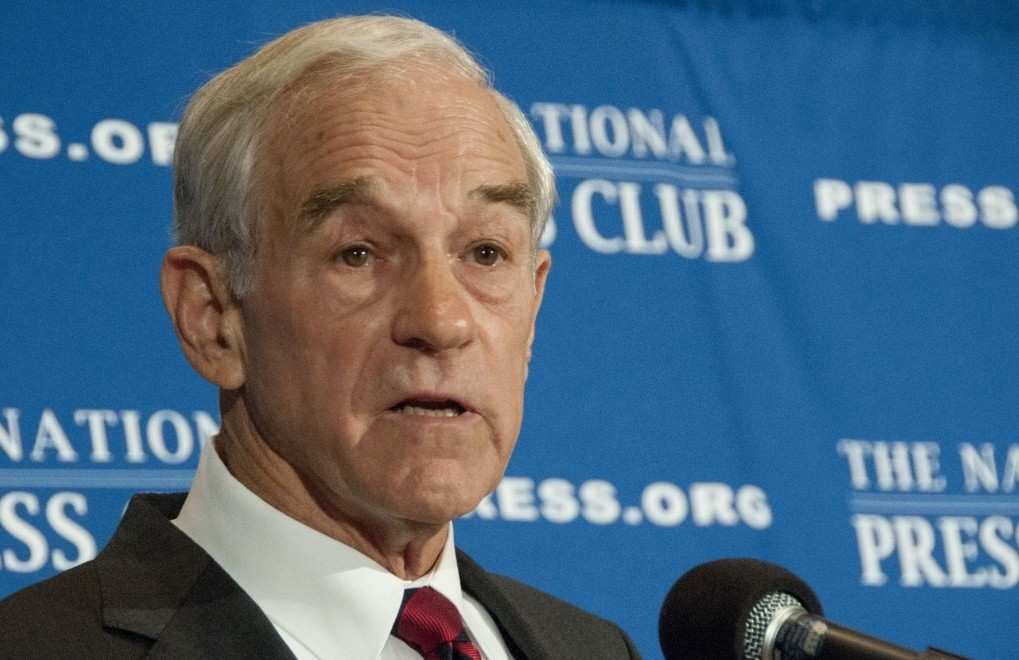

Former congressman Ron Paul is arguing that the U.S. economy is approaching a breaking point, as soaring debt, fiat debasement, and widening financial inequality threaten to culminate in what he described as a “big bankruptcy” for the nation.
Interviewed by David Lin on January 28, Paul argued that with federal debt now around $38 trillion, the country has reached a fundamentally different moment than past fiscal scares.
Namely, while previous crises ultimately passed, the one we’re facing today is more severe because the U.S. has “consumed so much of its wealth,” abused the dollar, and eroded its credibility thanks to foreign policy overreach.
“We have consumed the value of the dollar by, you know, abusing it. We have consumed credibility on a foreign stage because I think that people are getting leery of our pushing around with our foreign policy,” Paul said.
Paul also pointed to the early 1920s as a historical example of a sharp but brief economic contraction. By contrast, current attempts to delay adjustment through deficit spending and monetary easing could make the problem worse.
‘The dollar is in trouble’
“The dollar is in trouble,” Paul said, arguing that financial markets are already signaling stress. One tell-tale sign is the rapid rise in gold prices and what he described as an “eerie” environment marked by extreme volatility and uncertainty.
On the precious metal, Paul said the price around $5,000 per ounce reflects growing distrust in fiat money. As a result, he warned that if current policies persist, the dollar could ultimately lose its value entirely, as investors rush out of currency into real assets. While he has previously suggested gold prices could reach $20,000/oz, Paul now cautions that the monetary system itself may collapse before such a figure becomes meaningful.
Income inequality is another issue. The former congressman said the problem is directly linked to currency debasement, while inflation disproportionately harms lower and middle class. As such, the inflation appears as a hidden, “sinister tax” that punishes those who receive new money last, being more damaging than income taxes paid by high earners.
“The 50% of people: they don’t pay income tax, but they pay a much more sinister tax, and that’s the inflation.”
Paul also criticized U.S. fiscal and monetary policy since Federal Reserve intervention distorts interest rates and conceals the true cost of war and deficits. He said policymakers finance large expenditures without having the funds to do so, which transfers the burden to the public.
However, the discussion also acknowledged that the greatest risk is not the economic fallout but the political response. That is, financial chaos often leads to demands for greater government control and reduced liberty, which Paul says is already visible in social unrest in some cities.
Featured image via Shutterstock