
SpaceX’s (NASDAQ: SPCX) post-IPO sell-off has reached a new milestone, with the stock now ranking among the worst-performing major U.S. public offerings of the past decade.
Notably, SpaceX closed the Friday session at $115, down more than 27% from its first-day closing price following the company’s June 12, 2026 market debut.
The decline leaves SpaceX underperforming roughly 90% of all U.S. IPOs valued at $1 billion or more since July 2009. While post-IPO pullbacks are common, the scale and speed of SpaceX’s decline stand out.
Data shows that many large IPOs experience first-year declines of between 17% and 25%. However, few billion-dollar listings have fallen as sharply as SpaceX within weeks of going public.
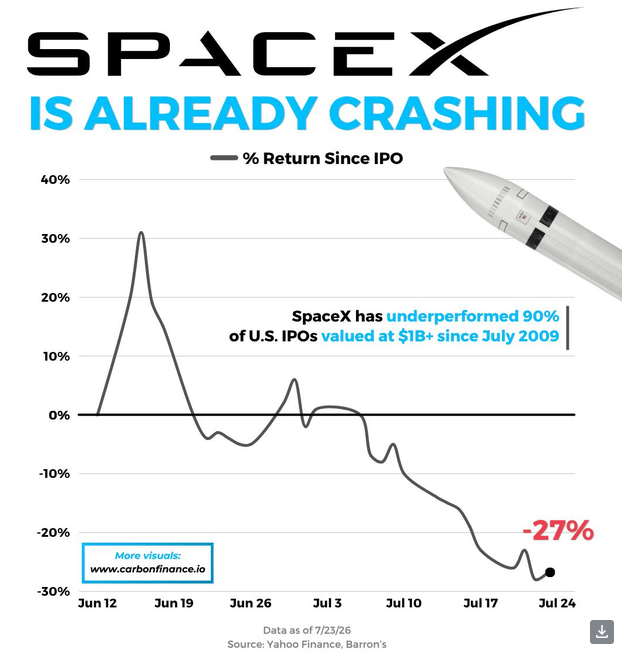
SpaceX stock reverses IPO gains
The latest drop extends a sharp reversal that began shortly after the stock’s initial surge. Following its historic IPO, SpaceX shares climbed to around $225, briefly pushing the company’s market capitalization above $2.5 trillion.
Since then, the equity has fallen about 45% to 50% from its post-listing peak, wiping out more than $1 trillion in market value.
SpaceX went public at $135 per share in the largest IPO ever, raising more than $85 billion and securing an initial valuation of approximately $1.8 trillion.
Investor enthusiasm initially drove the stock higher, supported by a limited public float that amplified buying pressure. However, sentiment shifted as investors reassessed the company’s valuation, financial performance, and capital requirements.
SpaceX stock fundamentals
The company generated approximately $18.7 billion in revenue in 2025 but reported a net loss of about $5 billion. Investors have also expressed concerns over the substantial spending required for Starship development, Starlink expansion, and AI infrastructure investments following the acquisition of xAI.
Additional pressure has come from expectations that upcoming lockup expirations will significantly increase the number of shares available for trading, potentially creating further selling pressure.
The stock has also been affected by a broader market rotation away from high-growth technology and AI-related names. A scrubbed Starship test flight in July and concerns surrounding the company’s ESG profile further weighed on investor sentiment.
Despite the sell-off, some Wall Street analysts remain optimistic about SpaceX’s long-term prospects, citing Starlink’s growth potential and the company’s dominant position in commercial space launches.