
Tesla (NASDAQ: TSLA) has moved within approximately $200 billion of overtaking SpaceX (NASDAQ: SPCX) in market value, marking a notable shift just weeks after Elon Musk’s space company completed one of the largest initial public offerings in history.
As of press time, SpaceX holds a market capitalization of about $1.633 trillion, while Tesla is valued at roughly $1.430 trillion.
The difference of around $203 billion leaves Tesla about 12.4% behind its sibling company, significantly narrowing the gap that emerged following SpaceX’s public debut.
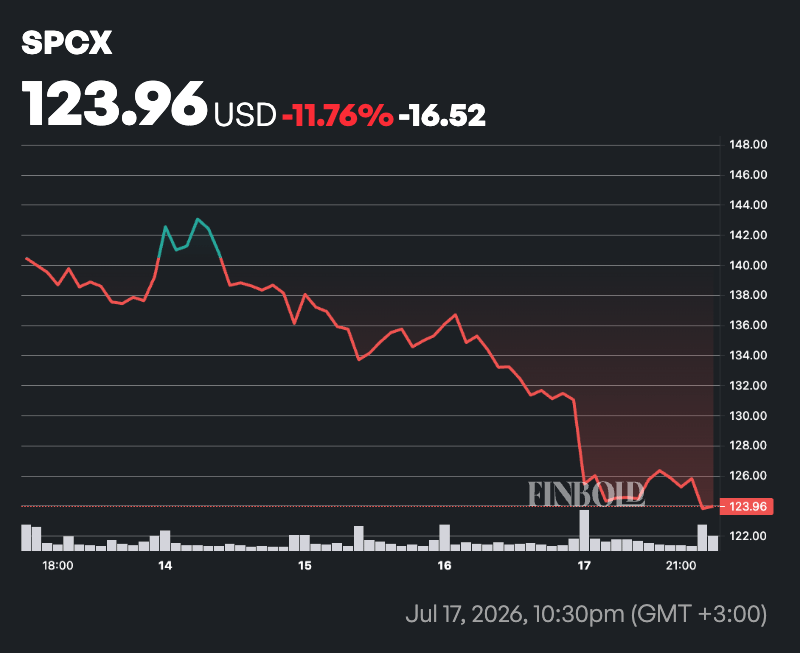
SpaceX briefly surpassed a $2 trillion valuation after its June IPO, fueled by investor enthusiasm for its Starlink satellite business, reusable launch systems, and ambitions in space infrastructure and artificial intelligence computing.
However, the stock has since retreated sharply, with shares recently trading near $124 after reaching highs of around $226 shortly after listing.
The decline has reduced SpaceX’s market capitalization by hundreds of billions of dollars and allowed Tesla to regain ground in the race to become Musk’s most valuable company.
Investors are closely watching upcoming Starship test flights and Starlink subscriber growth as potential catalysts for a recovery.
At the same time, concerns over share unlocks and broader market caution have weighed on the stock in recent weeks.
The case for Tesla
Tesla, meanwhile, has benefited from stronger operating performance and a more established profitability profile.
The electric vehicle maker continues to lead the global EV market while expanding its energy storage business, one of the company’s fastest-growing segments.
Shares of Tesla are currently trading at $380, supported by optimism surrounding several long-term growth initiatives.
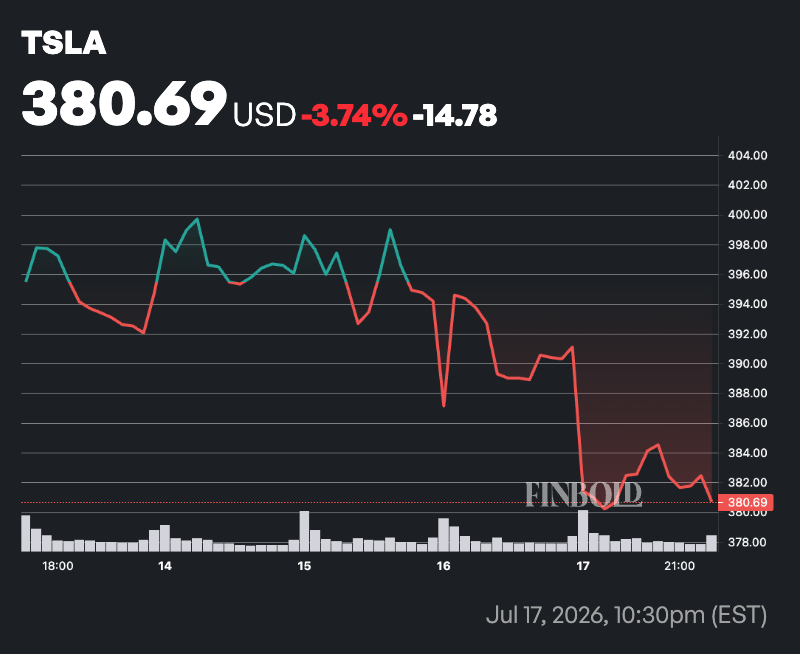
Investor focus remains on the expansion of its Robotaxi platform, continued development of Full Self-Driving technology, the rollout of Optimus humanoid robots, and broader AI applications across its products and manufacturing operations.
Unlike SpaceX, which continues to invest heavily in large-scale projects and infrastructure, Tesla generates substantial free cash flow and operates a global manufacturing network with proven commercial scale.
This has helped support investor confidence despite increasing competition in the EV sector.
The narrowing gap reflects differing investor preferences. SpaceX is viewed as a high-growth play on space and satellite infrastructure, while Tesla combines established revenue streams with growth opportunities in autonomy, robotics, and AI.