

U.S. equities have seen a sharp divide in sector performance in 2026, with geopolitical tensions and artificial intelligence (AI) investment influencing returns.
Energy leads with a 49.09% year-to-date gain, supported by supply disruptions and rising oil prices amid the U.S.-Iran conflict. In early October, the S&P 500 energy sector was already up more than 42%, outperforming all other sectors as the conflict drove oil prices higher.
Higher crude prices can boost oil producers’ revenue and cash flow, although further gains will depend on developments in the Middle East and global supply and demand.
Technology ranks second, gaining 21.80% as investment in AI infrastructure, semiconductors and data centers drives demand. However, rising capital expenditure has raised concerns about whether AI-related revenue will justify the spending, contributing to volatility as investors assess earnings prospects.
Consumer defensive stocks have gained 12.90%, while healthcare has risen 12.50%. In this case, steady demand for essential goods supports consumer defensive companies, while healthcare stocks benefit from interest in pharmaceutical development, biotechnology and medical innovation.
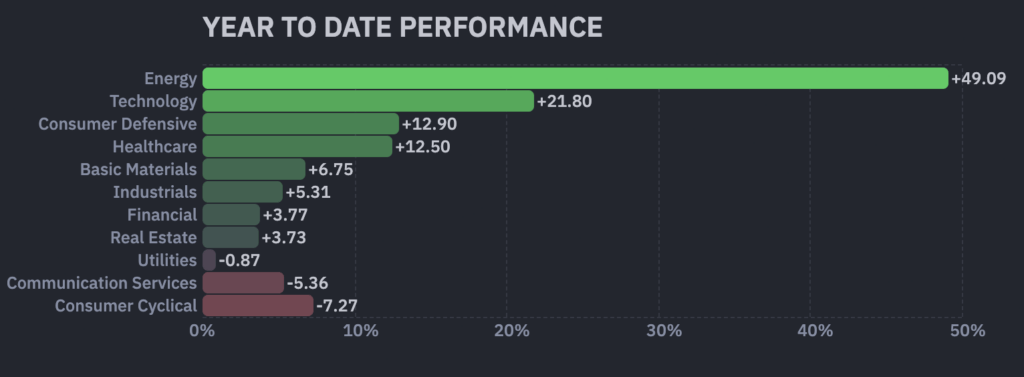
Basic materials have advanced 6.75%, followed by industrials at 5.31%, financials at 3.77% and real estate at 3.73%. Materials stocks respond to commodity prices and manufacturing demand, while industrials depend on infrastructure spending and capital investment. Financials are influenced by lending conditions and interest rates, while real estate remains sensitive to borrowing costs and property demand.
Weakest stock sectors of 2026
However, consumer cyclical stocks have fallen 7.27%, making them the weakest-performing sector. Communication services have declined 5.36%, while utilities have slipped 0.87%.
Notably, consumer cyclical companies are vulnerable to weaker discretionary spending, communication services face competition and advertising pressures, and utilities can struggle with high borrowing costs due to their substantial infrastructure needs.
Overall, energy stocks could reverse course if oil prices fall or geopolitical tensions ease. Technology shares remain exposed to concerns about AI spending and the returns on infrastructure investments.
To this end, investors should weigh earnings, valuations, and economic risks when assessing sector opportunities, as past performance does not guarantee future returns.
Featured image via Shutterstock