
Broadcom (NASDAQ: AVGO) could face a sharp decline toward $300 by late August 2026 if a key technical support level fails, according to an analysis shared by TradingShot.
The bearish outlook, shared in a TradingView post on July 17, comes as Broadcom stock ended the latest session at $370, significantly below its recent high near $495.
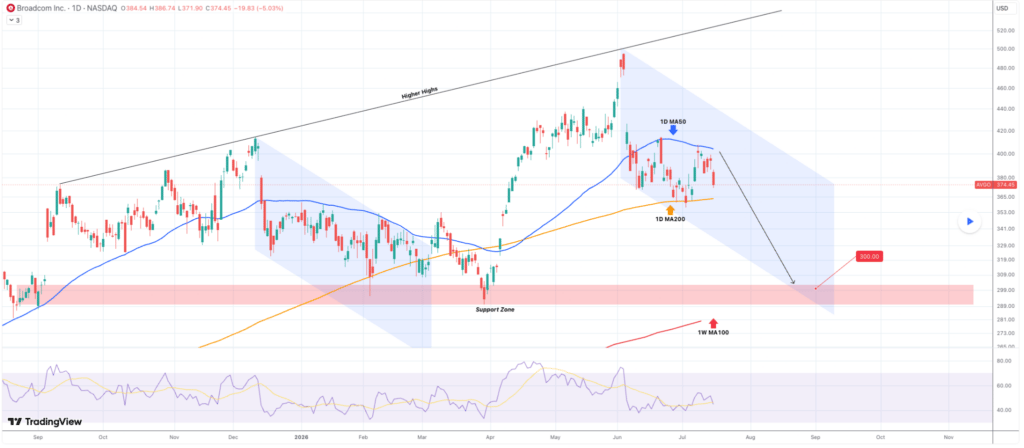
The analysis suggests AVGO remains under pressure after a rejection from its long-term ascending trendline on June 3, with subsequent rallies failing to regain momentum.
The technical setup shows Broadcom recently facing another rejection at its 50-day moving average (MA), a level that has acted as resistance in recent weeks.
While the stock continues to find support at its 200-day moving average, the broader trend remains bearish.
According to the outlook, the next major signal for traders will be whether AVGO closes decisively below the 200-day moving average.
A breakdown beneath that support could accelerate selling pressure and trigger a move toward a multi-month support zone between roughly $285 and $300.
The projected path on the chart suggests such a decline could unfold through August, with the stock potentially reaching the $300 area in late August or early September.
The target also aligns with the weekly 100-period moving average, identified as a key long-term support level.
Momentum indicators further support the cautious outlook. The Relative Strength Index (RSI) remains in neutral territory and has struggled to establish a sustained recovery, indicating buyers have yet to regain control of the trend.
Broadcom stock fundamentals
The bearish chart projection stands in contrast to Broadcom’s underlying business performance.
The semiconductor and infrastructure software giant reported record fiscal second-quarter 2026 revenue of $22.19 billion, up 48% year over year.
AI semiconductor revenue surged 143% to a record $10.8 billion, while earnings and profitability also exceeded expectations.
Broadcom continues to benefit from strong demand for custom AI accelerators, networking equipment, and its VMware software business.
These segments have helped position the company as one of the leading beneficiaries of ongoing AI infrastructure spending.