
The ‘Fear & Greed Index’ for the U.S. stock market dropped to a reading of 26 – just one point short of ‘extreme fear’ – at press time on March 9, 2026, per the data Finbold retrieved from CNN on the day.
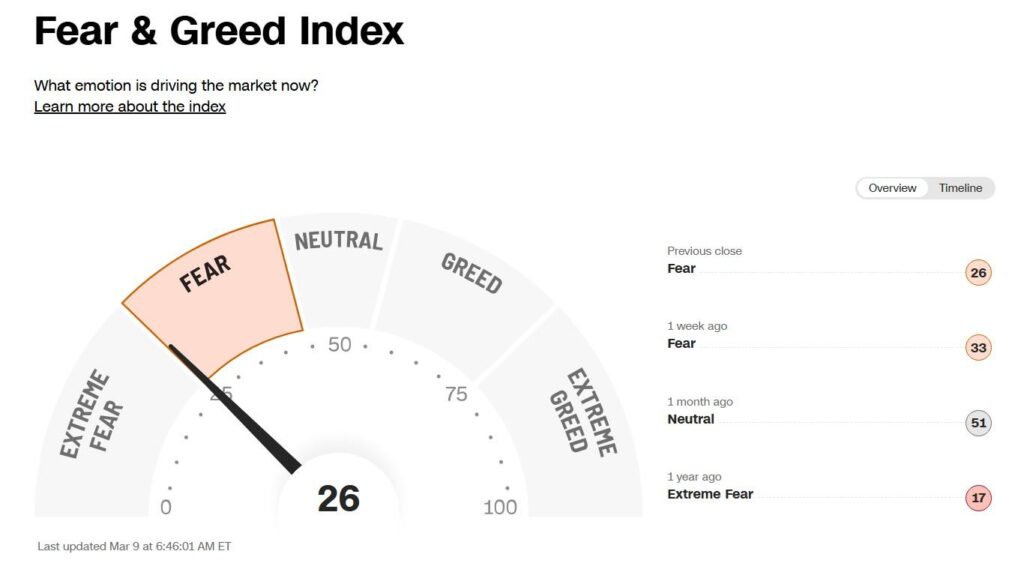
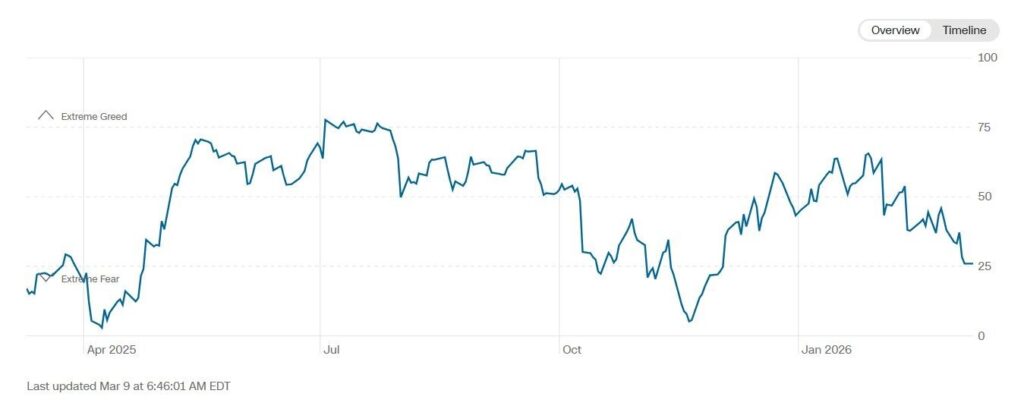
Such a figure indicates uncertainty among investors involved with the North American financial markets is the highest it has been since late November and early December 2025 – almost five months ago – when it hit lows at five.
Furthermore, the latest drop represents one of the more dramatic episodes of the decline from 2026 highs at 66 that started in early February.
Specifically, the two biggest sentiment drops in recent trading occurred between January 28 and February 13, when the readings fell from 66 to 38, and then between February 25 – the day the short-term recovery peaked at 46 – and press time on March 9.
Why stock investor sentiment is trending toward ‘extreme fear’
The latest drop to the border between ‘fear’ and ‘extreme fear’ can largely be attributed to the ongoing war against Iran that was initiated by a series of joint air strikes by the U.S. and Israel on February 28.
The conflict was quick to spread as the Islamic Republic initiated a series of missile and drone attacks across the region, generally targeting any country that is host to American military infrastructure, such as bases, air defenses, and radars.
Simultaneously, the war led to the effective closure of the Strait of Hormuz, a narrow waterway responsible for about 20% of the world’s oil supply. The escalation has led, by press time, to a significant increase in the prices of commodities such as oil and natural gas.
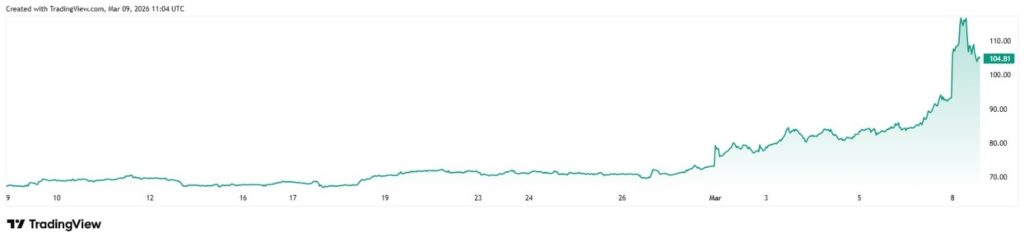
In fact, the importance of the strait can hardly be overstated since shipping disruption within it has not only had an adverse effect on the wealthy Gulf States, but has severely impacted the oil supply to Asian countries – an outcome with an outsized bearing on the entire globe, considering China’s role as the great factory of the world.
So far, potentially the most dangerous outcome for the U.S. economy is that multiple states in the Arabian Peninsula are reportedly considering a cancellation of their vast investments in North America, allegedly to offset the costs of the war.
How President Trump is contributing to stock market volatility
Elsewhere, volatility has been heightened by the persistence of Iranian missile and drone attacks, despite continuous USAF and IAF bombardment, and the continuously changing narrative and war goals coming from President Donald Trump and other officials in the Administration.
Still, such shifting messaging from Washington could also be one of the key reasons why the index is yet to read ‘extreme fear,’ as it involved, so far, continuous claims that the campaign is progressing well and even that Iran has already surrendered.
Iran war adds to early 2026 AI stock market dread
While the ongoing war in the Middle East has been dominating headlines since the initial February 28 airstrikes, it is worth noting that the U.S. financial markets have been mixed since before 2026 started.
Specifically, January and early February saw multiple signs that investors are losing confidence, as there have been multiple instances of the stock of major, blue-chip companies such as Microsoft (NASDAQ: MSFT) and Nvidia (NASDAQ: NVDA) suffering severe price drops in the wake of strong earnings reports.
This trend has been most pronounced in the technology sector, as the continuous mismatch between capital expenditure and the profitability of artificial intelligence (AI) has continued fueling the fears of a massive bubble that could, should it pop, create an economic crisis the likes of which haven’t been seen in a century.
Featured image via Shutterstock