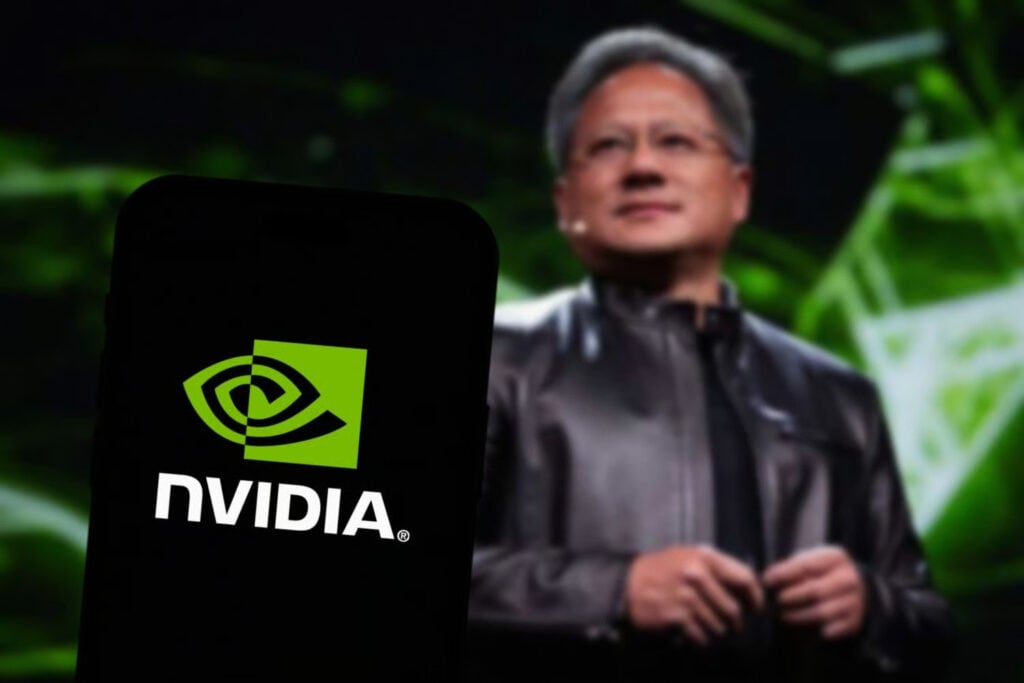

Following the revelation of the second infidelity scandal on the afternoon of Wednesday, November 11, the notion that Jensen Huang might soon be removed from his role as the CEO of Nvidia (NASDAQ: NVDA) became not only possible but plausible.
Multiple prominent observers and analysts have, in the wake of the latest events, made attempts to forecast NVDA shares and the semiconductor giant’s future, as well as to quantify the importance of the firm’s co-founder to the company.
Dan Ives, a prominent stock market expert and ardent big tech bull, came out optimistic about Nvidia’s future and its ability to eventually weather the storm, though he described the scandals surrounding Jensen Huang as a ‘black eye moment’ and issued two conditional price targets for the blue-chip chipmaker’s equity.
Advertisement
Specifically, the Wall Street analyst estimated that NVDA could soar as high as $300 – 72.68% above the latest close – if Huang remains at the helm, and rally to a far smaller $225 without him, for a 29.51% estimated upside.
Notably, these forecasts imply that the CEO is worth approximately $1.8 trillion to the company, as the former prediction anticipates a $7.24 trillion market capitalization and the latter a $5.43 trillion valuation.
Is CEO Jensen Huang really worth nearly $2 trillion to Nvidia?
Meanwhile, though a nearly $2 trillion difference contingent on one man’s employment status might appear an exaggeration, the latest stock market moves appear to back Dan Ives’ assessment.
On Friday, November 6, Nvidia stock closed at $186.64 and has – once the Thursday, November 12 pre-market is factored in – crashed 14.93% to its press time price of $161.15, largely due to the twin cheating scandals.

Crucially, however, despite Huang’s infidelity taking much of the air time, the debate around whether to oust him or not – and the associated equity turmoil – might have little to do with the CEO’s personal life.
The scandals – especially given that the Nvidia co-founder’s first known mistress is alleged to be a Chinese spy – put the spotlight on the semiconductor giant’s long history of dealing with firms in a way that implies it was knowingly – and potentially with the knowledge of some individuals in the Trump Administration – evading American export restrictions.
Advertisement
Notably, the suspicion that the chipmaker was making much of its revenue in the People’s Republic, despite CEO Huang claiming his firm’s market share in the country was close to zero, has been present for years, but has not been taken particularly seriously until the latest scandals.
Featured image via Shutterstock