

Bernstein Research has identified 2029 as the year Bitcoin (BTC) could reach $300,000 under its base-case forecast.
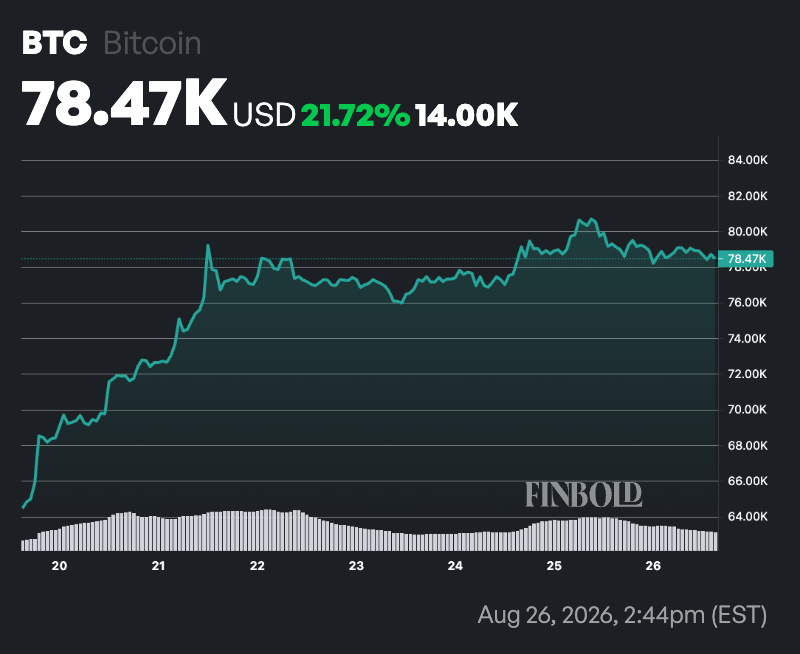
The outlook follows Bitcoin’s August rally, which saw the cryptocurrency briefly surpass $80,000 and implies a potential 282% gain from its press-time price of $78,471.
The projection was outlined in an August 26 client note led by Bernstein senior digital assets analyst Gautam Chhugani.
The firm’s latest Bitcoin price forecast expects the asset to recover to approximately $125,000 by the end of 2026, rise to $150,000 by mid-2027, and eventually reach a cycle peak near $300,000 in 2029.
Bernstein also maintained a more bullish scenario that sees Bitcoin climbing to $200,000 by mid-2027 and potentially reaching $500,000 before the end of the decade. Its long-term forecast of $1 million by 2033 remains unchanged from the target first published in 2024.
Bernstein’s model continues to view Bitcoin as an asset that follows historical four-year market cycles while valuing it relative to its marginal cost of production.
Impact of Bitcoin ETFs
The analysts identified growing institutional ownership as a key driver of the forecast. According to the report, spot Bitcoin exchange-traded funds (ETFs) and corporate treasury buyers have created a more stable holder base, with ETF outflows during recent corrections remaining below 5%.
The firm argued that regulated investors have been less prone to panic selling than participants in previous market cycles. At the same time, corporate buyers have continued accumulating Bitcoin throughout the downturn, helping support net capital inflows.
Bernstein noted that long-term holders who have not moved their Bitcoin for more than one year now control about 60% of the circulating supply.
The analysts also highlighted continued purchases by Strategy, formerly MicroStrategy, as an important source of demand during periods of market weakness.
Another pillar of Bernstein’s Bitcoin bull-market thesis is growing concern over government debt and currency debasement.
U.S. debt concerns
The analysts pointed to U.S. sovereign debt at $40 trillion and rising interest expenses that could increase pressure on policymakers to tolerate higher inflation rather than pursue fiscal austerity. In that environment, they expect fixed-supply assets such as Bitcoin to become increasingly attractive to long-term investors.
Despite Bitcoin’s nearly 50% decline from its October 2025 peak of around $126,000, Bernstein maintained that the asset’s store-of-value thesis remains intact. The firm noted that the current downturn has been significantly milder than previous Bitcoin bear markets, which typically saw declines of 75% to 90%.
Bernstein also addressed quantum-computing concerns, describing the threat as manageable and estimating that the Bitcoin industry has a three-to-five-year window to implement post-quantum security upgrades before the technology becomes a practical risk.
Featured image via Shutterstock