

Wall Street analysts have reaffirmed a bullish outlook on Oracle (NYSE: ORCL) ahead of the company’s fiscal first-quarter 2027 earnings report, scheduled for September 10.
Analysts expect Oracle to post earnings per share of approximately $1.74, up about 18% from $1.47 a year earlier. Revenue is projected to reach roughly $19.14 billion, representing year-over-year growth of around 28%.
Oracle previously guided for total revenue growth of 27% to 29% and adjusted earnings per share between $1.72 and $1.76. The company also forecast cloud revenue growth of 58% to 64%, underscoring continued momentum in its cloud infrastructure business.
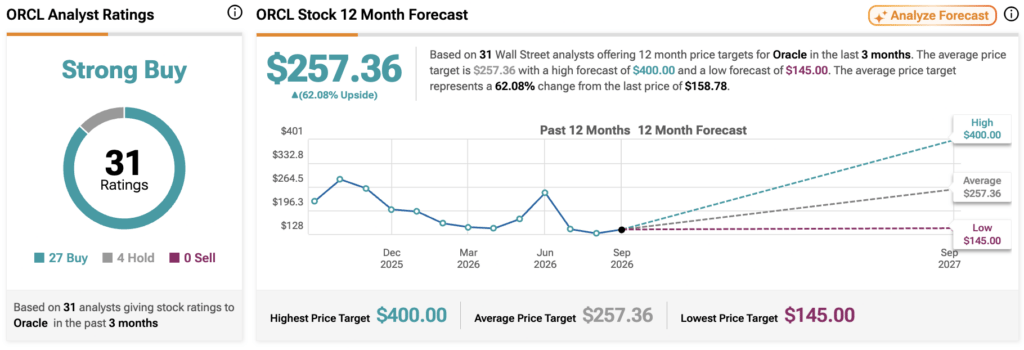
As for the stock outlook, TipRanks data shows that 31 analysts covering Oracle maintain a ‘Strong Buy’ consensus rating. Among them, 27 recommend buying the stock, four suggest holding, and none advise selling.
The average Oracle stock price target is $257, implying potential upside of 62.08% from the stock’s September 4 closing price of $158. Analysts’ highest target stands at $400, while the lowest forecast is $145.
ORCL’s stock investor focus
Investor focus remains on Oracle’s expanding cloud and artificial intelligence operations, particularly Oracle Cloud Infrastructure (OCI), which has become one of the company’s fastest-growing businesses.
One key metric to watch is Oracle’s remaining performance obligations (RPO), which reached a record $638 billion at the end of fiscal Q4 2026. The backlog reflects rising demand for AI and cloud services and offers visibility into future revenue growth.
Analysts will also be monitoring updates on Oracle’s data center expansion plans, capital spending, free cash flow trends, and any changes to full-year fiscal 2027 guidance.
Although Oracle shares remain well below their 52-week highs, the stock has rebounded in recent sessions as investors reassess the company’s long-term growth prospects.
The bullish analyst outlook is largely driven by expectations that Oracle will continue converting its sizable AI-related contract backlog into revenue while maintaining strong cloud growth.
However, concerns persist over the company’s elevated spending on AI infrastructure, financing needs, and execution risks associated with large-scale data center projects.
Featured image via Shutterstock