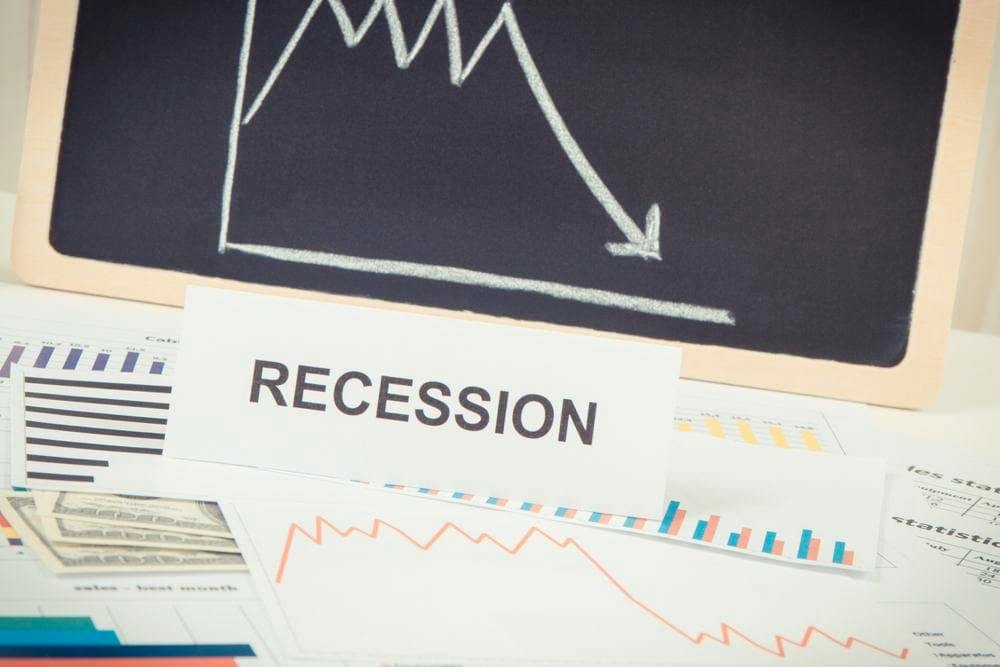

American banking giant Goldman Sachs has raised its estimate of the probability of a U.S. recession over the next 12 months to 30%.
The revised figure represents an increase from 25% earlier in March 2026 and 20% in January, marking a continued upward revision in its economic outlook.
According to the bank’s analysts, the latest adjustment reflects mounting pressures on the U.S. economy, primarily driven by a surge in energy prices alongside a cooling labor market.
Interestingly, the increase still leaves the probability well below 50%, indicating that the bank’s base case remains one of continued economic expansion, albeit at a slower pace.
The revision follows a sharp rise in oil and gas prices linked to escalating geopolitical tensions in the Middle East, particularly the conflict involving the United States and Israel against Iran. Higher energy costs are expected to weigh on economic growth while simultaneously pushing inflation higher, creating a stagflationary effect.
At the same time, labor market conditions have shown signs of weakening, with February payrolls declining by 92,000, falling short of the level required to maintain stable unemployment.
Job openings have also trended lower, while the unemployment rate has edged up to 4.44% and is projected to reach 4.6% by the end of the year.
Fading impact of rate cut
Additional factors contributing to the outlook include the fading impact of last year’s tax cuts and tighter financial conditions. According to Goldman’s economics team, led by Jan Hatzius, these developments are increasingly reinforcing one another rather than offsetting their effects.
Despite the heightened risks, the institution is still projecting positive, though below-trend, economic growth in the second half of 2026, with GDP expected to expand at an annualized rate of roughly 1.25% to 1.75%.
The bank also anticipates modest increases in unemployment without a sharp deterioration and maintains expectations for Federal Reserve rate cuts later in the year.
The updated forecast places Goldman broadly in line with other major Wall Street institutions, which currently estimate recession probabilities in the 25% to 35% range.
While the latest revision signals rising concern, it stops short of indicating an imminent downturn, pointing instead to a slower and more uneven growth trajectory for the U.S. economy.
Recession now a serious threat
Meanwhile, other recession warnings have come from Moody’s chief economist, Mark Zandi, who has raised fresh alarms about the U.S. economy, declaring a downturn “once again a serious threat” amid softening data and surging oil prices.
According to Zandi, Moody’s machine-learning recession indicator showed a 49% probability of a downturn within the next 12 months, even before the recent U.S.-Israel conflict with Iran drove oil prices higher.
Weak labor market figures and broadly soft economic data since late 2025 pushed the odds to this “uncomfortably high” level.