

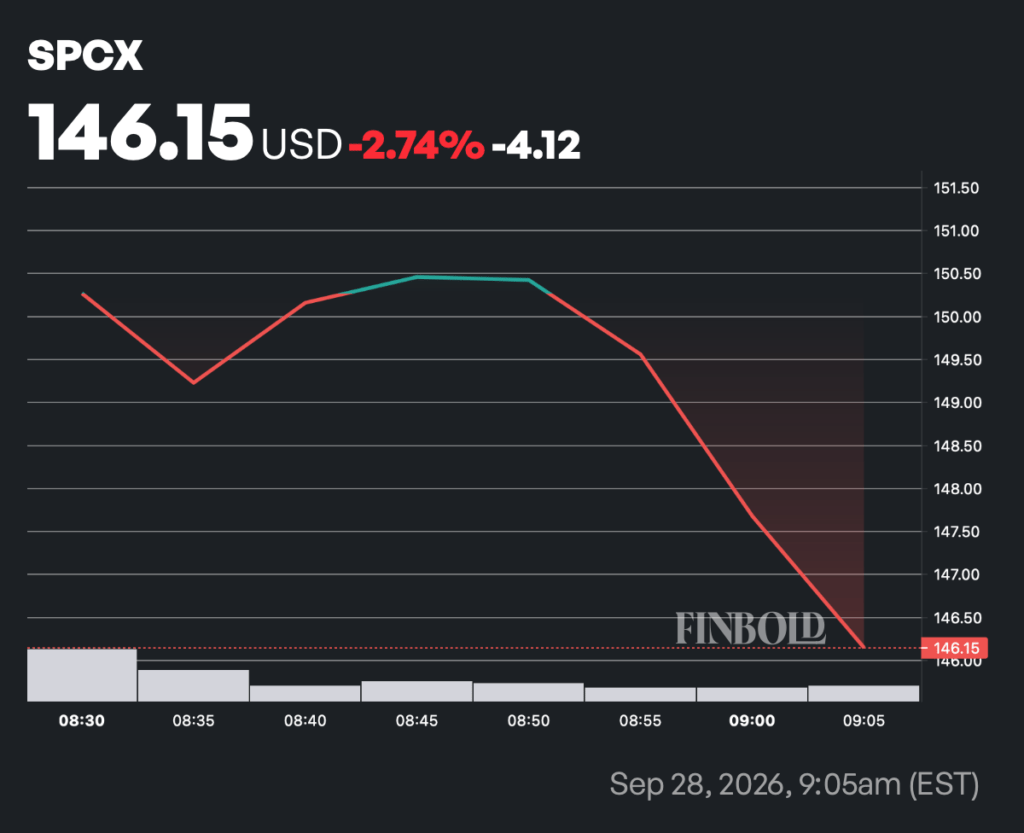
Bernstein reiterated its Buy rating on SpaceX’s (NASDAQ: SPCX) stock on September 28 and maintained its $248 price target, implying roughly 70% upside from the stock’s current price of $146.
The brokerage focused on the long-term growth potential of Starlink’s residential and small-business broadband operation, which analyst Douglas Harned described as a potentially large opportunity for the space company.
Specifically, he expects Starlink’s broadband subscriber base to double again this year after roughly doubling in each of the past four years. That is, the firm estimates that Starlink could reach about 168 million subscribers by 2031, supported by continued expansion into markets where traditional satellite broadband is losing relevance.
“Starlink roughly doubled its broadband subscriber base in each of the past four years and is expected to double again this year. In doing so, it has taken share not only from legacy satellite broadband (SBB) providers, but increasingly from other broadband technologies as well,” Harned wrote.
Furthermore, Bernstein also forecasts approximately $64 billion in consumer and SMB broadband revenue for Starlink in 2031, slightly below its previous $66 billion estimate. This revision, the research note says, reflects an expected decline in average revenue per user as Starlink expands its global footprint and reaches lower-income and less-served markets.
SPCX stock will go “Big!”, Bernstein says
Bernstein also updated its financial model to account for a faster near-term connectivity buildout. As a result, it raised its fiscal 2026 diluted earnings per share (EPS) estimate to a loss of $0.19 from $0.20 previously and lifted its fiscal 2027 diluted EPS forecast to $1.37 from $1.30.
Despite the unchanged $248 target, Harned highlighted downside risks to its Starlink business case, particularly the potential for lower average revenue per user as the service expands globally.
“While we believe these assumptions are reasonable given Starlink’s long-term plans and compelling operating momentum, there are downside risks, as with any business case,” he added.
Nonetheless, he expects continued subscriber growth and expanding connectivity capacity to support Starlink’s longer-term revenue opportunity, adding that downside risks are present in ever business case.
Featured image via Shutterstock