


Ontario’s auto insurance rules give drivers a choice about benefits that used to come with the policy as standard. The rules took effect on July 1, 2026. By the 2027 renewal, the household may have to weigh what it keeps against what its other insurance can cover.
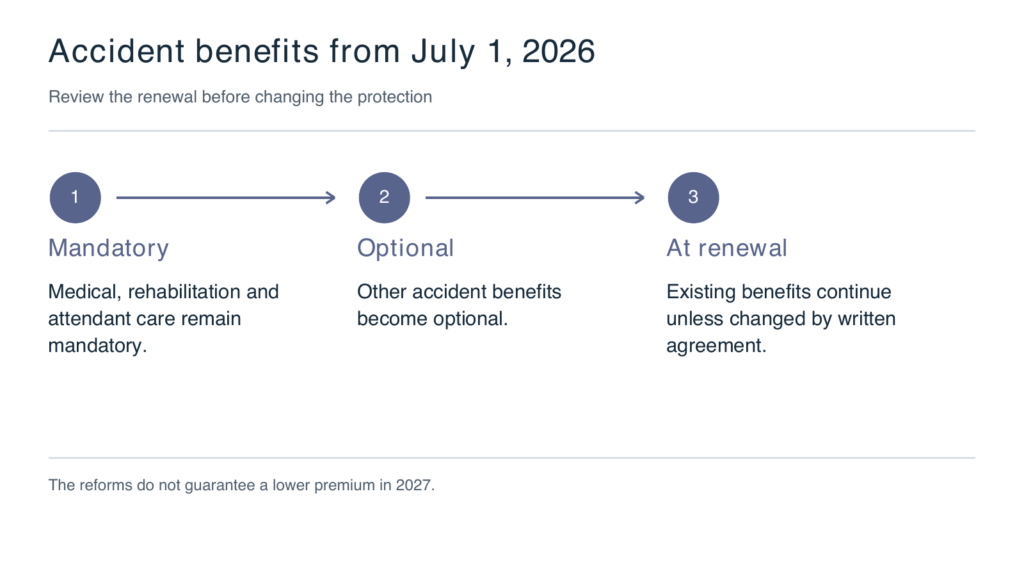
The driver keeps the old benefits at renewal unless a change is agreed in writing. A lower price has to be considered with the help the household would give up after a crash.
| Part of the policy | Position under the July 2026 rules |
|---|---|
| Medical, rehabilitation and attendant care benefits | Remain mandatory |
| Other accident benefits | Available as optional protection |
| Benefits on an expiring policy | Continue unless changes are agreed in writing |
What Changed on July 1, 2026?
Drivers now have more choice over the accident benefits they buy. These benefits can help with treatment, lost income and other costs after a car accident, regardless of who caused it. The required part still includes medical, rehabilitation and attendant care benefits.
Other benefits became optional. Income replacement can provide support when a covered person cannot work after an accident. Non-earner benefits serve a different purpose, including support for eligible people whose injuries prevent them from leading a normal life. Someone without wages may still have a reason to review that protection.
Caregiver benefits address the loss of a person’s ability to care for someone else. Housekeeping and home maintenance benefits can help with tasks an injured person can no longer do. These needs can exist in a household even when an employer offers disability insurance.
Other choices concern death and funeral costs, lost educational costs, visitors’ costs and damage to personal items. Removing one of these protections changes the help offered after an accident. It does not simply change how the same benefit is priced.
The reforms concern accident benefits. They do not make third-party liability or uninsured-auto coverage optional, and they do not automatically add protection for damage to the insured vehicle. Those parts of the policy still need their own review.
Existing Benefits Continue Unless Changed
A driver can keep the benefits bought before July 2026 through renewal. The same benefits and limits stay in place until the driver and insurer agree in writing to give them up or change them. The regulator has set no deadline that forces the driver to give them up in 2027.
The renewal price should show the cost of keeping the household’s old benefits. The old policy and a new basic package can both meet the law’s rules while offering different help after a crash. Keeping the chosen benefits and their limits beside each price shows what the driver would get.
Without a written agreement between the driver and insurer, the same benefits and limits continue through the next renewal. An agreed change can remove benefits the driver already has.
Who Receives Optional Accident Benefits?
The rules also limit who can claim optional benefits.
In most cases, optional benefits apply to the named insured, their spouse, dependants of either, and drivers listed on the policy. A passenger outside that group does not gain those optional benefits just by riding in the car.
A household cannot assume its chosen benefits cover every passenger.
Ontario auto insurance coverage options therefore involve both the benefits being kept and the people entitled to claim them.
Some rules treat a person as a named insured even if the policy doesn’t name them. Certain company-car plans can fall within those rules. These cases depend on the facts and the policy. A missing name should be checked rather than used to reach a blanket conclusion about every possible benefit.
The medical, rehabilitation and attendant care benefits that must stay on a policy are separate from those optional benefits for a smaller group of people.
People riding in a car, walking or cycling have not lost all accident benefits under the reforms.
Comparing Workplace and Auto Benefits
A workplace plan can change the household’s need for optional benefits. Its name alone does not show that it meets the same needs. Its terms should say what counts as a disability, how long the wait is, how much it pays, and how long those payments last.
Income and Unpaid Care
An employee’s disability plan may pay part of their lost wages after a wait. The amount and the date it starts need to be known. A self-employed person may have no workplace plan at all. Either household may still need help with unpaid care or housework after an injury.
A student or retired person should also compare the purpose of each benefit before removing it. Someone without wages can still face costs while they recover or lose the ability to do things they did before the crash.
Treatment and Payment Order
For accidents in Ontario on or after July 1, 2026, auto insurance pays first for medical and rehabilitation costs that qualify. Extra health plans pay after that, except for medication costs. Care paid for by the Ontario Health Insurance Plan is separate. That public plan still pays first for the services it covers.
This order does not apply to older accidents or accidents outside Ontario. It also does not mean a workplace plan can take the place of all optional accident benefits.
What a Lower 2027 Premium Could Mean
No rule guarantees that a driver’s total bill will fall. Removing benefits may lower a quote, while other pricing changes can affect the final bill. The quote should show the price for keeping the old benefits beside the price for the proposed changes.
A small yearly saving may remove support the household would have difficulty replacing after an injury. The quote and the benefit’s terms show how much is saved and what is lost.
Giving up a benefit can change the terms the driver can get later. A customer who gives up an older arrangement becomes subject to the post-July options and limits. The driver cannot assume they can get the old terms back.
A newly issued policy can also differ from one that has kept benefits through the transition. Comparing the two without checking the real selections may make the same price appear to buy the same protection when it does not.
Drivers can request changes before renewal as well, although insurers use different processes. The written record should show each agreed change, when it starts and what the policy still covers.
Documents to Check Before Renewal
The renewal papers should show which benefits stay, which change and when each agreed change starts. They should name the regular drivers and household members who can claim, with the up-to-date terms of any workplace plan.
A new job or a cut to workplace benefits can change the help the household has outside the auto policy. A choice made in 2026 needs another look when the 2027 policy begins. It should reflect the help that household would have after an injury at that point.
Featured image generated with AI.


