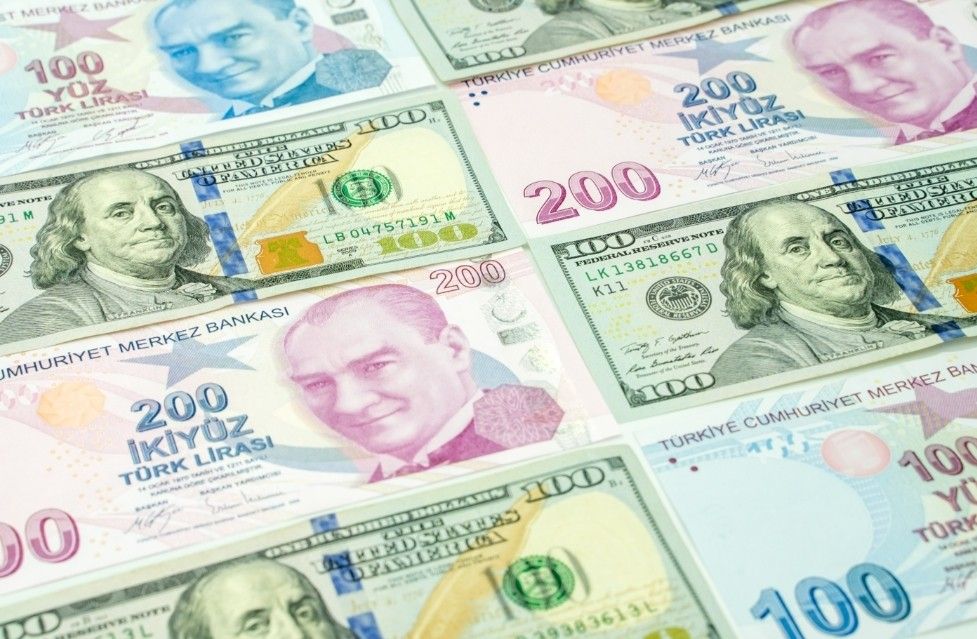

The Turkish lira (TRY) has been on a steep downward trend against the United States dollar (USD) for years now, but things are somehow becoming more dire, with the ratio between the two currencies hitting another all-time low on April 3.
What’s notable is that the accelerated fall came just as Turkey had reported lower-than-expected annual inflation rates, even amid all the pressures linked to the Iran war.
Specifically, consumer prices rose 30.9% year-on-year, marking a slowdown from 31.5% in February. On a monthly basis, inflation eased to 1.94%, down from 2.96%. The data also showed that the domestic producer index had risen 2.30% month-on-month in March (an annual increase of 28.08%).
Meanwhile, annual food inflation still remains above the inflation rate, as food and non-alcoholic beverages saw an annual increase of 32.36%. Similarly, transportation rates went up 34.35%, while housing, water, electricity, gas, and other fuels surged 42.06%.
Turkish lira under pressure
Nonetheless, the lira remains under pressure, trading another 0.18% lower against the U.S. dollar as of the time of writing.
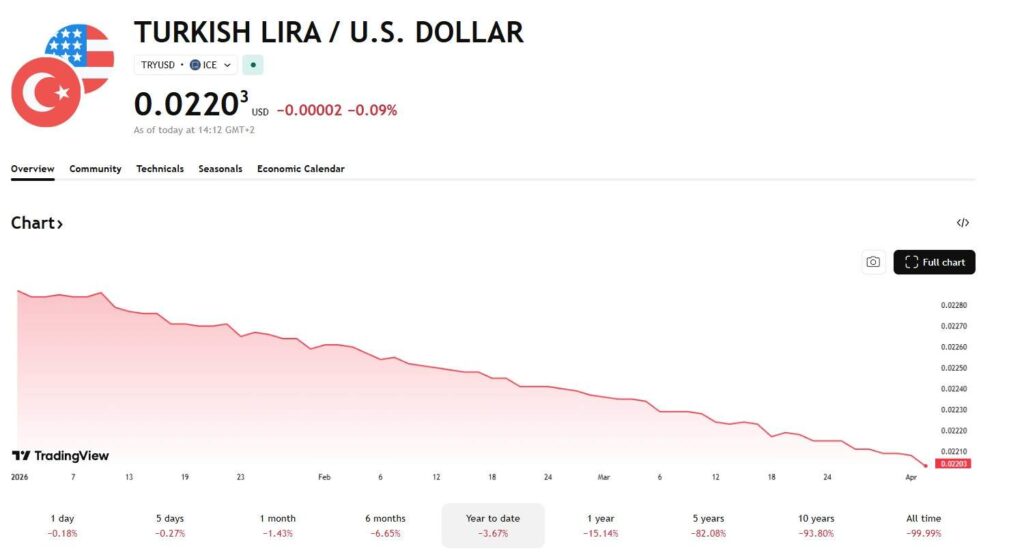
A notable problem emerged in March, when the lira faced renewed pressure in a broader emerging-market selloff triggered by the Middle Eastern conflict. At the same time, the nation’s central bank halted its rate-cutting cycle and effectively tightened policy.
Addressing the issue, Central bank Governor, Fatih Karahan, stated in the Briefing on Inflation Report that policymakers would take a defensive stance in an attempt to support disinflation. As a result of such policies, the lira fell just 1.2% in March.
Overall, the Bank’s approach appears to revolve around maintaining currency stability as the key to bringing inflation rates down. Looking ahead, it expects 16% inflation by year-end.
Featured image via Shutterstock