
Semiconductor stocks are showing signs of a bullish rebound after a sharp sell-off that raised concerns about a possible bubble burst.
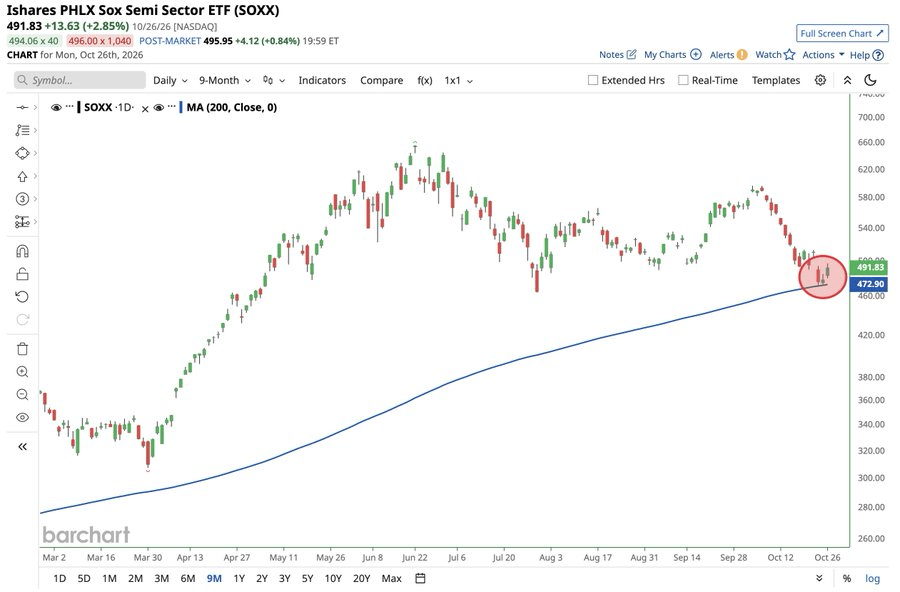
In this case, the iShares Semiconductor ETF (NASDAQ: SOXX) bounced off its 200-day moving average (MA) even as fears of an artificial intelligence (AI) bubble persist.
SOXX gained 2.85% to close at $491 on October 26, recovering after a steep decline toward long-term technical support. Its 200-day moving average stood at $472.90, leaving shares approximately 4% above the indicator at the close.
The rebound suggests investors are stepping in after the correction, although renewed weakness in semiconductor shares on October 27 indicates that the recovery remains fragile.
Semiconductor stock’s correction
The latest rebound follows a significant industry correction, with the Philadelphia Semiconductor Index falling 24% from its June record highs and recording eight consecutive losing sessions. Its nine-day relative strength index (RSI) dropped to 21.5, indicating deeply oversold conditions.
Such readings can precede a relief rally as selling pressure eases and investors seek opportunities at lower prices. However, oversold conditions alone do not confirm a market bottom.
After declining from October highs near $590, SOXX stabilized around its rising 200-day moving average. A sustained recovery above recent short-term highs would strengthen the bullish case, while a decisive break below the 200-day moving average could expose the ETF to further losses.
The rebound comes amid growing debate over whether AI-related stocks have become overvalued relative to the profits their businesses can generate.
While demand for semiconductor technology remains strong, investors are questioning whether enormous AI infrastructure investments will deliver sufficient returns.
Notably, semiconductor industry earnings grew 131% in the second quarter of 2026, even as the VanEck Semiconductor ETF (NASDAQ: SMH) fell 23%, highlighting how valuations and investor expectations can outweigh strong earnings growth.
Meanwhile, VanEck estimated that the five largest U.S. hyperscalers’ 2026 capital expenditure would reach $844 billion, up 81% year over year. While this spending supports AI chip demand, it raises concerns about free cash flow, financing costs, and investment returns.
What next for semiconductor stocks
The semiconductor outlook increasingly depends on whether Big Tech sustains its AI spending and generates sufficient revenue.
Notably, the October 26 rebound coincided with renewed AI enthusiasm after Anthropic filed for an IPO and Meta outlined plans to raise up to $95 billion through a stock sale to fund its ambitions.
However, the recovery faced another test on October 27, when several chipmakers, including Nvidia (NASDAQ: NVDA), Intel (NASDAQ: INTC) and Marvell Technology (NASDAQ: MRVL), declined in premarket trading.
The broader market backdrop also warrants caution. Bank of America’s Bubble Risk Indicator stood at 0.91 on a scale of zero to one for the Philadelphia Semiconductor Index, signaling elevated bubble risks.
Meanwhile, concerns over debt-funded data-center expansion are weighing on AI-linked stocks. Persistently high borrowing costs or slower hyperscaler spending growth could pressure semiconductor stocks even as AI adoption expands.
Featured image via Shutterstock