

As the technology sector stumbled in early 2026, American and international oil giants emerged as market leaders, helping keep the S&P 500 roughly flat year-to-date (YTD).
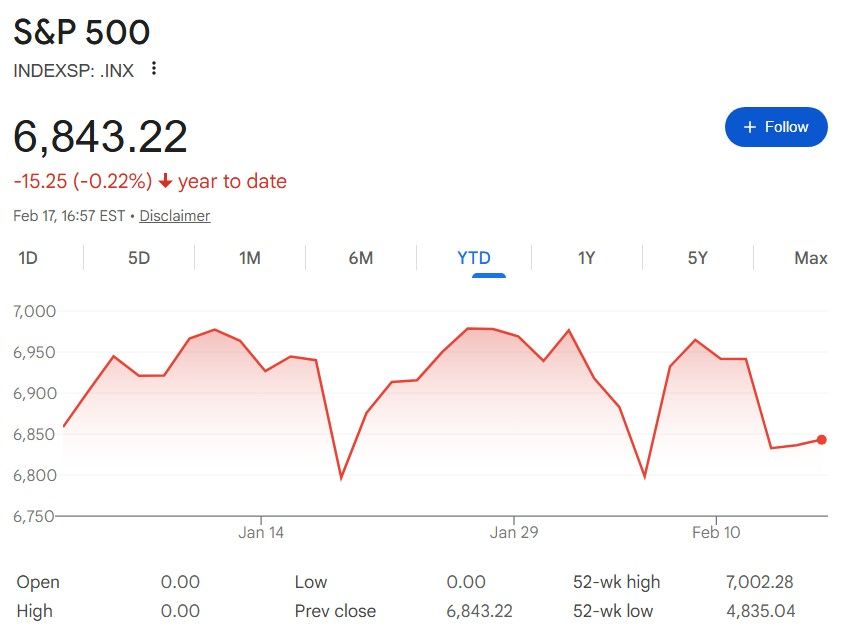
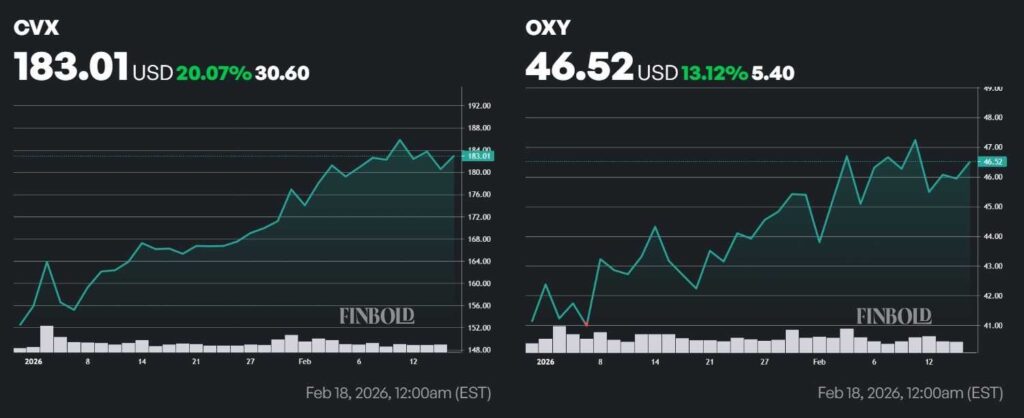
Specifically, while the index itself is down 0.22% and big tech firms such as Microsoft (NASDAQ: MSFT) and Nvidia (NASDAQ: NVDA) fell 16% and 2% YTD, firms like Chevron (NYSE: CVX) and Occidental Petroleum (NYSE: OXY) are flying high, having gained 20% and 13%.
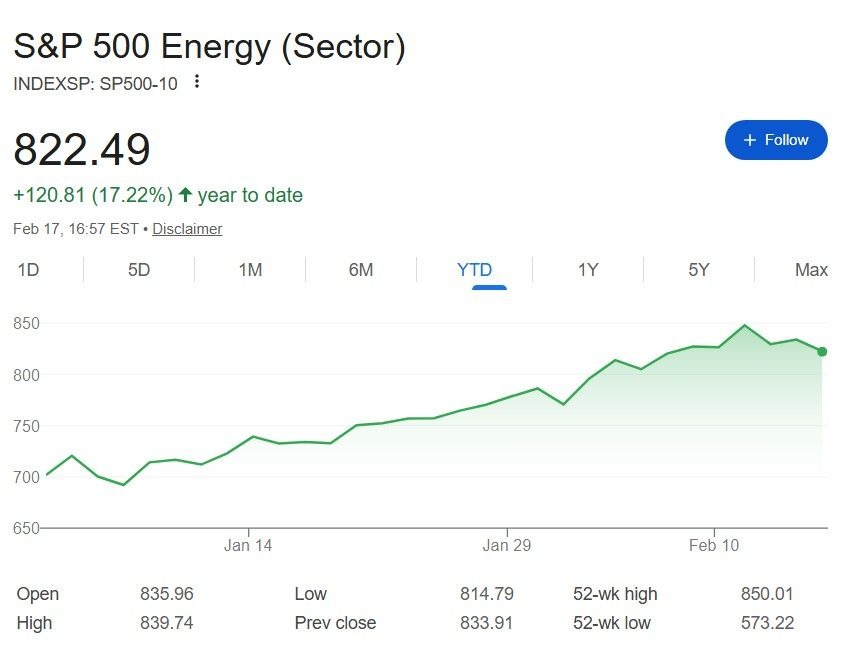
The strong performance is also evident in the S&P 500’s Energy Index, which is up 17.22% to 822 in 2026.
Why Oil stocks are flying high in 2026
In part, such a strong performance for oil corporations could have been anticipated. Indeed, a significant part of President Donald Trump’s campaign was rooted in a ‘drill, baby, drill’ philosophy of rejecting much of the green transition and embracing the traditional energy sector.
What was not as expected is the scale and type of geopolitical pressures that are helping firms like Chevron, Shell (LON: SHEL), and BP (LON: BP) fly higher in 2026.
Chevron, for example, has benefited from recent U.S. policy shifts in Venezuela after Washington eased sanctions and issued new licenses that allow the company and other oil majors to resume and expand operations in the country’s large oil fields.
The world’s likely next oil supply shock
Through the talks in Oman and Switzerland, the U.S. has been increasing its naval and air force presence in the Middle East, and the Islamic Republic has been issuing statements of defiance and executing naval exercises in the Persian Gulf.
The exercises have already given the world a taste of things that might come as the Strait of Hormuz – a critical waterway for the global oil trade – was briefly closed on Tuesday, February 17.
While most firms would, arguably, prefer their operations to remain undisturbed, black gold companies have a similar moat to cigarette manufacturers and sellers: a captive consumer base.
Thus, at least a part of the latest stock market boom can be linked to the volatility in the commodity markets.
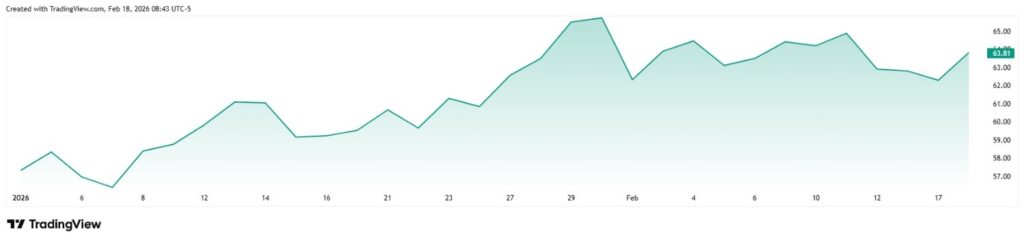
For example, Contract for Difference (CFDs) for WTI crude have been running from about $56 to above $65 since 2026 started, and between almost $66 and $62 in February, with the latest spike coming at press time on Wednesday with a surge from $62 toward $64.
How big tech is helping the fossil fuel energy sector rally
Lastly, despite its own headwinds, big tech has also been contributing to demand. Specifically, the sector’s ravenous expansion of artificial intelligence (AI) data center infrastructure has put essentially unprecedented and escalating pressure on energy grids.
Though many major AI companies are looking into leveraging sources such as nuclear, the ongoing shortage has reportedly led some firms – such as Elon Musk’s xAI – to resort to utilizing fossil fuel generators as a stopgap.
Featured image via Shutterstock