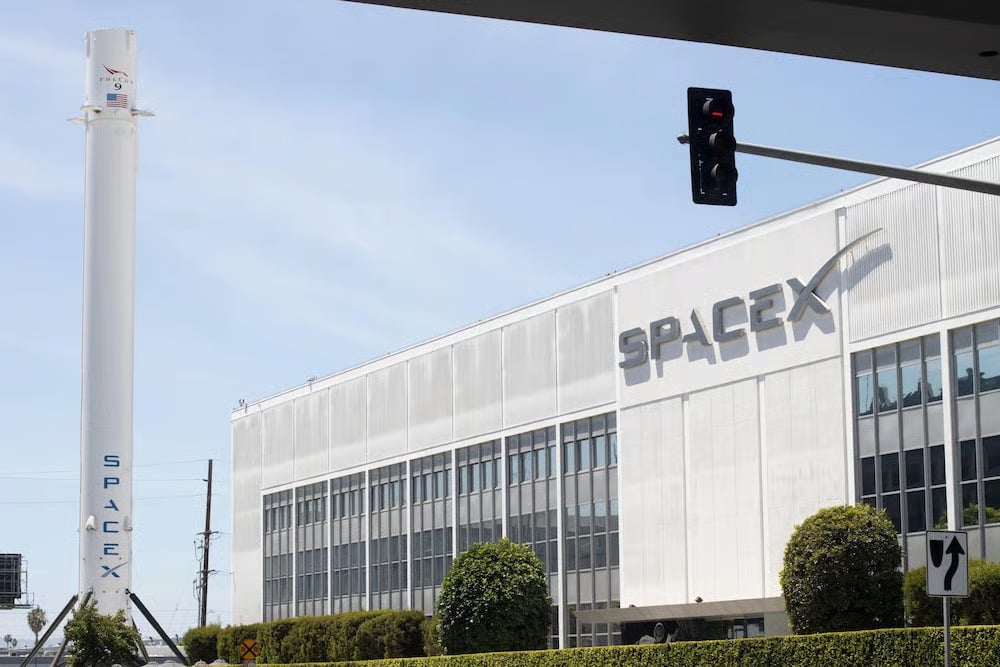

SpaceX’s (NASDAQ: SPCX) milestone Starship Flight 13 was the first such test that saw the successful deployment of Starlink satellites on July 24 after the market closed, but despite its technological and regulatory importance, it failed to halt the equity’s decline.
Specifically, SPCX stock closed at $113.50 on July 27, the first regular session after the event – lower than the $115.07 recorded on launch day and below even the $119.85 on July 20, the first session after the initial launch failed.
Still, a SpaceX share price reversal came about a week later with the company’s first-ever quarterly filing and, at press time in the pre-market on Friday, September 25, the equity is changing hands at $149.36.

Thus, a $1,000 investment triggered by confidence instilled by the successful test flight would have risen to $1,315.95 shortly before the next milestone launch: the Starship Flight 14, scheduled for Monday, September 28.
What is Starship Flight 14?
Meanwhile, the next test flight promises to be even more technologically important than the July launch. Indeed, Starship Flight 14 is aimed at not only deploying Starlink satellites, but also being the first attempt to enter a sustained orbital trajectory.
SpaceX will use the reusable Super Heavy rocket – the same as in July – but will not attempt to catch it, reserving that experiment for Flight 15. Notably, the test was initially scheduled for September 22 and was subsequently delayed to the next Monday.
Could Starship Flight 14 reignite the SpaceX stock price rally?
Elsewhere, the upcoming launch appears relatively unlikely to turn into a significant SPCX stock price driver, whether it fails or is successful, considering the lack of impact of Flight 13.
Still, with only a single example since the SpaceX initial public offering (IPO) available, and with the equity being in an apparent consolidation phase unlike in July, it is possible the event will prove a catalyst after all.
A part of the reason for the relatively low odds of major moves is the significant expansion of the company’s business.
While best-known for its reusable rockets and Starlink communications satellites, SpaceX runs the military-focused Starshield and has become both a social media company and an artificial intelligence (AI) firm in recent years.
Under the circumstances, the next major SpaceX stock move might come in two to three months – should Elon Musk’s estimates about new advanced models prove correct this time – due to both the dominance of the technology in public discourse and the importance the company itself gave it in the S-1.
Featured image via Shutterstock