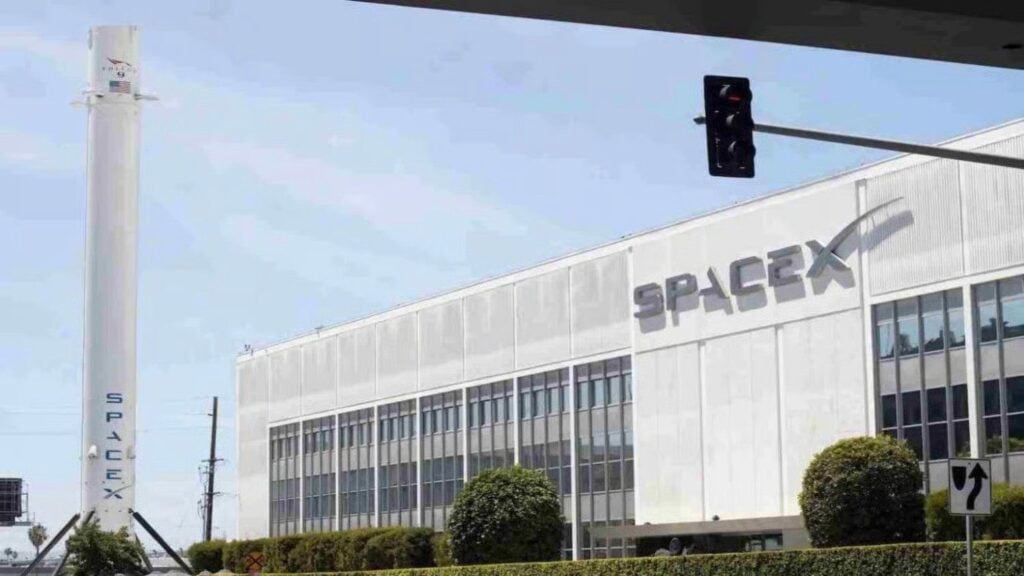

Though SpaceX (NASDAQ: SPCX) executed its initial public offering (IPO) at a record valuation of $1.77 trillion, it nonetheless managed to grow even larger to over $2.1 trillion by press time on October 9, 2026.
Indeed, investors who managed to fill their orders during the IPO itself would have acquired SPCX stock at $135 per share. Thus, with SpaceX equity trading at press time in the Friday pre-market at $166.69, a $1,000 early investment would have grown to $1,234.74 for a $234.74 profit.
Similarly, thanks to the early October rally, SPCX stands above its day-one open and close.
Investing $1,000 in Elon Musk’s newer public company on the morning of June 12 would have meant paying roughly $150 per share, meaning one would have seen their position appreciate 11.13% to $1,111.27.
Buying on the evening of the same day would have meant paying $160.95, leading to a 3.57% – $35.67 – increase in the value of the position to $1,035.67.

What’s next for SpaceX stock investors?
Still, the recent success does not necessarily indicate that investors who purchased SpaceX stock at its IPO are guaranteed to remain in the green long-term.
So far, SPCX shares have proved exceptionally volatile as they soared to $225.64 mere days after hitting the market and then fell to $104.83 in less than two months for a $120.81 difference between the extremes.
More recent trading has also been following a similar pattern. After ending September at $150.86, SpaceX equity rallied to $171.92 by October 6, then fell to $160.57 at the latest close and then rose another 3.81% to $166.69 by press time in the Friday pre-market.
The SpaceX stock price long-term forecast
The long-term picture is likewise unclear. On the one hand, there has been a strong bias toward bullishness for SPCX stock, with the average Wall Street price target estimating a rise to $216.21.
Elon Musk’s own recent remarks also demonstrate an astronomical degree of optimism, with the world’s first trillionaire making an X post in which he claimed he sees ‘a path to SpaceX being worth orders of magnitude more than the current Earth economy.’
While the parallel is imperfect, the world’s GDP is estimated at roughly $126 trillion, meaning the forecast – for the indeterminate future – indicates SPCX could hit a market capitalization in the tens of quadrillions and the share price, assuming no splits, would approach $1 million.
Meanwhile, SpaceX has also not been bereft of bearish assessments. As impressive as the firm’s rocket technology is, the gap between the firm’s valuation and revenue remains vast, and some reputable companies – such as Morningstar – have set a crash to $70 per share as their base case for the equity.
Featured image via Shutterstock