
Two months after investing $1,000 in SpaceX (NASDAQ: SPCX) stock on June 15, an investor would now be holding about $714, reflecting a loss during a period marked by significant volatility following the company’s historic market debut.
On June 15, SpaceX shares traded at $196 just three days after the firm went public. By August 15, the stock had fallen to $140, representing a decline of about 28.6%.
Consequently, a $1,000 investment made at the June 15 price would have lost roughly $286 over the two-month period.
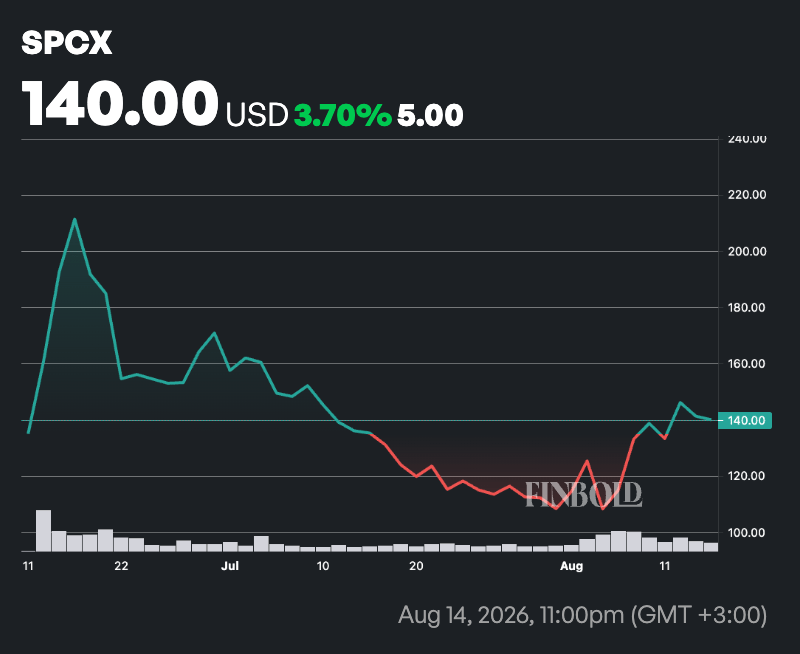
SpaceX went public on June 12 at $135 per share, raising $85.7 billion in the largest IPO on record and valuing the company at about $1.77 trillion.
Initially, SPCX shares surged to a high of nearly $225, pushing its market capitalization above $2 trillion.
However, shares later fell below the IPO price, hitting a low near $105 in early August before recovering to $140.
SpaceX stock fundamentals
Meanwhile, SpaceX’s first quarterly earnings report as a public company highlighted rapid business expansion but also signalled concerns about heavy spending.
For the quarter ended June 30, revenue climbed 92% year-over-year to $7.8 billion, exceeding expectations. Net losses narrowed to $541 million, while adjusted EBITDA rose to $3.5 billion.
Notably, Starlink remained the company’s largest revenue contributor and most profitable business segment.
At the same time, the artificial intelligence division delivered strong growth as new cloud computing and infrastructure agreements began generating revenue.
Management also indicated that annualized revenue could reach $100 billion by the end of 2026, supported by a substantial backlog of contracted business.
However, investors remained focused on SpaceX’s aggressive spending plans, with the company investing about $18 billion during the quarter in AI infrastructure, Starship development, and capacity expansion.
Although the heavy spending initially pressured the stock, sentiment later improved as management highlighted growing AI revenue opportunities and ambitious computing expansion targets.
Looking ahead, investor confidence will largely depend on SpaceX’s ability to sustain growth while managing its significant capital requirements.
Featured image via Shutterstock