
An investor who bought $500 worth of SpaceX (NASDAQ: SPCX) stock on June 23 would now be sitting on a loss, as shares have retreated significantly from their post-IPO highs.
With the stock falling from $156 on June 23 to $136 on August 23, that investment would have dropped to about $436.
The decline represents a loss of about $64, or 12.8%, over the past two months, as selling pressure and share unlocks weighed on the stock.
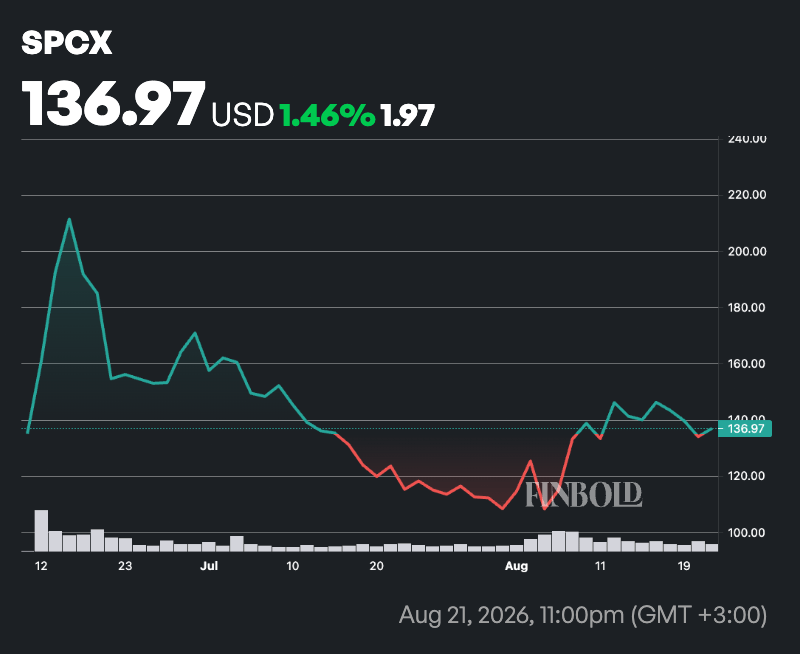
Notably, SpaceX completed its initial public offering in June at $135 per share. The stock rallied strongly after listing, closing its debut session near $161 and later climbing above $220 in mid-June as investor enthusiasm pushed the company’s market capitalization beyond $2 trillion.
Why SpaceX stock corrected
However, the rally proved difficult to sustain. By late June, shares had settled near $156 before entering a prolonged correction.
The stock has since retreated toward its IPO price amid post-listing volatility and multiple lockup expirations that increased the supply of tradable shares.
A key factor behind the decline has been successive share unlocks following the IPO. The latest release made roughly 319 million shares eligible for trading around August 20, adding further selling pressure.
Despite the weaker share price, the aerospace manufacturer continues to report strong operational and financial growth.
SpaceX fundamentals
The company generated $7.8 billion in second-quarter revenue, up 92% year-over-year. Adjusted EBITDA surged 191% to $3.5 billion, while the net loss narrowed significantly from the same period a year earlier.
Starlink remains the company’s largest business segment and primary source of cash flow. The satellite internet network has surpassed 11,000 satellites in orbit and continues to add subscribers across consumer and enterprise markets.
Meanwhile, SpaceX’s launch operations remain highly active. The company completed its 100th mission of 2026, reinforcing its position as the world’s leading commercial launch provider.
Investors continue to focus on the long-term potential of Starship and the company’s artificial intelligence business following the acquisition of xAI earlier this year.
Notably, SpaceX is investing heavily in AI infrastructure and cloud computing capacity while advancing Starship development to support future satellite deployments and commercial missions. Those investments have kept capital expenditures elevated and continue to weigh on profitability.
Featured image via Shutterstock