
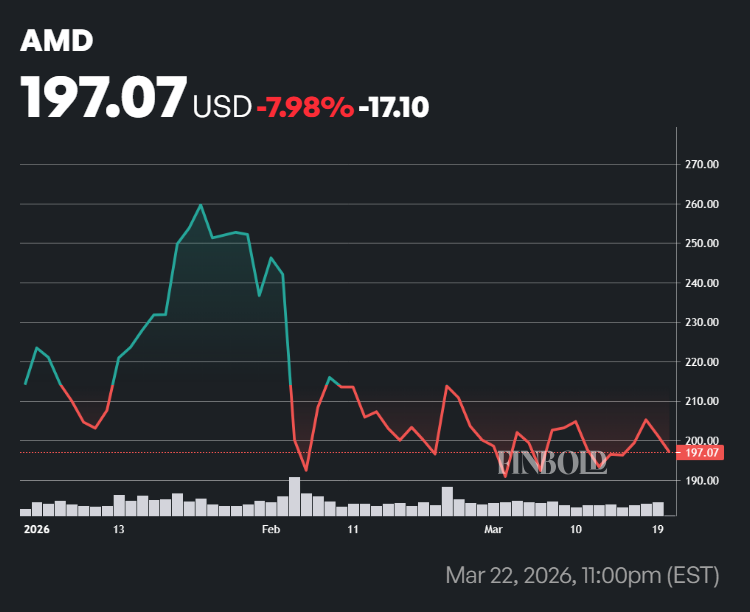
Following the deep, early February crash, the stock of Advanced Micro Devices (NASDAQ: AMD) has been consolidating, and advanced artificial intelligence (AI) models appear to believe that, after a continued moderate drawdown, the semiconductor equity will rally by the end of the second quarter (Q2).
Specifically, after starting the year with a rally from $214 to nearly $260, the world’s second most prominent chipmaker suffered nearly a 20% plunge in the aftermath of a positive earnings report but also weak forward-looking guidance.
Such a turn of events ensured that, at its press time price of $197.07, AMD stock is 7.98% down year-to-date (YTD) and that the outlook for Q2 remains uncertain due to a series of industry and supply chain risks.
Under the circumstances and seeking to pierce the uncertainty, Finbold consulted OpenAI’s flagship ChatGPT platform on how the semiconductor equity might fare in the coming three months.
ChatGPT forecasts AMD stock price target for Q2, 2026
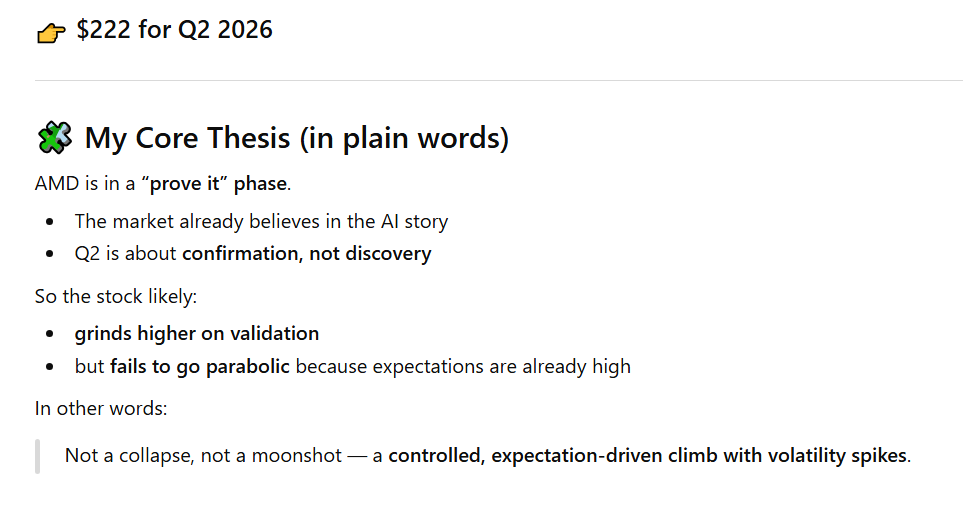
Perhaps the most important factor the AI identified for AMD stock is the fact that the market has already priced in aggressive growth. Indeed, such a view – also increasingly shared by analysts – has led to a relatively widespread cautious attitude toward the chipmaker.
Furthermore, it led ChatGPT to estimate that the semiconductor maker’s shares will remain level in the final week of March and begin Q2 at $198 before likely dropping further to the quarter’s low at $176.
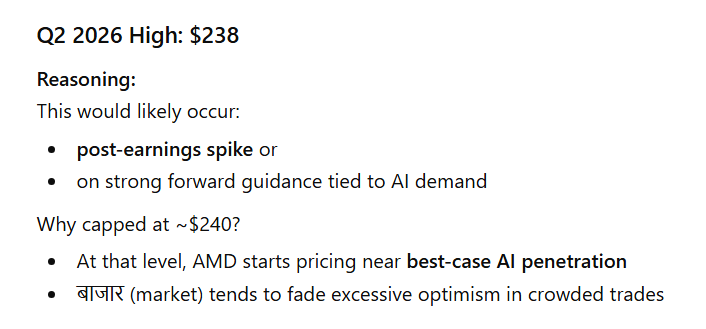
Despite this, the AI revealed it anticipates Advanced Micro Devices to begin delivering on the hoped-for profits from the technology, thus potentially enjoying a trimester high of $238 – explained as following a strong earnings report or upon strong guidance – and ending Q2 at $222 for a 12.12% rally between April 1 and June 30.
Did ChatGPT undermine its own AMD stock analysis for Q2 2026?
Elsewhere, a series of shortcomings in ChatGPT’s performance might actually undermine its core $222 thesis for the end of Q2.
Despite Finbold’s prompt instructing the large language model to thoroughly examine the relevant real-world data at the end of Q1, the AI appears to have entirely failed to verify market information.
For example, the platform did not mention the ongoing supply chain issues for semiconductor manufacturing arising from the closure of the Strait of Hormuz, and it did not reflect on the growing contemporary concerns regarding the profitability of the industry.
While one might interpret the failure to mention such factors as ChatGPT dismissing them as, ultimately, irrelevant, it would be significantly more difficult to explain why, at one point, the platform opted to switch to Hindi for a single word: बाजार (market).
Similarly, the AI’s final remark about it being willing to provide ‘a slightly more punchy version of the reasoning’ raises the question of whether its forecast was based on actual analysis of the market, or its analysis of what Finbold might have wanted to hear.
Featured image via Shutterstock