

Apple (NASDAQ: AAPL) stock fell nearly 2% in pre-market trading on Friday, October 9, following a report that the company reduced production of components for its newly launched iPhone 18 models.
Namely, rising memory chip costs and higher retail prices appear to have weighed on consumer demand, which has led to Apple adopting a more cautious approach to shipments last month, as reported by Nikkei Asia.
As a result, the company cut October component orders by at least 15% compared with its original requests. However, as of press time, Apple is yet to make an official statement.
At the time of writing, AAPL shares were sitting at $333.8 in pre-market.
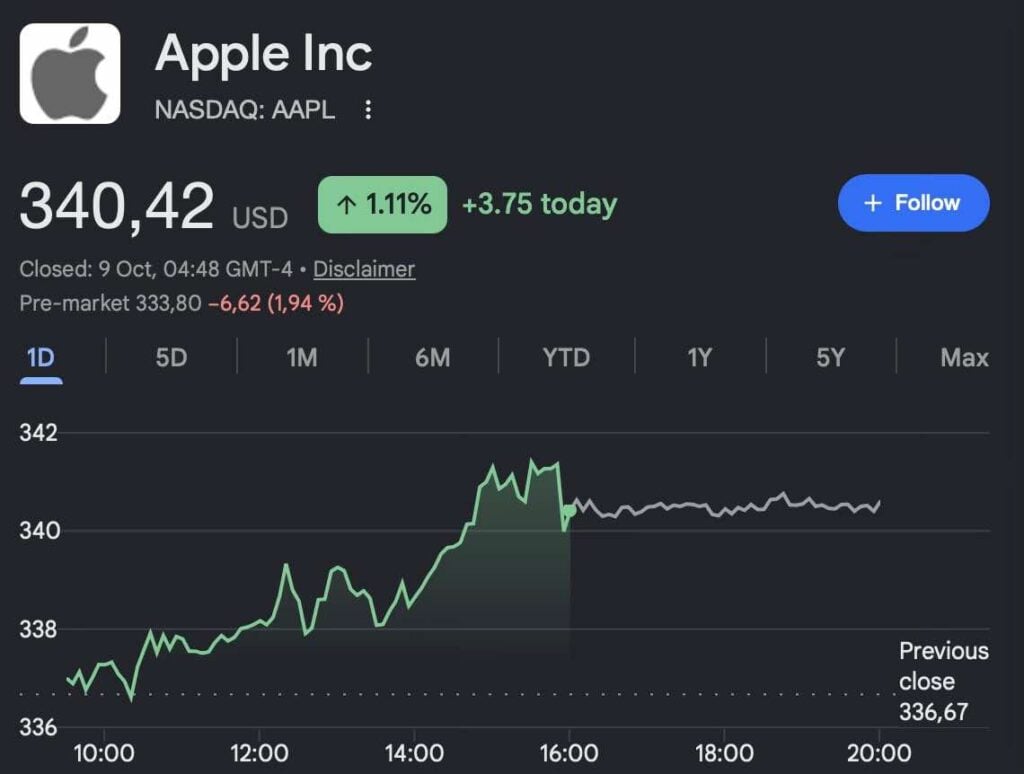
Is low consumer demand putting pressure on Apple stock?
According to the reports, the production adjustments come as Apple competes for advanced semiconductors and memory chips to power artificial intelligence (AI) data centers. The highly competitive market has, however, contributed to supply shortages and higher prices, putting pressure on the personal computer and smartphone markets.
Indeed, Apple has already raised prices for some iPad and MacBook models in June, acknowledging that it could no longer fully absorb the rising costs of memory and storage components driven by investment in AI infrastructure.
In addition, consumer demand for devices has reportedly weakened from late August through October. However, Nikkei noted that Apple’s changes to the iPhone launch schedule could also be contributing to the issue, which makes it difficult to attribute the slowdown to pricing alone.
Be that as it may, rising memory costs are becoming an increasingly important factor for Apple as it incorporates more AI-powered features into its devices. After all, such features require greater computing and memory resources, which increases reliance on high-performance chips.
Ultimately, the iPhone order cut reports further highlight a growing challenge for the technology industry, as the major players attempt to balance rising component costs and increasingly expensive devices against consumer demand.
Featured image via Shutterstock