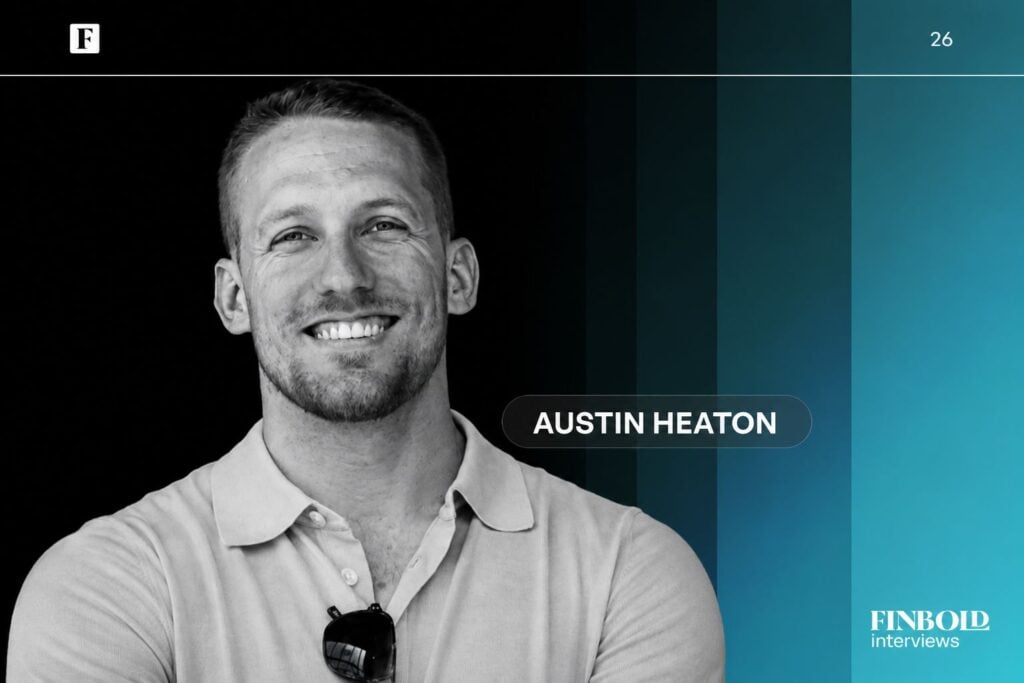

AI startups are in the strange position of building the technology that now controls their own discovery. B2B buyers ask ChatGPT, Perplexity, and Gemini which vendors to trust, and the answers those engines give are quietly reshaping pipelines across the AI, B2B SaaS, and fintech markets. Austin Heaton, an Answer Engine Optimization consultant with over 12 years in search, works with B2B companies to make sure they are the brand the AI names.
Heaton, whose work has been featured in Fast Company, SimilarWeb, Zapier, and FintechZoom, explains why AI citations now convert better than traditional rankings, what AI startups get wrong about their own visibility inside the models they compete alongside, and the five-step method he uses to take brands from invisible to recommended.
For readers who have not heard the term, what exactly is Answer Engine Optimization?
AEO is the practice of getting your brand cited and recommended by AI systems like ChatGPT, Perplexity, Claude, Gemini, and Google’s AI Overviews for the questions your buyers actually ask. Traditional SEO earns you a ranking that someone may click. AEO earns you a mention inside the answer itself, at the exact moment a buyer is forming a shortlist. Those are two very different assets, and right now most companies only manage the first one.
Why does this matter more for AI startups than most companies?
Two reasons. First, their buyers are the earliest adopters of AI research. Someone evaluating an AI infrastructure tool, an agent platform, or a model API is already living in ChatGPT and Perplexity, so the shift that will hit other industries over years has already happened in this market. Second, the category is brutally crowded. Thousands of AI startups launched in the last two years, and the engines compress that field into answers naming four or five vendors. If you are not one of them, you do not exist in the conversation. The irony is that most AI startups have no idea what the models say about them.
What does an AI citation actually do for a business commercially?
It compresses the funnel. When ChatGPT names you as a credible option, the buyer arrives at your site pre-sold in a way that no ad can replicate. In one engagement, a client went from essentially invisible to 5,130 ChatGPT referrals and 101 conversions in 60 days. The volume looks small next to organic search numbers until you look at intent. These are buyers who asked a specific question and were told your name. Conversion rates reflect that.
What do companies most often get wrong when they try to fix AI visibility themselves?
They treat it like classic SEO with new keywords. They publish more blog posts on their own domain and wait. But AI engines assemble answers largely from third-party sources: independent publications, comparison content, analyst commentary, review platforms. If everything good ever written about you lives on your own website, the machines have very little reason to trust you. The work is a blend of technical structure, content the engines can extract cleanly, and earned authority in the places they actually read.
Walk us through your method of growing AI visibilty.
It is a five-step system. First, technical SEO and AEO fixes: crawlability, indexing, and schema, all validated in Google Search Console so the gains are measurable rather than guesswork. Second, content strategy aimed at buyers, meaning the landing pages and comparison content people read at the moment of decision, not traffic for its own sake. Third, authority building: getting the brand featured in publications buyers already trust, because that earned coverage is what Google and the AI engines treat as proof. Fourth, strategic pages get refreshed every 30 days. Roughly 76% of AI citations come from content updated in the last 30 days, so freshness is not a nice-to-have, it is the format the engines cite. Fifth, clients have me daily in their Slack, steering strategy in real time as the landscape moves.
How do you prove the work is generating revenue and not just visibility?
I track six layers: citations by AI model over time, visibility on the specific prompts that matter commercially, citation share against competitors, how the models describe the brand, the actual AI conversations driving traffic, and finally clicks and conversions by AI source tied to revenue. That last layer is the one most providers skip. If you cannot connect an AI citation to pipeline, you are reporting vanity metrics, and clients deserve better than that.
Can you share results that show AEO producing revenue, not just traffic?
Across engagements, clients average 5 to 7x ROI, average AI click growth in the first 45 days is around 560%, and first measurable results typically land within a week. Every number is pulled from the client’s own analytics and citation tracking, and I publish them openly in the case studies on my site, because in this market, verifiable results are the only claims worth making.
Which companies are the best fit for this kind of work?
B2B companies where a customer is worth real money: AI products, B2B SaaS, fintech, and legal tech. If your buyer researches before purchasing and your average contract makes each new customer meaningful, AI visibility pays for itself quickly. It is a poor fit for impulse purchases or brands unwilling to invest in genuine authority. There is no shortcut that survives a model update.
Fintech and B2B SaaS brands operate in crowded, regulated categories. How does AEO work there?
Those are actually my deepest categories. In fintech, AI engines are conservative about who they recommend, so the path is legitimacy: verifiable claims, structured data, and coverage in publications the engines already trust. Lumanu, the creator payments fintech behind those ChatGPT referrals I mentioned earlier, became a consistently cited source for influencer payment queries, and its AI visitors converted at significantly higher rates than traditional organic traffic. In B2B SaaS the challenge is crowd noise, and the answer is owning the bottom-funnel comparison queries buyers ask right before choosing a vendor. Riseworks, a B2B SaaS and fintech client, grew organic sessions 1,419% and AI search visibility 575% on exactly that playbook.
Is traditional SEO dead, then?
No, and anyone selling that line is overcorrecting. Google still drives significant pipeline, and the fundamentals, meaning technical health and content that deserves to rank, feed both systems. What is dead is treating a Google ranking as the finish line. I run SEO and AEO as one program because buyers use both, often in the same hour.
Where does AI search go from here, and what should brands do this quarter?
Answer engines become the default first touch for B2B research, and the gap between cited and invisible brands hardens into a moat. The single most useful thing a team can do this quarter is run the audit: ask the engines your own buyers’ questions and read what comes back. Most executives are shocked. That shock is the beginning of a strategy, and the companies that start now are compounding authority while their competitors are still debating whether this is real.
Read more interviews here.