
Morgan Stanley has identified seven semiconductor and AI infrastructure stocks as attractive buying opportunities following the recent selloff in memory-related equities.
In a note on Monday, the banking giant argued that underlying demand from data centers remains strong despite weakness in consumer-facing technology markets.
To this end, the banking giant highlighted Micron Technology (NASDAQ: MU), Sandisk (NASDAQ: SNDK), Seagate Technology (NASDAQ: STX), SK Hynix, Western Digital (NASDAQ: WDC), Nvidia (NASDAQ: NVDA), and Broadcom (NASDAQ: AVGO) as stocks that could benefit from continued artificial intelligence-driven demand.
The call comes after memory stocks experienced a sharp correction amid broader semiconductor sector weakness.
Recent market volatility has weighed on major memory names, with investors concerned about valuation levels and mixed demand signals from consumer electronics, PCs, and smartphones.
According to Morgan Stanley, the current memory cycle differs from previous cycles because demand is being driven almost entirely by AI data centers rather than traditional consumer markets.
While slowing demand in PCs and smartphones has contributed to recent stock declines, the firm said conversations with data center customers indicate memory shortages remain severe.
The bank expects memory prices to rise by at least 25% between the second and third quarters, exceeding both its own forecasts and broader industry estimates.
Memory shortages to extend
It also believes concerns about memory shortages extending into 2027 and 2028 remain intact due to growing AI infrastructure requirements.
Morgan Stanley noted that memory stocks are not its preferred risk-reward opportunity within the semiconductor sector.
Instead, it continues to favor Nvidia and Broadcom, arguing that the two companies offer the strongest exposure to the ongoing AI infrastructure buildout.
Nevertheless, the firm believes recent weakness has made memory stocks increasingly attractive relative to their growth prospects.
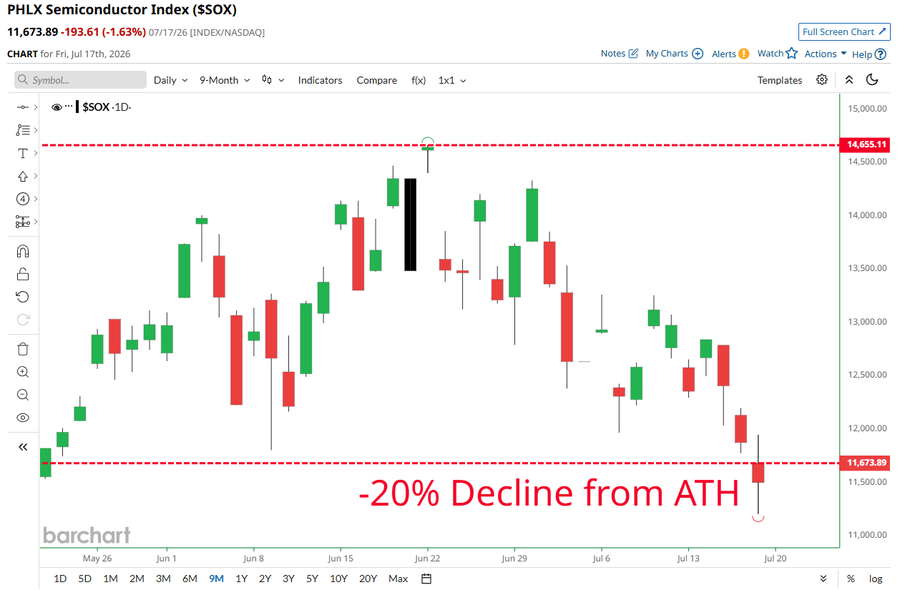
The bullish outlook contrasts with growing concerns about the semiconductor sector after the PHLX Semiconductor Index entered bear market territory, falling more than 20% from its recent peak.
Despite the pullback, analysts across Wall Street continue to view AI spending as a long-term growth driver for chipmakers and memory suppliers.