
Gold’s long-term and accelerating rally, paired with continuous economic uncertainty and repeated external shocks, compelled one of the world’s largest banks, Goldman Sachs (NYSE: GS), to turn even more bullish about the precious metal’s performance and raise its 12-month price target even further.
Specifically, Goldman’s analysts, including Lina Thomas and Daan Struyven, issued a note on January 21 in which they raised their December price forecast for the commodity by $500: from the previous $4,900 to $5,400.
Should Gold reach the banking giant’s price target, it would mean it had rallied an additional 11.87% in the coming 12 months, continuing the 76% rally that took place in the last 52 weeks and helped the yellow metal hit $4,827 by press time on January 22.
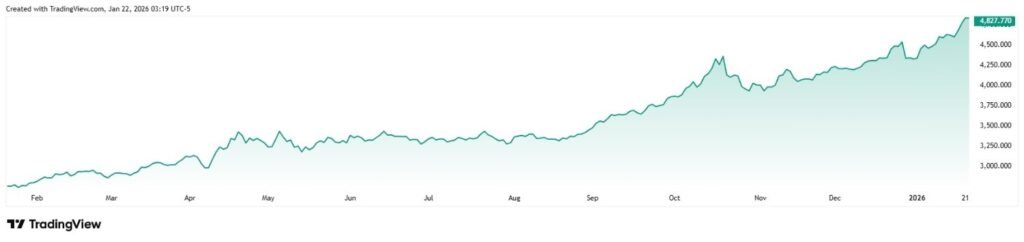
Why Gold rally will continue through 2026
Notably, Goldman analysts estimated that both the public and the private sectors will play a role in the expected rise of the world’s largest commodity by market capitalization. For example, they expect that central banks worldwide will be buying approximately 60 tons of gold each month – about 720 tons through the entire 2026.
In the note, the experts also noted that Western exchange-traded funds (ETFs) increased their holdings by as much as 500 tons since the start of 2025 and opined that the trend would continue.
Indeed, unlike previous hedges against potentially turbulent events such as the 2024 elections that have been relatively ephemeral, Goldman estimates the prevailing global instability that has been driving the ongoing investor flight into gold will prove ‘sticky,’ leading to continued accumulation and relatively little selling.
Additionally, the analysts remarked that the risks associated with the price target are very skewed to the upside. Although $5,400 appears like a staggeringly high forecast, contrasting the 75% rally in the previous 12 months with the 11.87% rise predicted by the end of 2026 paints Goldman Sachs’ target as comparatively conservative.
Lastly, despite the overall bullish tone of the note, the banking giant left some room for a sudden downtrend should there be a stark drop in perceived risks regarding global monetary and fiscal policy.
Featured image via Shutterstock