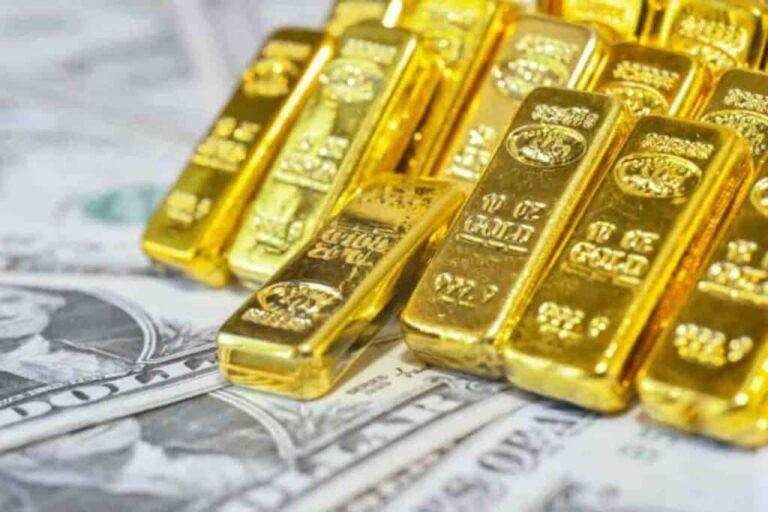
Gold has been one of the defining financial stories of the mid-2020s. After a historic bull run that carried prices to an all-time high of roughly $5,595 per ounce in January 2026, the precious metal has entered a consolidation phase — and the key question for investors is whether the next leg higher is already forming, or whether a more prolonged correction lies ahead. Here is a comprehensive look at what the major banks, macro drivers, and technical signals suggest for gold in 2026 and 2027.
Where Gold Stands Today
As of early June 2026, gold is trading near the $4,335 level, having pulled back significantly from its January peak. The retreat has been driven by a combination of a hawkish Federal Reserve tone, a temporary dollar recovery, and profit-taking after an extraordinary multi-year rally. Yet the broader structural picture remains largely intact — and that is what makes the current consolidation period so closely watched by institutional investors.
The Structural Drivers Behind the Bull Case
The fundamental tailwinds for gold are not new, but they have grown considerably stronger in recent years.
Central bank demand remains the dominant force. Central banks are still buying large quantities of gold, with projections suggesting purchases of around 800 tonnes in 2026 alone — driven by a desire to diversify reserves away from traditional dollar-denominated holdings. Central bank net purchases reached 244 tonnes in Q1 2026 alone, up 17% quarter-on-quarter and above the five-year quarterly average.
De-dollarization is a related and increasingly powerful trend. Institutions in regions such as China and the Middle East have been shifting reserves away from the US dollar into physical bullion, with some reports indicating average purchases of 60 tonnes per month. This is not speculative flow — it is structural, sovereign-level reallocation that does not reverse on bad trading days.
Fiscal concerns add another layer. The rapidly declining US fiscal health is one of the biggest tailwinds for gold going into 2026. Ray Dalio has described the skyrocketing national debt as a “heart attack” threatening the economy, and Moody’s recently downgraded the US credit rating, eliminating the country’s final unvarnished credit score.
What the Major Banks Are Forecasting for 2026
Wall Street’s biggest names have significantly upgraded their gold targets over the past year.
For 2026, major financial institutions and analysts have revised their outlooks sharply higher, with price targets now ranging from $5,400 to $6,300 per ounce. J.P. Morgan projects a target of $6,300, citing a “structural demand thesis” fuelled by sustained central bank accumulation of roughly 800 tonnes. Deutsche Bank, Yardeni Research, and Peter Schiff all align on a $6,000 milestone, while UBS forecasts a peak of $5,900 following the US midterm elections. Goldman Sachs maintains a $5,400 target, basing its optimism on continued de-dollarisation and private-sector diversification.
Morgan Stanley’s base case is the most measured of the major forecasts, with gold expected near $4,800 per ounce by Q4 2026. The bank sees momentum from 2025 fading, but the broader trend remaining higher.
Investors who want to monitor these targets in real time should consult a reliable xau/usd live chart, which tracks spot price action against key technical levels and allows traders to assess whether the market is moving toward or away from these bank targets on any given session.
The Path to $6,000: What It Would Require
A path to $6,000 requires one of two catalysts: either a peace deal that allows the Fed to cut rates and removes the opportunity-cost headwind, or a prolonged conflict that eventually breaks investor faith in fiat alternatives.
The Fed’s policy trajectory is central to both scenarios. Each 25 basis point cut is estimated to generate approximately 60 additional tonnes of ETF demand within six months — meaning that a renewed easing cycle would act as a powerful secondary demand engine on top of the existing structural buying.
Conversely, the risks are real. A meaningful recovery in the US dollar, a sharp rise in real interest rates, or an unexpected resolution to global geopolitical tensions could put near-term pressure on gold. Traders should be prepared for bouts of volatility, particularly if macroeconomic data shifts market expectations around Federal Reserve policy.
Gold Price Forecast for 2027
Looking further ahead, the picture widens considerably — and that dispersion is itself informative.
Analysts are divided in their predictions for gold in 2027. The metal is projected to reach $6,776 by the end of the year in the bullish scenario, while a bearish trend could see prices falling back to the $4,130–$4,205 range.
Commerzbank carries a target of approximately $5,200 into 2027, while the upper end of the range reaches extreme-demand scenarios. Bank of America analyst Michael Widmer has flagged a potential $8,000 by 2027, citing uncertainty over Federal Reserve leadership and large structural deficits, with investor allocations to gold still historically low.
J.P. Morgan expects gold prices to average $5,400 per ounce by the fourth quarter of 2027, aligning with Goldman Sachs’s long-term view, which sees prices grinding steadily higher as the structural demand backdrop remains intact.
For traders accessing the market through derivatives, tracking the gold CFD price on regulated platforms provides a practical way to gain exposure to these multi-year trends without holding physical metal, while also allowing for risk management through stop-loss orders as the macro picture evolves.
Key Risks to the Bullish Consensus
The weight of analyst opinion points higher, but consensus trades carry their own dangers.
- A hawkish Fed surprise. If inflation re-accelerates and the Fed is forced to raise rates rather than cut, the opportunity cost of holding gold rises sharply and ETF outflows could overwhelm structural central bank demand.
- Dollar strength. Gold and the dollar tend to move inversely. A period of dollar outperformance — perhaps triggered by a global risk-off event that paradoxically benefits the greenback — could suppress gold even as physical buying continues.
- Geopolitical resolution. A significant de-escalation in global conflicts could remove the safe-haven premium that has been embedded in gold’s price for the past several years.
Conclusion
The gold market in 2026 and 2027 is not a story of speculative excess — it is a story of structural transformation. Central banks are buying, institutions are hedging, and retail investors are waking up to gold’s role as a long-term store of value in a world of persistent fiscal deficits and geopolitical fragmentation. Whether prices reach $5,400 or push toward $8,000, the weight of analyst opinion suggests the path of least resistance remains higher.
The current consolidation near $4,335 may ultimately prove to be an accumulation zone before the next leg upward — or it may develop into a deeper correction if macro headwinds intensify. Either way, gold in 2026–2027 is a market where the fundamental case is among the strongest it has ever been, and where careful, data-driven positioning will matter more than ever.