
Several XRP-related developments have landed in recent weeks. Ripple has expanded its regulatory reach, RLUSD has moved into new markets and activity on the XRP Ledger has continued to change. The xrp price live shows how traders are responding at a given moment, but the price does not explain the full picture.
During research on 14 July 2026, Binance showed XRP/USDT trading at approximately 1.0672, down 0.73% over 24 hours. The pair also recorded 57.30 million XRP in trading volume and 61.26 million USDT in turnover. Those figures show what was happening on one active spot market at that moment. Recent licensing decisions, stablecoin growth, software updates and investment-product flows provide the wider context behind the attention surrounding XRP.
What the Live XRP Market Is Showing
The latest traded price is usually the first number users notice, but Binance’s XRP/USDT page contains several indicators of current market conditions:
- Current price and 24-hour movement
- The session’s high, low and trading range
- XRP volume and its value in USDT
- Open buy and sell orders
- Recently completed trades
During the research snapshot, XRP reached a 24-hour high of 1.0832 USDT and a low of 1.0535 USDT. The difference was 0.0297 USDT, equal to around 2.8% of the lower figure. XRP therefore moved through a clear intraday range despite ending the period less than 1% lower. The numbers cover one trading pair on one exchange. They do not include every XRP trade worldwide or transactions taking place directly on the XRP Ledger.
That difference is important. Moving XRP between two ledger addresses is not the same as trading XRP against USDT. News can increase interest across the ecosystem without producing an immediate move in the Binance pair.
European Authorisation Broadens Ripple’s Reach
Ripple received full crypto asset service provider authorization under the European Union’s Markets in Crypto-Assets framework on 6 July 2026. The Luxembourg approval brought the company’s global portfolio to more than 75 regulatory licenses.
The authorization allows Ripple to offer its regulated crypto payments product across all 30 countries in the European Economic Area. Operating under a single regional framework could make it easier for financial institutions and businesses to access Ripple’s services.
The link with XRP is not direct. Ripple is a company, the XRP Ledger is a network and XRP is a traded asset. Growth in one part of that structure can support attention around the others, but customers using Ripple’s payments services are not necessarily required to purchase XRP.
The Binance market supplies a more immediate reading of trader behavior. Its price and volume reflect completed orders and available liquidity, while the MiCA approval shows how Ripple’s regulated operating reach is changing.
RLUSD Adds Measurable Activity to the XRP Ledger
Ripple and SBI Group launched Ripple USD in Japan on 24 June 2026. Approval from Japan’s Financial Services Agency allowed RLUSD to become available to institutional and retail users through SBI VC Trade. Ripple said the stablecoin had reached a global market capitalization of $1.7 billion by the time of the launch.
The RWA.xyz XRP Ledger dashboard provides a closer look at stablecoin activity taking place specifically on XRPL. At the latest check, it recorded:
- Approximately $431.17 million in stablecoin market capitalisation
- Around 52,590 stablecoin holders
- Holder growth of 49.94% over 30 days
- Approximately $858.30 million in 30-day transfer volume
Stablecoin value rose by 1.5% over the same period, while transfer volume fell by 27.06%. The number of holders was growing much faster than the amount being transferred.
That is different from the 57.30 million XRP recorded in Binance’s XRP/USDT volume. RWA.xyz tracks stablecoins moving through the ledger, while Binance records XRP bought and sold against USDT.
RLUSD gives users another way to move dollar-denominated value on XRPL. Its longer-term relevance to XRP will depend on whether that use creates more demand for the token beyond network fees and routine ledger operations.
Technical Updates Arrive as Network Use Grows
XRP Ledger activity had already increased before its latest software release. Messari reported that average daily transactions rose from 1.83 million to 2.48 million during the first quarter of 2026, a quarter-on-quarter increase of 35.3%.
Version 3.2.0 followed on 15 June. XRPL described it mainly as a maintenance and cleanup release, with fixes affecting Single Asset Vaults, lending functions, permissioned trading, multi-purpose tokens and permissioned domains. Server operators were advised to upgrade to maintain continuity.
The timing matters. The transaction growth occurred before the software update, so version 3.2.0 cannot explain the increase. Instead, the release arrived while the network was already handling more daily interactions.
Maintenance work rarely attracts the same attention as a new product, but reliable software remains important to exchanges, applications and financial services built on the ledger. The effect becomes measurable only when updated functions lead to more transactions, liquidity, or application use.
What XRP/USDT Volume Reveals About Trading
The Binance snapshot showed 57.30 million XRP traded over 24 hours, worth 61.26 million USDT. The first figure counts the tokens that changed hands, while the second shows the value of those trades in the pair’s quote currency.
Volume alone does not reveal how many people participated or which side of the market had more influence. One trader may place dozens of orders, while a single large transaction can contribute more volume than many smaller trades. Every completed trade also involves both a buyer and a seller, so high turnover does not automatically point to upward price pressure.
Price movement also depends on how much buying and selling interest sits near the current rate. When the order book is deep, larger trades can often be completed without causing a sharp move. In a thinner market, even a smaller order may push through several price levels.
Large transactions need the same context in other markets. When Apple executives sold nearly $24.2 million worth of shares, the headline value attracted attention, but the surrounding timing and market conditions were needed to interpret what the sales meant. XRP/USDT turnover works in a similar way: the size of the activity matters, but it becomes more useful when read alongside liquidity and price movement.
The gap between the best bid and best ask adds another clue. A tight spread suggests buyers and sellers are quoting prices close together, while a wider spread can make trades more expensive to complete. Looking further down the order book also shows how much XRP is available at different price levels.
Together, volume, liquidity, spread and the daily range give a fuller picture of market activity than any one figure on its own.
Address Growth Sends a Mixed Activity Signal
The XRP Ledger added 489,739 addresses during the first half of 2026, according to an analysis of XRP Ledger address growth. Total addresses rose from 7,913,554 on 1 January to approximately 8,403,293 on 30 June. That represents growth of around 6.19%. Daily participation moved in the opposite direction. Active unique addresses fell from 19,927 to 15,302, a decline of roughly 23.2%.
Together, the numbers show a network with a broader account base but fewer addresses being used each day at the end of the period. Some new accounts may remain inactive, while one business or individual may control several addresses.
Exchange trading also takes place outside this measure. A Binance customer can complete several XRP/USDT trades without moving coins from a personal XRPL address. The 57.30 million XRP recorded in Binance’s daily volume therefore describes a different form of participation.
Address totals help show the size of the network’s footprint. Active-address data gives a better indication of how much of that footprint is being used regularly.
Fund Flows Provide Another View of Demand
CoinShares recorded XRP inflows across three consecutive weekly reports:
- $39.6 million in the report published on 11 May 2026
- $67.6 million in the report published on 18 May 2026
- $31.8 million in the report published on 26 May 2026
Added together, the weekly totals equal approximately $139 million. That is a calculated sum based on the separate CoinShares reports rather than a cumulative figure published by the company. These inflows track money entering investment products that provide exposure to XRP. They do not measure direct ledger transfers or every purchase made through a spot exchange.
The three-week run indicates sustained interest in XRP-linked products during that reporting period. Spot-market behavior may still differ because investment-product demand can be offset by selling elsewhere or changes in wider crypto sentiment.
Placed beside Binance turnover, the figures show two forms of activity. Fund flows track demand for structured exposure, while spot volume shows XRP actively changing hands between buyers and sellers.
Live Pricing Shows How the Market Is Responding
Recent developments have widened Ripple’s regulated reach, expanded RLUSD access and arrived while the XRP Ledger was processing more daily transactions. Address growth and fund inflows offer additional evidence of attention around the ecosystem.
Binance’s XRP/USDT market shows how part of that attention is being expressed through spot trading. On 14 July, the pair stood at 1.0672 USDT within a daily range of 1.0535 to 1.0832 USDT.
None of the surrounding developments explains that price alone. Regulation, stablecoin transfers, ledger transactions, address activity, investment-product flows and exchange turnover each capture something different. Looking at them together gives a fuller view of XRP’s market environment than using one announcement or statistic to account for the live price.
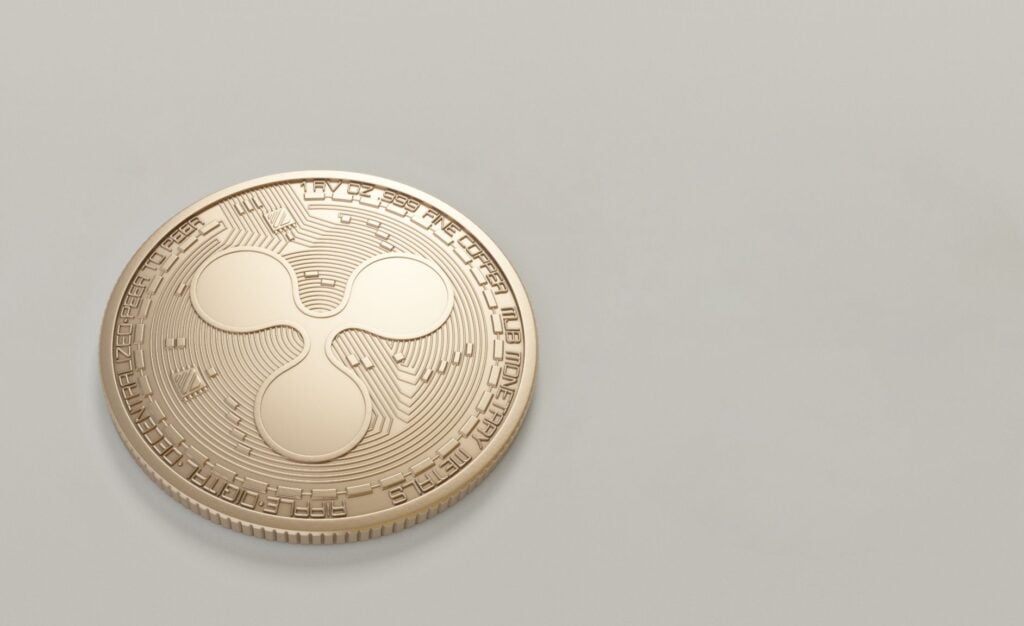
Featured image via Pexels.com