

Elon Musk filed a new 13G disclosure with the SEC on August 13, revealing a 48.4% stake in SpaceX (NASDAQ: SPCX) as of June 30, which puts the value of his holding at more than $900 billion based on the company’s current value.
The filing has provided some much-needed insight into Musk’s control of the space company. Namely, the CEO owns approximately 6.42 billion SPCX shares and exercises sole voting and dispositive power over them.
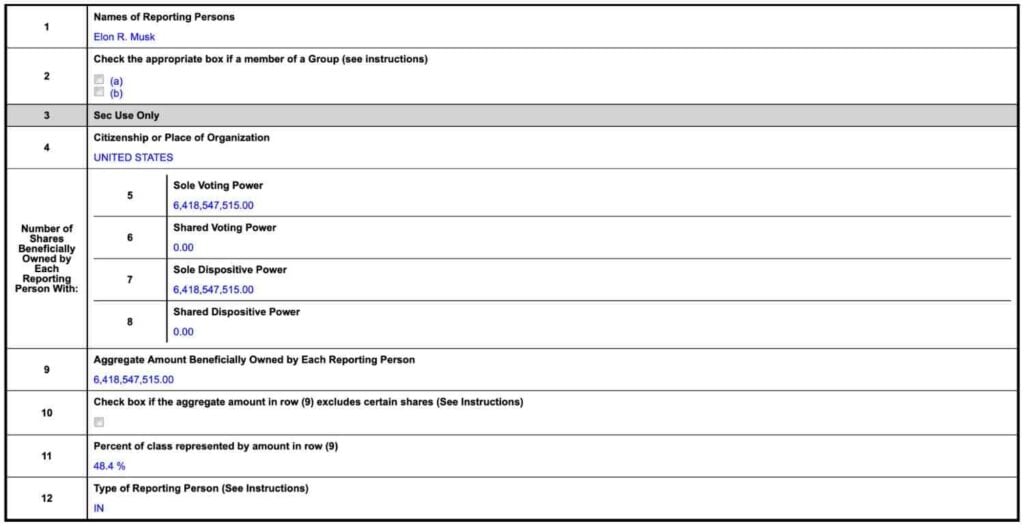
His stake consists of about 849.5 million Class A shares held by trusts for which he is a trustee, 3.92 billion Class B shares held by those trusts, 1.3 billion restricted Class B shares held directly, and 350 million Class B shares issuable upon the exercise of stock options.
Since the June 12 IPO, Musk has maintained more than 82% of the company’s voting power, underscoring his continued influence over SpaceX despite its transition to public ownership.
Is the market getting optimistic on SpaceX again?
The rockets-to-AI company went public in June with a record-setting initial public offering that raised $85.7 billion and pushed the company’s market capitalization above $2 trillion. Soon after, the initial enthusiasm surrounding the listing faded, and the stock started dropping below the IPO price in July.
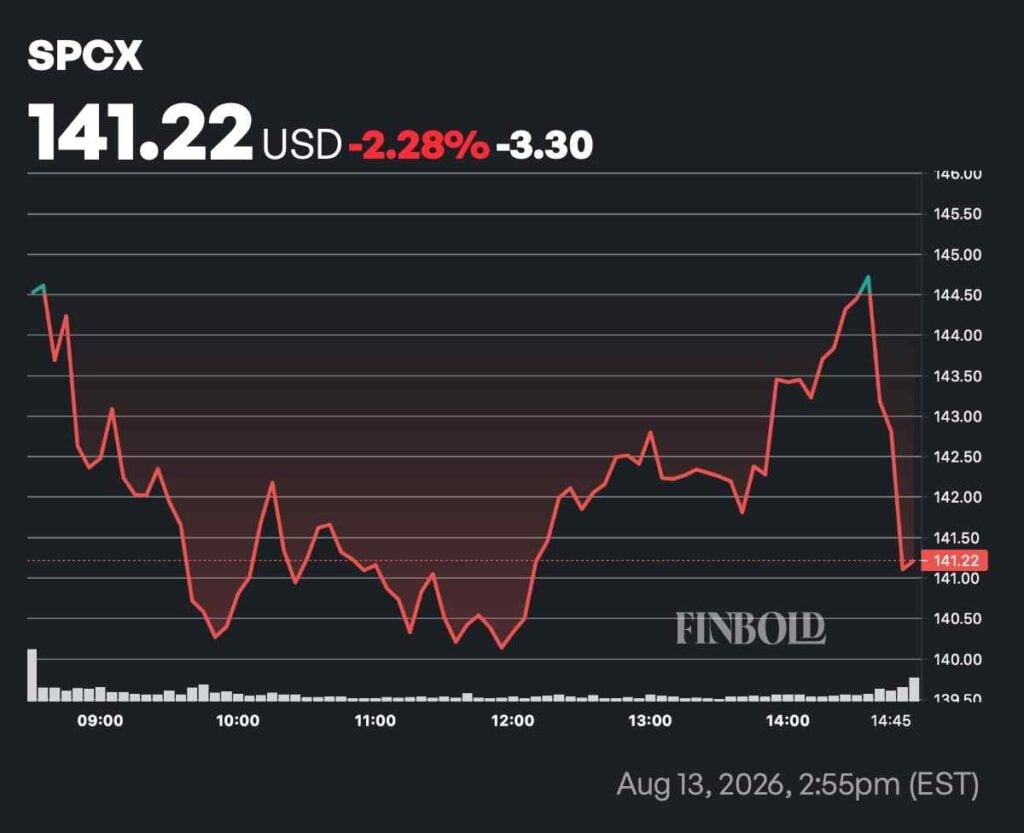
Since then, SpaceX shares have somewhat rebounded. After falling to as low as $104 in early August, the stock climbed above its $135 IPO price on August 12, just two months after its public-market debut. At the time of writing, SPCX stock is trading at $141.
The recovery followed SpaceX’s first quarterly earnings report on August 4. Notably, the company reported a 92% year-over-year increase in second-quarter revenue to $7.8 billion, while its net loss narrowed to $542 million from $1 billion a year earlier.
Investors also closely watched the expiration of the first post-IPO lockup period on August 6, when many insiders became eligible to sell portions of their holdings. Instead of a sharp sell-off, however, SpaceX shares went through a rally, gaining about 30% so far in August.
SpaceX’s strong second-quarter performance has also fueled optimism. For example, Musk recently forecasted that the company could generate $1 trillion in annual revenue in 2030-2031.
Featured image via Shutterstock