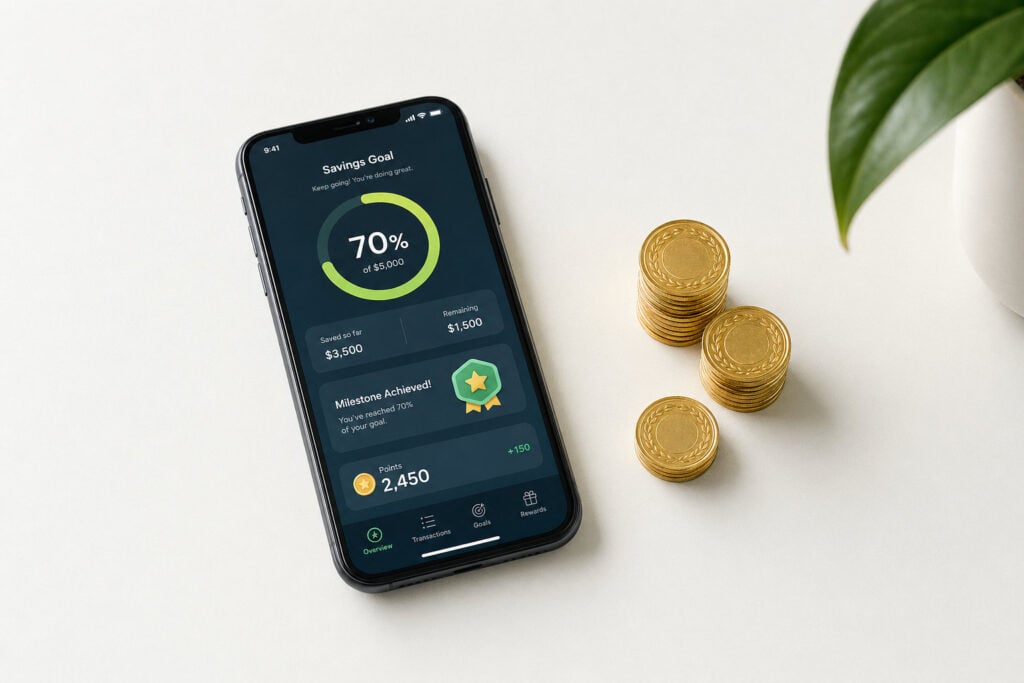
Financial platforms are adopting gamification elements to boost user engagement in an increasingly crowded digital landscape. These mechanics transform routine financial activities by introducing progress tracking, rewards, and interactive feedback. As competition rises, the role of gamification in finance continues to attract attention for its potential benefits and emerging challenges.
User engagement has become crucial for financial services, as acquisition costs rise and retention grows more difficult in a field saturated with innovative digital apps. Gamification elements, borrowed from game design but applied to non-game contexts, are being harnessed by many financial platforms to create more interactive and rewarding experiences, sometimes drawing on familiar entertainment mechanics such as Sweepstakes Slots. Unlike traditional games, these features are intended to encourage consistent involvement through structured incentives, micro-goals, and behavioral prompts. Sweepstakes Slots, appearing mid-sentence here, highlights how varied approaches in gamification can start to influence user behavior in virtual finance, illustrating the breadth of interactive strategies reshaping financial technologies.
Progress trackers and milestones re-shaping user journeys
Modern finance apps frequently employ progress indicators that transform goal-setting into a visible, trackable journey. These indicators allow you to see advancement toward objectives, often using levels, streaks, or badges to recognize achievements. Such elements provide ongoing feedback, turning mundane actions like saving or sticking to a budget into a series of concrete steps.
Beyond simple progress bars, many platforms incorporate milestones that unlock new features or privileges as you progress. For instance, reaching a certain savings goal might reveal new financial tools or personalized insights. This approach helps maintain interest and motivation, as each completed milestone reinforces a sense of accomplishment and encourages continued activity.
Reward structures play a vital role in enhancing user motivation. Many apps implement points, unlocks, or limited-time challenges, giving you reasons to return regularly and engage with different tools. These rewards may take the form of badges, free educational content, or new functionalities that feel earned rather than simply provided.
Feedback loops and behavioral prompts further sustain activity through well-timed notifications and confirmations. Many platforms now issue micro-goals, small, achievable tasks that guide you through key actions, while providing instant feedback whenever these goals are achieved. Sweepstakes Slots, placed here for seamless integration, serves as an example of how varied interactive elements can manifest in financial interfaces, illustrating the adaptability of gamification techniques across different products and contexts.
Visual design plays a critical role in making progress trackers effective and engaging. Many platforms use color-coded indicators, animated transitions, and celebratory graphics to reinforce positive behaviors and create emotional connections with financial goals. These visual cues help transform abstract concepts like “saving 20% of income” into tangible, digestible markers of success. The psychological impact of seeing a progress bar fill or watching a savings thermometer rise creates a dopamine response similar to completing tasks in other achievement-oriented environments, making financial discipline feel less like a chore and more like a rewarding personal journey.
Behavioral economics and the science behind engagement
Gamification’s appeal is rooted in behavioral economics, with principles such as loss aversion and variable reinforcement shaping user experience. Loss aversion, where individuals prioritize avoiding losses over securing equivalent gains, can encourage cautious behaviors in investment or budgeting platforms when tied to streaks or milestone resets.
Variable reinforcement adds an unpredictable element to rewards, prompting users to check back frequently, unsure when the next badge or benefit might arrive. This unpredictability mirrors mechanisms used in successful game and entertainment products, providing a sense of excitement and ongoing incentive.
The goal-gradient effect also contributes to engagement in finance apps. This effect describes how the closer you get to a goal, the faster and more frequently you act to reach it. Progress visualizations and streak mechanics encourage users to complete actions consistently, especially as they near the finish line of a savings target or investment milestone.
Several user experience principles reinforce the effectiveness of gamification in financial platforms. Interface designs that reduce friction, for instance, simplifying workflows or providing clear next steps, increase the chances that you will complete onboarding or return for repeat visits. Perceived control, delivered through interactive features and immediate feedback, strengthens your sense of ownership over financial outcomes and builds habitual, positive behaviors.
Social proof and comparative benchmarking further amplify engagement through gamification in financial platforms. Many apps now incorporate anonymized peer comparisons, showing how your savings rate or investment consistency measures against similar demographic groups. This taps into fundamental human tendencies toward social comparison and competitive motivation, encouraging you to maintain or improve your standing relative to others. However, these features must be carefully calibrated to avoid creating anxiety or unhealthy competition, instead fostering a sense of community achievement and shared progress toward financial wellness goals.
Widespread adoption across varied financial verticals
Personal finance management tools have rapidly introduced gamification to transform how you track expenses, categorize spending, and set up budgets. Apps often segment large goals into manageable chunks, rewarding consistency with badges or streak icons to make prudent habits feel gratifying.
Retail investing and trading platforms use similar techniques to simplify complex processes for new users. By implementing digital milestones and progress bars, these platforms demystify market engagement while providing reward mechanisms for educational progress, repeat investing, or diversification efforts.
Credit-building and savings-focused products also benefit from gamified engagement models. Platforms may offer virtual progress displays that highlight credit improvement, or encourage small, regular deposits with immediate acknowledgments and incremental rewards. These mechanics support better financial discipline by keeping long-term outcomes visible and attainable.
Loyalty ecosystems and card-linked offers leverage gamification to encourage cross-product usage. By tying rewards or challenges to actions like using a credit card for specific transactions or engaging in partner offers, you are incentivized to explore and utilize different features across the ecosystem, increasing platform retention and usage depth.
Insurance platforms and pension providers represent emerging frontiers for gamification adoption. These traditionally static financial products are being reimagined with interactive elements that reward healthy behaviors, regular policy reviews, or engagement with retirement planning tools. Some insurance apps now offer premium discounts or wellness rewards for completing health challenges or maintaining safe driving streaks, while pension platforms use projection tools and milestone visualizations to make distant retirement goals feel more immediate and actionable. This expansion demonstrates how gamification can breathe new life into financial services that have historically struggled with user engagement and perceived relevance.
User and platform benefits from gamified experiences
For users, gamification creates more transparent financial environments. Progress trackers reduce ambiguity by delineating steps toward goals, helping you focus attention on what matters and visualizing success in incremental ways. This can improve financial literacy while fostering a sense of achievement.
Consistent interaction is another significant benefit. By breaking down complex behaviors into daily or weekly activities recognized through streaks or challenges, platforms help you develop better habits and stay engaged long after initial sign-up. Educational feedback provided alongside rewards ensures that actions lead to learning, as well as progress.
Platforms deploying gamification see improvements in key business metrics. Retention rates can increase because users have reasons to return and continue their engagement beyond basic transactions. Higher session frequency may be observed as interactive mechanics give you multiple ways to interact with services throughout your financial journey.
Cross-use of products and reduced onboarding drop-off are also notable outcomes. When unlocking a new badge or reaching a milestone is tied to trying different services or finishing onboarding steps, you are more likely to explore options within the same platform and become deeply integrated into its ecosystem.
Community building and social features add another dimension to gamified financial platforms, creating networks of users who share goals, celebrate achievements, and support one another’s progress. Many apps now include forums, challenge leaderboards, or friend-connection features that allow you to engage with others on similar financial journeys. This social layer transforms solitary financial management into a shared experience, reducing feelings of isolation or overwhelm that often accompany money matters. The accountability and encouragement provided by community features can significantly boost long-term adherence to financial goals while creating valuable word-of-mouth marketing for platforms.
Ethical design, risks, and governance in gamified finance
As gamification grows in influence, so do concerns about ethical design. Overly aggressive mechanics can create compulsive usage patterns, inadvertently mimicking problematic engagement models seen in digital entertainment. Industry conversations increasingly highlight the dangers of “dark patterns,” where mechanics nudge you toward unwanted or frequent interactions for platform benefit rather than user well-being.
Suitability and consumer protection have become central to responsible implementation. High-risk financial behaviors, such as rapid-fire trading or excessive credit spending, can be inadvertently encouraged by reward mechanics designed without sufficient guardrails. Regulatory attention is focused on ensuring that gamification enhances healthy engagement without driving risky or damaging patterns.
Data privacy provides another layer of complexity. Gamification systems frequently rely on behavioral data to personalize challenges and notifications, raising questions about how much information is being collected and how it is used. Clear boundaries around personalization, transparency, and user consent are necessary to sustain trust while delivering tailored experiences.
Balancing the strengths of gamification with these ethical considerations requires thoughtful governance. As you engage with platforms using interactive mechanisms, it is important that designs prioritize long-term financial well-being and autonomy.