

Morgan Stanley has more than doubled its price target on Micron (NASDAQ: MU) on Wednesday, June 3, raising it from $520 to $1,050 and keeping an ‘Overweight’ rating on the shares.
The bank argued memory chipmakers such as Samsung, SK Hynix, and Micron are emerging as the primary beneficiaries of the pricing surge, according to the analysis shared with Reuters, controlling nearly 90% of global output as their shares more than tripled this year.
However, analyst Joseph Moore at the same time noted that there’s ‘no quick fix to the memory shortage,’ which he expects is going to drive tight supply conditions for the next two to three more years, or even longer.
Micron stock performance is still strong
As for the most noteworthy Micron catalysts, Morgan Stanley cited new HBM contract renegotiations in late 2026 and the new share buybacks in fiscal 2027, with $50 billion in repurchases across 2028.
‘We don’t think the run of strong performance is over,’ Moore wrote.
Further, the bank raised its earnings per share (EPS) estimates for Micron for calendar years 2026 and 2027 by 4% and 48%, respectively, driven by higher pricing assumptions.
To go back to the memory shortage issue, Moore told Reuters that soaring memory chip prices driven by surging AI demand are still raising the risk of ‘chipflation.’ This, he said, is because manufacturers of everything from smartphones to PCs are now forced to choose between higher prices or shrinking profit margins.
Similarly, Raymond James analyst Melissa Fairbanks has lifted her Micron share price target to $1,100, claiming that memory supply has been locked in for years to come.
Is Micron stock a buy?
Micron shares are currently trading at $1,050, but according to the latest TipRanks data, the average MU stock price target for the next 12 months sits at just above $852, implying a nearly 19% downside from the current levels.
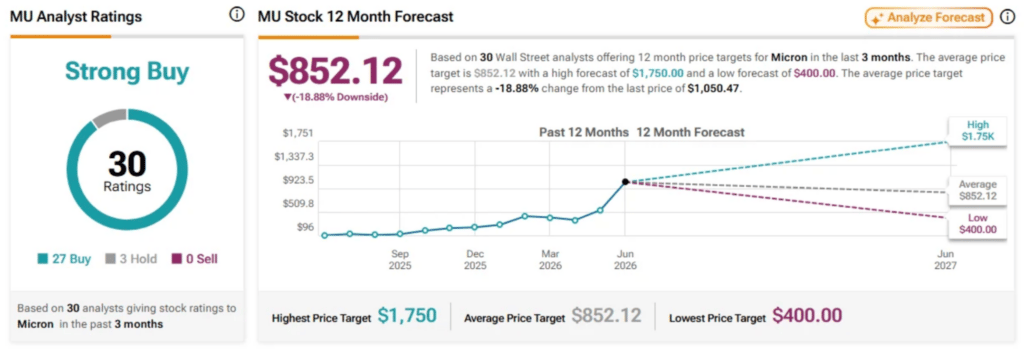
MU stock price target. Source: TipRanks
Still, with 27 ‘Buy’ and only three ‘Hold’ recommendations over the past three months, Wall Street considered the company a ‘Strong Buy.’
Featured image via Shutterstock