
The mainstream adoption of XRP Ledger (XRPL), which uses XRP as its native token, has continued to grow as of August 5, following a recent catalyst from Ripple Labs’ Markets in Crypto-Assets Regulation (MiCA) license.
Ripple received its Crypto Asset Service Provider (CASP) license from Luxembourg’s Commission de Surveillance du Secteur Financier (CSSF), as Finbold reported. As such, institutions across Europe seeking to tap into Ripple Payments, an institutional-grade cross-border platform, can seamlessly integrate.
“With our EU EMI license, institutions across all 30 EEA nations can now collect, exchange, and pay out via Ripple Payments in a single regulated relationship,” Ripple noted.
Mid last month, the company launched Ripple Mint, a platform that allows institutional investors to manage Ripple USD (RLUSD). With the blockchain payment company having recently rolled out several products including the XRPL Lending protocol and XRP Ledger AI Starter Kit, XRPL’s adoption is well-positioned to expand, driven by regulatory clarity.
XRP Ledger adoption rises
The rising adoption of XRP Ledger, fueled by regulatory clarity, is evident by the network utilization. For instance, XRP Ledger tokenization growth has been fueled by more than 60,000 stablecoin holders and over $4 billion in represented asset value, as Finbold highlighted.
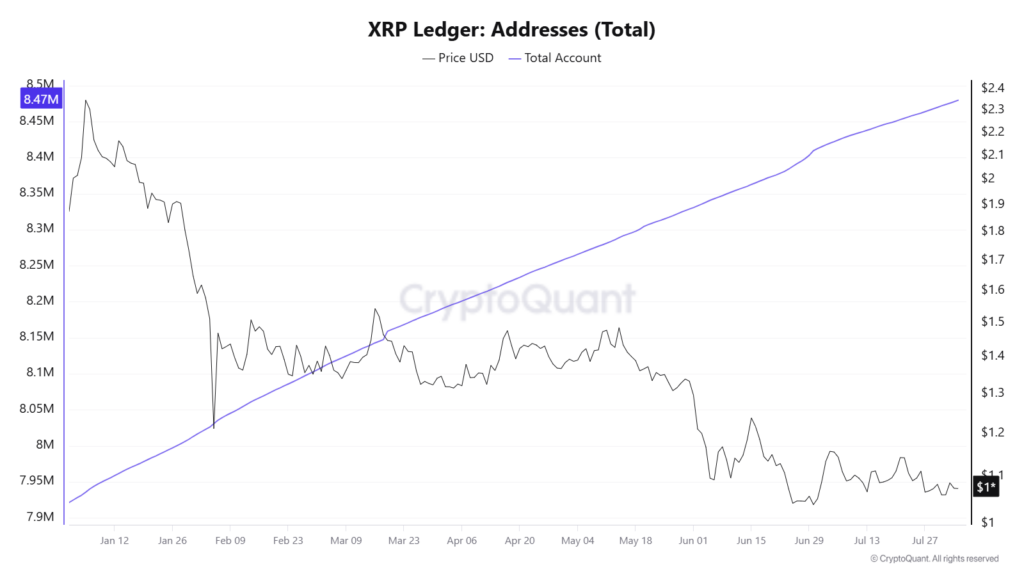
The XRPL addresses have also been on the rise, from around 7.92 million on January 1, 2026, to roughly 8.48 million on Wednesday, according to data from CryptoQuant. Consequently, the total accounts on the XRPL were at a new all-time high (ATH), following a linear growth year-to-date (YTD).
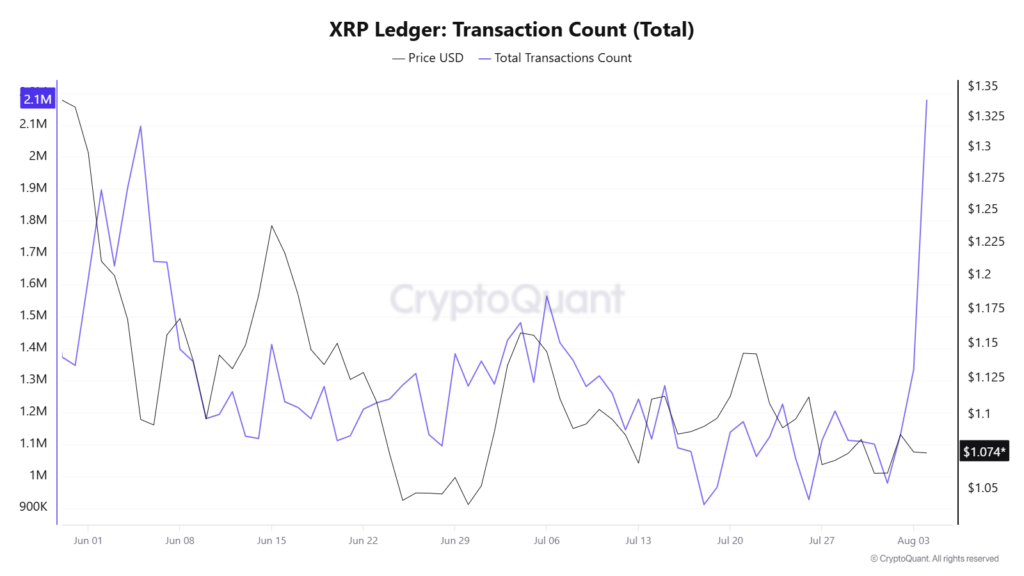
Meanwhile, the XRP Ledger’s total transaction count has experienced a sharp uptick since the beginning of August. On Tuesday, XRPL’s total transaction count surged to 2,178,219, up from 977,951 on August 1 and the highest since June 5, based on metrics from CryptoQuant.
With Ripple having more than 70 regulatory licenses globally, the mainstream adoption of the XRPL network could attract more users.