

Nvidia (NASDAQ: NVDA) investors are set to receive a higher dividend payout on October 1, 2026, after the artificial intelligence giant raised its quarterly dividend earlier this year.
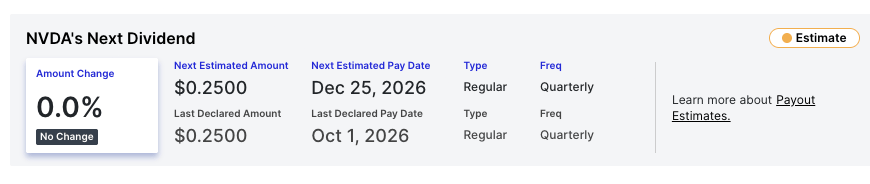
The company will distribute $0.25 per share to shareholders who held Nvidia stock before the September 10 ex-dividend date.
The payment is among the first major distributions under Nvidia’s new payout policy after the company increased its quarterly dividend from $0.01 to $0.25 per share, representing a 2,400% increase.
At the current annualized rate of $1 per share, Nvidia offers a dividend yield of approximately 0.44% based on its last share price of $225.
Investor earnings
For investors, the upcoming payout translates to $25 for every 100 shares owned, while those holding 1,000 shares will receive $250. An investor with 10,000 shares is set to collect $2,500 from the October distribution.
The dividend increase comes as Nvidia continues to generate record cash flows from surging demand for artificial intelligence infrastructure.
The company’s payout ratio stands at about 6.35%, meaning only a small portion of earnings is returned to shareholders through dividends, leaving most profits for growth initiatives, AI investments, and share repurchases.
The latest dividend data also shows Nvidia has increased its dividend for three consecutive years and maintains a quarterly payment schedule.
NVDA stock fundamentals
Nvidia’s higher dividend payout comes amid sustained demand for AI infrastructure. In its latest quarter, the chipmaker reported revenue of approximately $96 billion, beating Wall Street expectations, and projected revenue of about $108 billion for the current quarter.
Investor sentiment in the technology company remains tied to Nvidia’s ability to maintain its leadership in AI chips amid growing competition from rivals such as AMD and custom chip initiatives from major firms.
However, the company recently forecast more than 70% revenue growth for the next fiscal year, signaling confidence in continued demand for its products.
Featured image via Shutterstock