
Most prospective investors in Europe say succeeding at investing matters to them, but only about one in five feel very confident making decisions on their own, according to a new study commissioned by online trading platform Capital.com.
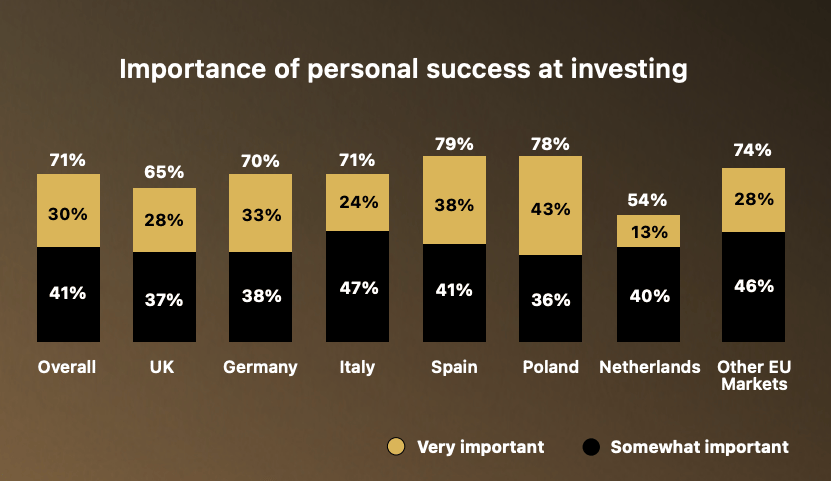
In the survey, 71% called personal success at investing important, while 21% described themselves as very confident deciding alone. Another 42% said they feel somewhat confident.
The “Beyond Access” study surveyed 3,613 prospective investors in the United Kingdom (UK), Germany, Italy, Spain, Poland and the Netherlands, plus a wider sample from other European Union (EU) countries.
Capital.com defines them as adults who hold some form of savings or financial assets. It points to the decision environment, meaning the information, tools, guidance and structure people meet when they decide, as a key factor in how confident they feel, and calls the challenge a confidence gap.
The findings land as the EU develops its Savings and Investments Union. The European Commission has recommended that member states offer simple savings and investment accounts for retail investors. Spain’s government has approved its Financia Europa account, and Poland’s Personal Investment Accounts are due to launch in January 2027.
The question Capital.com’s study asks is what happens once people have access. Most Europeans understand why investing matters, yet only one in five feel very confident deciding on their own. Supporting investors beyond access means giving them clear information, a clear view of risk and the room to take their time, including when the right decision is to wait,” said Christoforos Soutzis, CEO Europe at Capital.com.
Why people hesitate at the point of decision
Most respondents grasp the case for investing. According to the study, 66% understand that savings earning less than inflation lose real value, and 60% recognise that holding most of their money in low-risk cash accounts may mean missing out on long-term returns.
Acting on that is harder. 54% worry about making a decision they will later regret, 47% often second-guess themselves, and 44% delay decisions because they fear getting them wrong. Information overload is a problem for half of respondents, and 49% say the tax side of investing is unclear.
Losses weigh heavily. While 62% expect periods of loss to be a normal part of investing, 58% say large losses would make them less likely to invest again. Confidence in standard products is similarly thin: between 8% and 14% say they feel very confident investing in pensions, bonds, exchange-traded funds (ETFs) or mutual funds. And although 63% trust their own investment judgement, only 17% agree strongly.
What investors say would help
Respondents pointed to clarity at the moment of decision. Two-thirds say clear explanations reduce their anxiety, and 64% say a clear explanation of risk shown before they confirm a decision would be extremely or very helpful. The study also tested other support tools:
- Access to an expert at moments of uncertainty (60%);
- A simple summary of whether an investment may suit them (59%);
- A simulation showing potential losses (57%);
- A reminder of their long-term goals (54%);
- A short cooling-off pause before completing a transaction (50%);
- A risk prompt on an online platform (50%).
In their own words, respondents asked for plainer information, guidance they can trust, expert support and practical tools for making decisions. Some suggested AI-assisted tools could tailor that guidance.
Where the pressure points differ by country
Support needs vary by market. Spanish respondents rate most forms of help above the European average, most of all a clear risk explanation before confirming a decision (72%, against 64% overall). UK respondents put more weight on access to an expert (68%, against 60%). The Netherlands sits at the other end, with just 54% valuing a risk explanation and 33% a cooling-off pause, the lowest shares among the markets surveyed.
Each market also showed its own pattern. Country samples were around 500 people, and Capital.com says differences of a few percentage points between markets should be treated as indicative.
- Poland: 66% often second-guess their investment decisions, 19 percentage points above the European average, and 43% call success at investing very important to them, the highest share surveyed (30% overall);
- Germany: 18% feel very confident investing in ETFs, the highest share surveyed (10% overall), and 52% feel prepared for downturns (47% overall);
- UK: 66% recognise that holding cash may mean missing long-term returns (60% overall), yet 55% feel anxious making investment decisions (47% overall);
- Spain: 79% say success at investing is important to them (71% overall), and 76% say clear explanations ease their anxiety (two-thirds across Europe);
- Netherlands: 30% struggle to open an investment account, below the 35% average, but only 53% trust their own investment judgement (63% overall), which puts Dutch respondents among the least confident groups surveyed;
- Italy: 41% feel overwhelmed by investment information, the lowest share surveyed (50% overall), yet only 7% feel very confident investing in ETFs (10% overall).
“A confident investor is someone who understands when to act, when to wait, and when to seek guidance. The differences between countries show that each market has its own pressure point, and in all of them people decide better when risks are explained clearly and they have time to think. At Capital.com, our role, within the regulatory frameworks we operate under, is to help build that kind of decision environment,” Soutzis added.
The online survey ran from 18 to 31 March 2026, with 501 respondents each in the UK, Germany and Poland, 505 in Italy, 507 in Spain, 423 in the Netherlands and 675 from other EU markets. The full report is available here.
Featured image via Shutterstock.