
Semiconductor stocks have officially entered a bear market after the PHLX Semiconductor Index (SOX) plunged more than 20% from its June 2026 record high, raising concerns that the AI-driven rally may be losing momentum.
The benchmark chip index peaked at 14,655 points in late June before sliding to about 11,674 by July 17, according to market data.
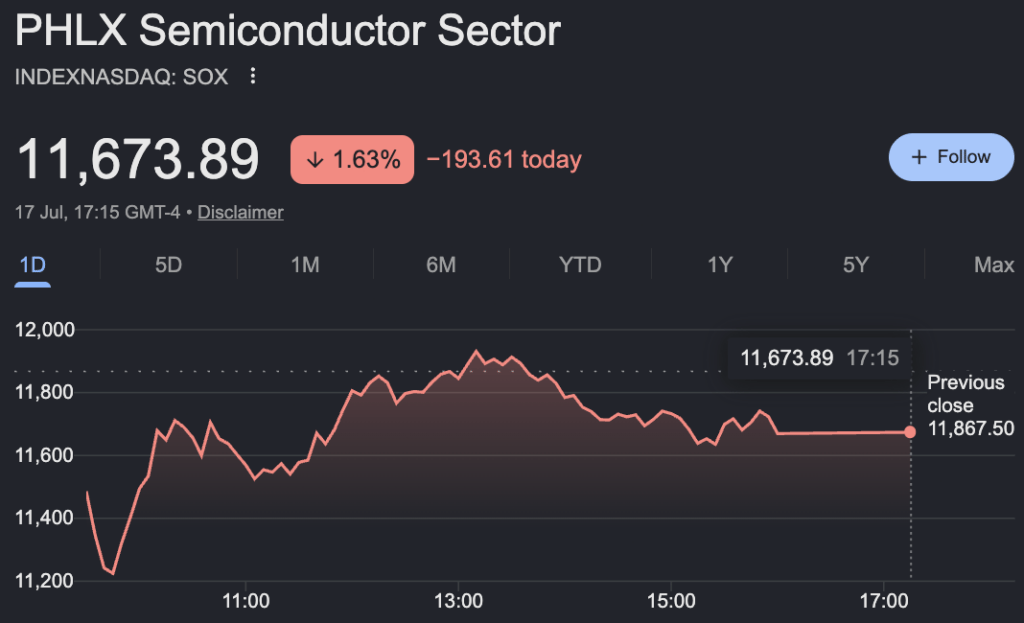
The decline has erased an estimated $3.3 trillion in market value across the global semiconductor sector and marks one of the sharpest reversals in technology stocks this year.
The semiconductor sector bear market follows months of extraordinary gains fueled by optimism surrounding artificial intelligence infrastructure spending.
Investors had pushed valuations higher on expectations that demand for advanced processors, AI accelerators, and high-bandwidth memory would remain strong for years.
Why chip stocks are struggling
However, sentiment shifted in early July as investors began questioning whether massive AI-related capital expenditures would generate returns quickly enough to justify elevated valuations.
Concerns intensified after reports indicated slower expansion plans for high-bandwidth memory production, particularly among major suppliers such as SK Hynix.
The developments raised fears that supply growth may be outpacing actual demand from AI data center operators.
At the same time, a more hawkish Federal Reserve stance reduced expectations for near-term interest rate cuts, putting additional pressure on growth-focused technology stocks.
The latest chip stocks selloff has reignited debate over whether parts of the AI market have entered bubble territory.
A key catalyst emerged from China, where the launch of a large open-source AI model raised questions about the long-term need for expensive proprietary hardware.
Hyperscalers spending
Investors began reassessing assumptions that hyperscale technology companies would continue spending hundreds of billions of dollars annually on specialized AI chips.
Memory-related semiconductor companies were among the hardest hit. Shares tied to Micron (NASDAQ: MU), Samsung Electronics, and SK Hynix experienced significant declines, contributing to broader weakness across global chip markets.
Although Nvidia (NASDAQ: NVDA) has shown greater resilience than many peers, the broader semiconductor industry has struggled as investors rotate away from highly valued AI-related names.
The upcoming earnings season is expected to be the next major test for the sector.
Investors will monitor guidance from leading chipmakers for evidence that AI demand remains strong. Any signs of slowing orders, delayed deployments, or weaker spending plans could fuel further volatility.
Despite entering bear market territory, semiconductor stocks remain well above levels seen before the AI boom accelerated.
The sector continues to benefit from long-term demand for advanced computing power and artificial intelligence infrastructure.