
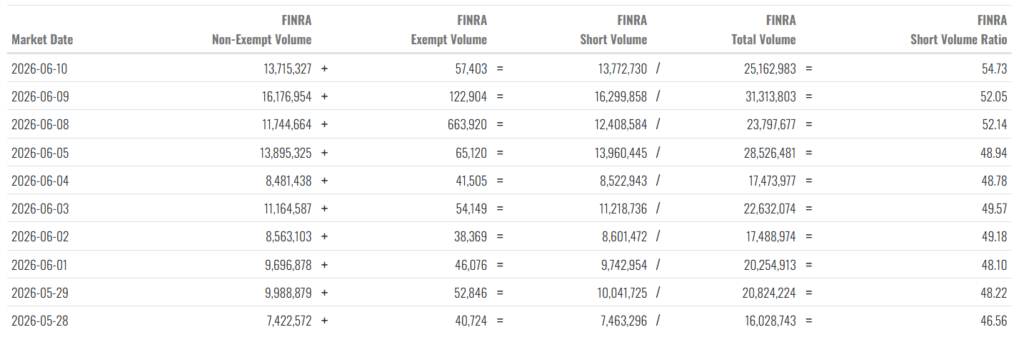
On Wednesday, June 10, Tesla (NASDAQ: TSLA) stock short volume ratio hit a two-week high, signalling investors are anticipating a further decline for the electric vehicle (EV) maker and significant volatility surrounding the SpaceX initial public offering (IPO).
Specifically, the figure on the day rose to 54.73 in the third consecutive day above 50 – on Monday, it stood at 52.14 and on Tuesday at a slightly lower 52.05 – per the data Finbold retrieved from Fintel on June 11.
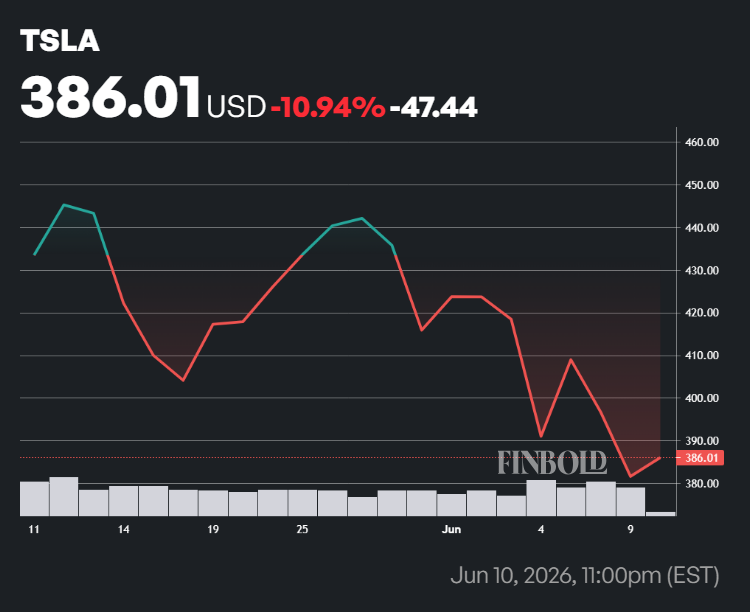
Furthermore, the reading hints that a majority of traders are expecting Tesla stock’s 10.94% drop in the monthly chart will not present a buying opportunity that could reverse the trend in the foreseeable future.
Why Tesla stock investors are increasingly bearish
While it cannot be determined for certain, the bearish sentiment can likely be linked directly to the imminent – scheduled for June 12 – SpaceX IPO.
Indeed, the offering has already coincided with a widespread technology stock sell-off that multiple analysts have interpreted as an accumulation of capital to feed into the $75 billion goal at a $1.75 trillion valuation.
Tesla stock might be particularly vulnerable under the circumstances, as Elon Musk’s takeover of X – at the time known as Twitter – led to a protracted period of the billionaire’s attention being perceived as being away from the EV maker.

Considering that SpaceX is set to be the company that leads to the world receiving its very first trillionaire, all the while boasting a series of ambitious promises surrounding orbital data center deployment and a colony on Mars, the car manufacturer might indeed soon experience a period of absentee leadership.
Is Tesla stock a victim of the broader market sell-off?
Elsewhere, it is notable that the spike in the Tesla stock short volume ratio came at a time of deteriorating sentiment in the U.S. markets.
Along with the sheer scale of the SpaceX IPO driving as much skepticism as it has been generating hype, the wider technology sector is under pressure due to the cost debate destabilizing the long-standing artificial intelligence (AI) boom narrative.
Even more recently, the rising conflagration in the Middle East that might push the already dubious ceasefire brought the matter of oil supply – and the consequence of any potential shortages on the economy – back into focus.
Featured image via Shutterstock