

While the equities market has been somewhat volatile this year, several stocks are showing a lot of long-term growth potential.
To see which of them are the most promising, Finbold has identified three stocks with the potential to explode by 2030.
1. Palantir (PLTR)
Although it might be down 15% since January 1, Palantir (NASDAQ: PLTR) remains a growth-pick, expecting revenue for the next fiscal year to reach a staggering $7.19 billion.
If reached, the figure will mean that Palantir has beat the $6.22 billion analyst consensus by more than 15% and seen a yearly increase in revenue above 60%. Also worth noting is that the company’s net dollar retention has climbed to 139%, meaning existing customers are increasing spending by 39% annually.
On the government side, Palantir secured a landmark $10 billion, 10-year U.S. Army contract that consolidated 75 separate artificial intelligence (AI) agreements into a single platform, as well as a $500 million Navy deal. Commercial momentum is also positive, as U.S. commercial customers rose to 571, up 49% year over year.
Based on the data and long-term trajectory, the current valuation fears are easily seen as not reflective of the company’s fundamentals, meaning its long-term potential might very well be underestimated.
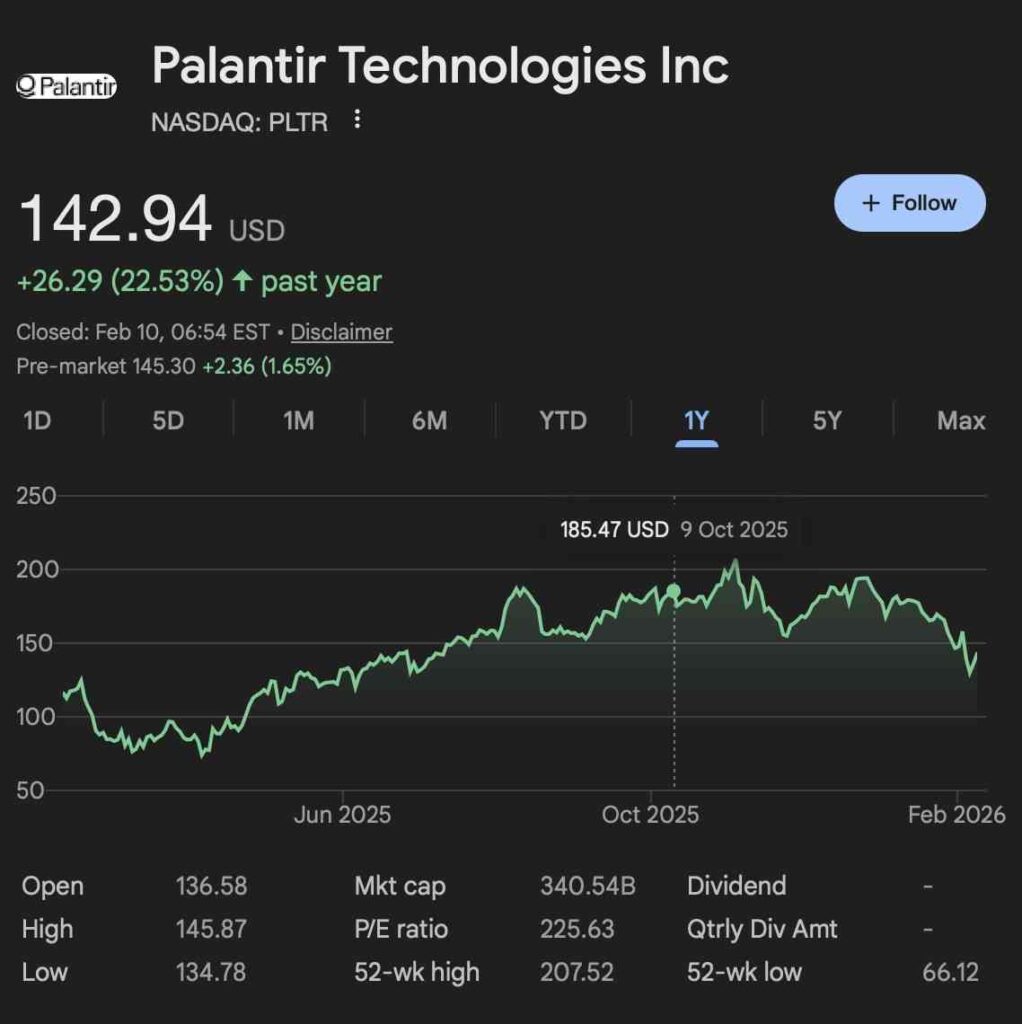
At press time, Palantir stock was trading at $142.94, having gained 22.53% on the yearly chart.
2. Symbotic (SYM)
Symbotic (NASDAQ: SYM) is positioning itself as a dominant force in warehouse automation, building fully autonomous, AI-powered robots that handle sorting, storage, and retrieval of goods.
These tools are already employed by major global retailers, including Walmart (NASDAQ: WMT) and Target (NYSE: TGT), but the company has now expanded beyond traditional retail through a major partnership with Medline (NASDAQ: MDLN), a medical supply firm.
Growth potential is, however, most meaningfully tied to Symbotic’s acquisition of Walmart’s Advanced Systems and Robotics business. After all, the deal has significantly broadened the company’s target customer base, allowing it to explore in-store and micro-fulfillment systems in e-commerce as well.
The outlook appears even more promising if we consider that AI-enabled e-commerce is expected to grow from $8.65 billion to $22.6 billion by 2032. If executed well, Symbotic’s participation in the sector could thus potentially lead to exceptional revenues.

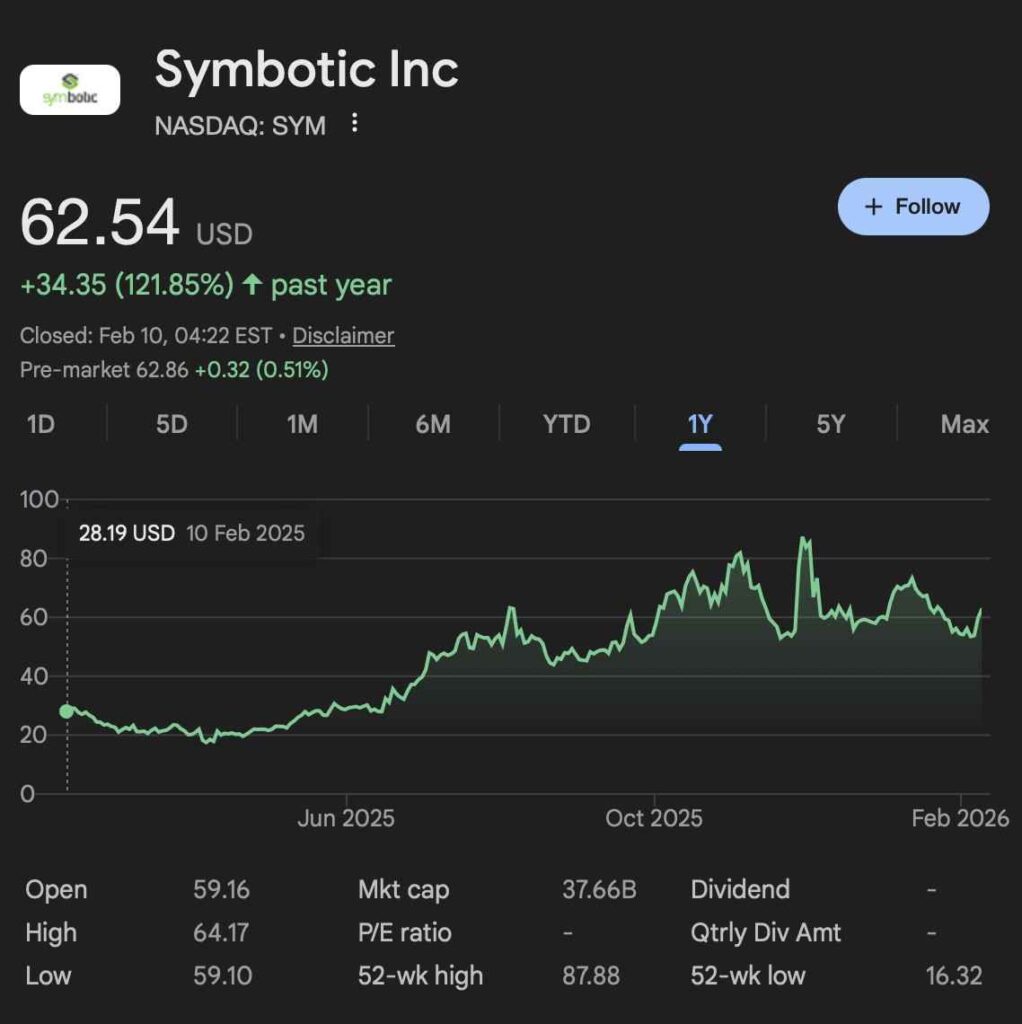
At the time of writing, Symbotic stock was changing hands at $62.54, up 121.85% over the past year.
3. CoreWeave (CRWV)
CoreWeave (NASDAQ: CRWV) is emerging as another AI play, particularly in cloud infrastructure. However, unlike, for example, Amazon Web Services (AWS) and Google Cloud, which operate general-purpose platforms, CoreWeave targets AI model training, inference, and deployment exclusively.
This specialization has allowed the company to become a critical infrastructure partner to some of the most influential names in the sector, including Nvidia (NASDAQ: NVDA), who is also an investor, having poured $2 billion in CoreWeave last month.
Moreover, as U.S. data center capacity is expected to fall short of demand by roughly 10 gigawatts annually through 2028, the need for specialized infrastructure, such as that provided by CoreWeave, is becoming more notable. Naturally, the Livingston firm is going to up its efforts to position itself directly at the center of that supply gap.
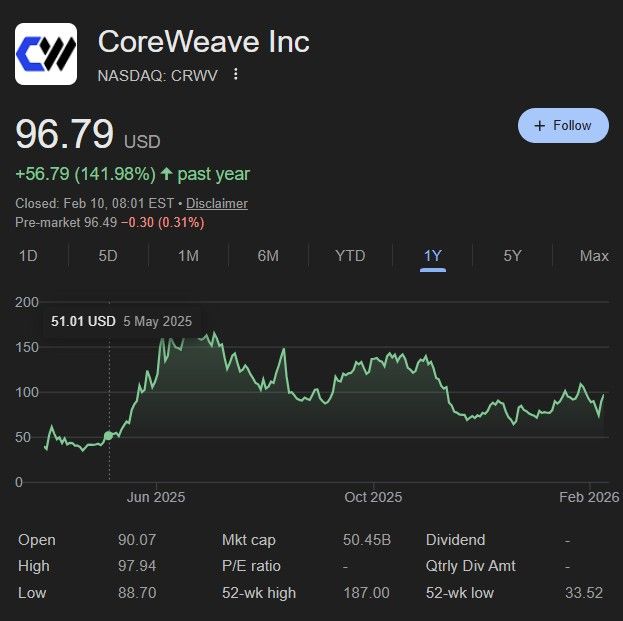
At the time of publication, CoreWeave stock prices sat at $96.79, up 141.92% the past twelve months.
Best stocks to buy before 2030
Each of the three companies on our list offers deep exposure to long-term structural trends, such as artificial intelligence and automation.
Moreover, they enjoy expanding customer bases, strategic partnerships, and accelerating adoption curves, which position them for further growth over the next few years.
However, positive outcomes will depend more on execution and broader market conditions than past successes, meaning investors should always approach them with caution and practice due diligence before investing.
Featured image via Shutterstock